New Details Emerge About the Artemis III Mission

▼ Summary
– NASA announced the Artemis III crew and plans for the mission to dock with both a Blue Origin and a SpaceX lander in low-Earth orbit, with a launch no earlier than summer 2027.
– Key questions about the landers’ readiness and design remain unanswered after the announcement.
– The mobile launcher is in good shape post-Artemis II, with about 90% of repairs complete and booster stacking expected to begin in July.
– NASA will perform a short-stack wet dress rehearsal for the SLS rocket, testing redesigned cryogenic seals before stacking the Orion capsule.
On Tuesday, NASA officially named the crew for the Artemis III mission, a flight now expected no earlier than summer 2027. During the announcement, agency officials outlined plans for the crew to dock with both a Blue Origin lander and a SpaceX Starship lander while in low-Earth orbit. While the presentation offered new details, it left several critical questions unanswered, particularly regarding the landers’ readiness and their final designs.
Following the crew reveal, Ars sat down with Jeremy Parsons, NASA’s Artemis program manager, at the Johnson Space Center to clarify those lingering points. The conversation, lightly edited for clarity, shed light on the state of the Space Launch System (SLS) rocket and the launch pad following the Artemis II mission.
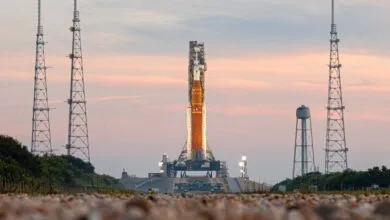
When asked about the SLS rocket and launch pad’s condition months after Artemis II, Parsons explained that the mobile launcher emerged in excellent shape. “The modifications we did between Artemis I and II were highly, highly successful,” he said. “We rolled back a couple of weeks after launch, and two things are going on in parallel right now.” The boosters have arrived at the rotation processing surge facility, where they are being prepped and readied for stacking. Meanwhile, repair work on the mobile launcher is nearly complete. “There were a couple of areas of damage, and we’ve got like 90-something percent of it done right now,” Parsons noted. “There are a couple of areas in the flame hole that they’re re-welding, and we want to get that work done before we start stacking boosters. As a general rule, we don’t want to weld with the propellant there.” He expects the work to finish in early July, with stacking to begin that same month.
Regarding testing plans for the SLS rocket, Parsons addressed whether a wet dress rehearsal would be conducted before placing the Orion capsule on top. He referenced issues with cryogenic seals during Artemis I and II, which go through the tail service mast umbilicals. “We’re in the process of redesigning those and implementing new ones for this mission,” he said. “Part of what we want to do is what we call a short-stack tanking or wet dress rehearsal. Basically, you get the boosters and the core stage on, you complete all the thermal protection systems. We then would put a cover on top of the core stage, and we’d roll out in that configuration. Then we tank it up and make sure the seals are tight.” This approach aims to verify the seals’ integrity before proceeding with the full assembly, reducing risk for the crewed mission.
(Source: Ars Technica)