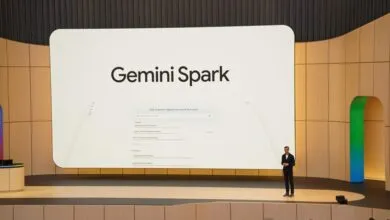
Gemini Spark: My most impressive and terrifying AI experience yet
▼ Summary
– The author found that most AI trip planners only offer generic suggestions, but Google’s new Spark agent created a highly detailed and personalized weekend itinerary for a family trip to Hershey, PA.
– Spark used data from the author’s Google account (email, calendar, etc.) to include specific details like his dog’s name, his wife’s dietary preferences, his children’s ages and free park admission, and even a concert he had tickets for.
– When the author updated the plan to include his parents as babysitters, Spark automatically adjusted its recommendations from a hotel to an Airbnb and drafted a document to share with his wife.
– Spark failed to book an Airbnb because the website’s security policies blocked the AI agent from logging in or completing payments on the user’s behalf.
– The author notes that while Spark’s personalized assistance feels magical, it is also deeply invasive, as it mines vast amounts of personal data, raising the uncomfortable trade-off between utility and privacy.
For years, tech demos have promised that AI trip planning would be the killer app. Just tell the bot where you’re headed, and it will scour the web for flights, restaurants, and attractions, handing you a perfect itinerary. In practice, I’ve found those promises fall flat, delivering only the most generic suggestions,the top six tourist traps in any given city, and nothing more.
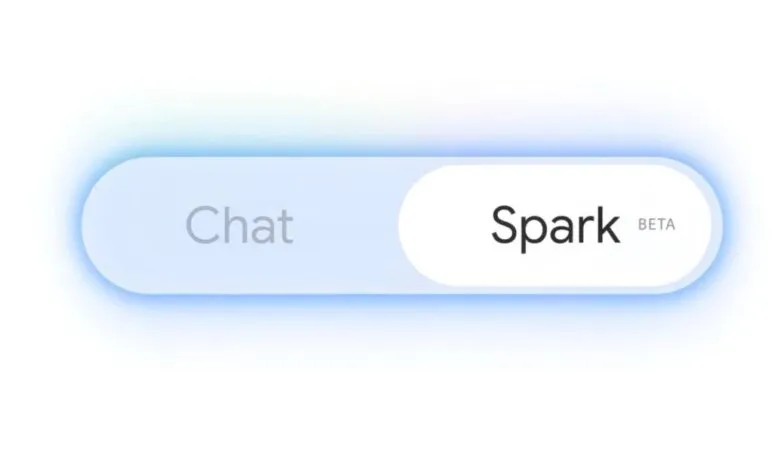
Then I tried Gemini Spark, Google’s new always-on AI agent. This isn’t a simple chatbot. Spark is designed to become the central interface for using external apps and, eventually, controlling your entire computer. It’s rolling out to subscribers of Google’s $99-per-month AI Ultra plan, and I got early access. I started small: I asked Spark to scan my Gmail for subscriptions to cancel and to dig through Google Docs for unfinished tasks. It performed well, even generating a tidy document with unsubscribe links.
But the real test was a weekend trip to Hershey, Pennsylvania, with my wife, two kids, and our dog. I deliberately left out details, like concert tickets for Saturday night, to see how much Spark could figure out on its own.
Within minutes, Spark returned a link to a Google Doc. It was a comprehensive, family-friendly, and dog-friendly itinerary spanning from Friday, July 17, to Sunday, July 19. The level of detail was staggering. Spark included driving directions from my home address,which I never explicitly provided. It suggested hotels with pet fees, and even recommended dog-friendly activities for Frida. I never told Google my dog’s name; Spark must have found it in an email from my vet.
Then came the real shockers. Spark noted that my son Lewis would get into Hershey Park for free because he’s under one, while Arthur, age three, would need a ticket. It even scheduled Lewis’s afternoon nap for 1:30 PM,an accurate guess based on his routine. The itinerary included my wife’s name and accounted for her dietary preference of avoiding onions and scallions. It also flagged the Thomas Rhett and Niall Horan concert on Saturday night, pulling the details from a Ticketmaster confirmation in my email. It even reminded me that parking was included with those tickets.
When I reached the part about hiring a babysitter for that night, I mentioned that my parents were joining us. “That is a wonderful update!” Spark replied, using my parents’ names and switching its hotel recommendations to an Airbnb. I then asked Spark to compile everything into a Google Doc and share it with my wife. It found her email, attached the document, and drafted a note that sounded like a polite business colleague rather than a spouse.
The only hiccup came when I asked Spark to book an Airbnb directly. It attempted to navigate the site but was blocked. “Due to security and authentication policies on Airbnb, I am unable to log in, handle payment, or complete bookings directly on your behalf,” it explained. Instead, it offered a list of available properties and reminded me of the details I’d need to complete the booking.
On one hand, this is the most impressive AI experience I’ve ever had. Google’s Personal Intelligence feature, combined with its vast data on me, produced an itinerary that felt like it came from a human assistant. It knew my family’s names, ages, preferences, and schedules. I suspect we’ll follow the plan almost exactly.
On the other hand, it’s deeply unsettling. Spark casually revealed my children’s names and ages, reminded me it knows where I live, and surfaced information I never consciously shared. I know intellectually that Google holds a massive amount of data,emails, calendar events, photos, search history. But seeing Spark treat that data not as something to protect, but as something to mine, feels invasive.
This is the trade we’re all being asked to make. The more you share with an AI system, the more useful it becomes. Google is uniquely positioned because it already has that data, while rivals like OpenAI and Anthropic scramble to catch up. The AI tools being promised require total openness. They need to know us intimately, act on our behalf, and make decisions without us. That means handing over our correspondence, our photos, our lives.
There’s an old saying: “If you’re not paying for it, you’re the product.” AI takes that further. We are paying for it. And we,our data, our routines, our relationships,are both the raw material and the end product, constantly mined, sorted, and fed back to us. Some of those results may be incredible. All of them require this trade. I suspect I’ll have a wonderful weekend in Hershey this summer. But I’ll never shake the feeling that I’m being watched,supposedly for my own benefit.
(Source: The Verge)