Why Google’s AI struggles to spell its own name
▼ Summary
– Google’s AI Overview incorrectly states there are two Ps in “Google” and one R in “poop,” and misspells “journalism” and “Trump.”
– This is the second time Google’s AI Overview has failed, previously citing satirical posts and advising users to eat rocks and put glue on pizza.
– LLMs struggle with spelling because they process text as tokens (numerical representations) rather than reading words and letters like humans.
– AI researchers explain that the transformer architecture behind LLMs makes perfect spelling difficult, as models encode words without understanding individual letters.
– These spelling failures highlight that AI is not perfect, and users should not blindly trust AI outputs without verification.
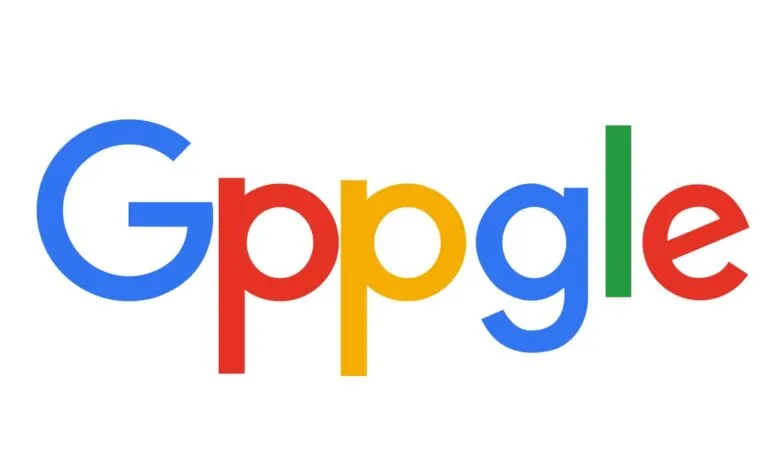
How many Ps are in Google? According to Google’s own AI, the answer is two. But ask it about the word “poop,” and it says there’s exactly one ‘r’ in there. It also claims the word “journalism” contains two ‘d’s, though it spells it as j-o-u-r-n-a-d-i-s-m. At least the AI correctly identified one P in the U.S. president’s last name, but then wrote it as t-r-p-u-m.
No one needed a crystal ball to foresee that Google’s AI-driven Search overhaul would face backlash. This isn’t the first time. When Google initially introduced AI Overviews in Search, the feature famously cited satirical content from The Onion and Reddit, advising users to eat rocks and put glue on pizza. Now, as Google doubles down on making generative AI the centerpiece of its 29-year-old flagship product, these stumbles feel inevitable.
“Counting within words has been a known challenge for LLMs, and we’re working to fix this particular issue,” Google told TechCrunch in a statement.
These basic spelling errors might seem trivial, but they highlight a deeper truth. Large language models (LLMs) – the kind of AI powering chatbots and text generators – aren’t built to understand spelling. It’s become a running joke that whenever a company unveils a new AI model, you should test it by asking how many ‘r’s are in “strawberry.” These models can code an app in seconds or solve math problems that baffle human experts, yet they spell like a kindergartener.
Google’s AI Overview issues go beyond silly spelling mistakes. Last week, the company patched a bug where searching the word “disregard” returned what looked like a dictionary definition, but actually read: “Understood. Let me know whenever you have a new prompt or question!” The spelling errors persist because they’re surprisingly hard to fix.
As researchers have explained, AI doesn’t perceive sentences as units of language made up of words and letters. Many LLMs are built on transformer models, which break text into tokens – which can be full words, syllables, or letters, depending on the model. Instead of reading like a human, the AI converts text into numerical representations, then contextualizes them to generate a logical response.
“LLMs are based on this transformer architecture, which notably is not actually reading text. What happens when you input a prompt is that it’s translated into an encoding,” Matthew Guzdial, an AI researcher and assistant professor at the University of Alberta, told TechCrunch. “When it sees the word ‘the,’ it has this one encoding of what ‘the’ means, but it does not know about ‘T,’ ‘H,’ ‘E.’”
This token-based architecture is inherently limiting, and researchers aren’t optimistic about solving the spelling problem. “It’s kind of hard to get around the question of what exactly a ‘word’ should be for a language model, and even if we got human experts to agree on a perfect token vocabulary, models would probably still find it useful to ‘chunk’ things even further,” Sheridan Feucht, a PhD student studying large language model interpretability at Northeastern University, told TechCrunch. “My guess would be that there’s no such thing as a perfect tokenizer due to this kind of fuzziness.”
This isn’t a top priority for researchers, since the real value of LLMs doesn’t lie in their spelling ability. But these blatant failures serve as a useful reminder: AI is not perfect, even when it seems like an all-knowing power beyond our comprehension. We cannot blindly trust AI outputs without double-checking their accuracy.
(Source: TechCrunch)