Intel targets handheld gaming PCs with new Arc G3 processors
▼ Summary
– Most Steam Deck imitators use AMD Ryzen Z-series chips, while Intel has not previously marketed silicon specifically for handhelds.
– Intel is now releasing two Arc G-series processors for gaming handhelds, leveraging its Arc B-series integrated GPUs.
– Multiple Arc G-series handhelds will launch starting in June 2026, including models from MSI, Acer, and OneXPlayer.
– The “Arc” brand for these chips covers the entire processor, including CPU, GPU, NPU, and other components.
– The G-series chips share architectures with Intel’s Core Ultra Series 3 (Panther Lake) but have a different combination of CPU and GPU cores.
Most gaming handhelds currently on the market run on AMD hardware, particularly the Ryzen Z-series processors. While those chips are essentially the same ones found in standard laptops, they are tuned with power profiles more suitable for compact, battery-powered devices. A few exceptions exist, like MSI’s Claw, which uses Intel silicon, but Intel has never before produced a processor explicitly designed for this form factor.
That changes today. Intel is officially entering the handheld gaming PC space with two new Arc G-series processors, engineered to let portable gaming systems take full advantage of the company’s impressive Arc B-series integrated GPUs. According to Intel, the first wave of Arc G-series handhelds will launch “starting in June 2026, with broader availability throughout the year.” Confirmed devices include a new MSI Claw model, the Predator Atlas 8 from Acer, and a system from OneXPlayer.
Typically, Intel reserves the “Arc” name for its graphics solutions, whether integrated or discrete. In this case, however, the Arc G-series branding covers the entire chip , CPU, GPU, NPU, and all supporting components , marking a shift in how the company markets its full system-on-chip offerings.
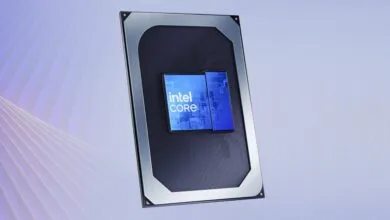
Architecturally, the G-series chips share a great deal with the Core Ultra Series 3 processors (codenamed Panther Lake) that Intel is currently shipping in high-end thin-and-light laptops. They rely on the same CPU and GPU designs and utilize Intel’s 18A manufacturing process, among others. However, the G-series parts ship with a distinct combination of CPU and GPU cores that doesn’t directly mirror any existing Core Ultra model, giving handheld makers a tailored balance of performance and efficiency.
(Source: Ars Technica)