Starlink Mini Battery Pack Reportedly in Development
▼ Summary
– Code in a May Starlink firmware release suggests SpaceX may release a Starlink Mini with an integrated battery.
– A university researcher found strings in the firmware hinting at the battery, including a “DishBatteryStats” line to report charge status.
– A battery-powered Starlink Mini would provide untethered portability for users like vanlifers and emergency responders.
– The device aims to offer fast, low-latency internet from almost anywhere on the planet.
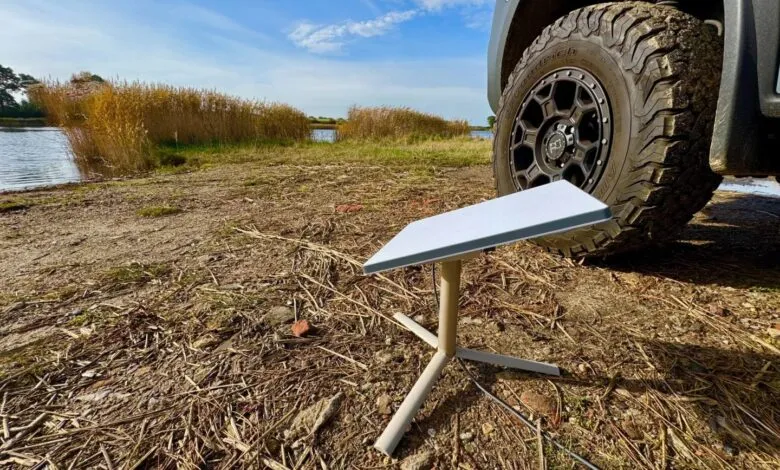
Code hidden in a recent Starlink firmware update points to an intriguing development: SpaceX may be preparing a version of its compact Starlink Mini dish with a built-in battery. If true, this battery-powered Starlink Mini would eliminate the need for an external power source, offering true portability for van dwellers, emergency crews, and remote workers who rely on fast, low-latency internet from virtually any location on Earth.
Jinwei Zhao, a university researcher, uncovered several lines of code hinting at this integrated battery in a May firmware release, as first reported by PCMag. Specifically, a section labeled “message DishBatteryStats” appears designed to pull data from an internal battery, including its current state of charge. If the dish were merely connected to an external battery pack, such dedicated code would be unnecessary. The firmware also references a “DishPowerSupply” message, which could indicate a USB-C power delivery port, further supporting the idea of a self-contained, all-in-one satellite terminal.
This move would mark a significant step forward for the Starlink Mini, which already stands out for its small footprint and ease of transport. An integrated battery would remove one of the last tethers to a wall outlet, making it even more appealing for off-grid adventures, disaster response, or simply setting up internet in a backyard without running extension cords. While SpaceX has not officially confirmed the feature, the firmware evidence suggests the company is actively exploring ways to make its satellite internet hardware more self-sufficient and user-friendly.
(Source: The Verge)