Starlink V5 Dish Cuts Power and Weight, Not Speed
▼ Summary
– Starlink’s new V5 dish reduces weight from 6.5 to 2.4 pounds and lowers power consumption to 35-50 watts, but offers a slightly lower max speed of 375+ Mbps compared to the V4’s 400+ Mbps.
– The V5 is available in select US areas for Residential customers, bundled with a Router Mini and pipe adapter, but is not intended for in-motion use.
– The V4 dish remains available for higher-tier Residential plans and includes a better Router 3, supporting in-motion use and higher speeds, positioning it as more powerful than the V5.
– The V5’s lighter weight and smaller size are expected to simplify installation, potentially making it more cost-effective for SpaceX to manufacture and scale globally.
– CEO Elon Musk indicated the V5 is designed for high-volume production to help Starlink reach hundreds of millions of terminals, though it offers no major reason for existing users to upgrade.
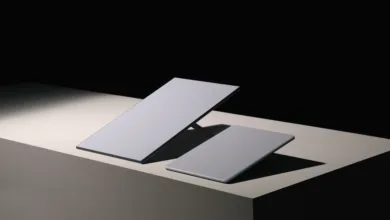
SpaceX has officially launched its Starlink V5 dish, and while it won’t deliver faster internet speeds, the hardware brings meaningful improvements in weight, size, and power efficiency. The company updated its website and mobile app today with details on the next-generation terminal, which follows the V4 model introduced in late 2023. SpaceX confirmed via Twitter that the V5 is rolling out in the United States starting today, though availability is limited to select locations.
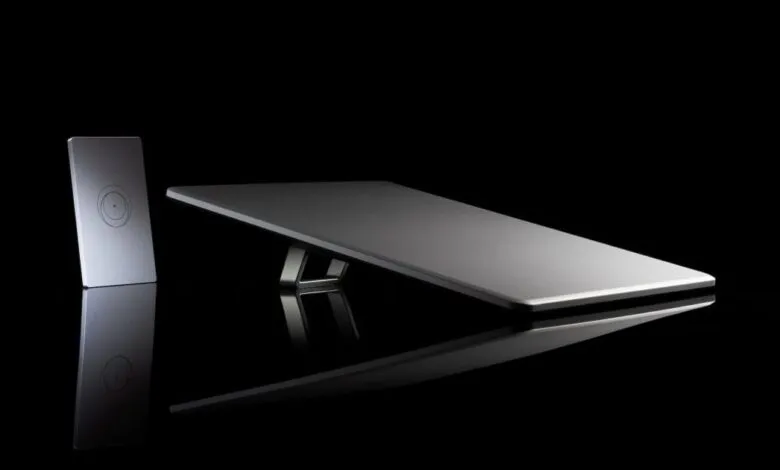
According to a Starlink support page, the V5 features a smaller form factor, a lighter design, and greater power efficiency compared to the V4. Surprisingly, the new dish offers a slightly lower maximum speed of 375+ Mbps, versus the V4’s 400+ Mbps. However, the trade-off comes in weight: the V5 drops from 6.5 pounds to just 2.4 pounds. Power consumption also sees a significant reduction, averaging 35 to 50 watts compared to the V4’s 75 to 100 watts.
The V5’s weight matches the portable Starlink Mini, which tips the scales at 2.4 pounds (or 2.5 with the kickstand). The V5 is only a few inches wider, measuring 12.05 by 15.12 inches, while the Mini comes in at 11.75 by 10.2 inches. However, the V5 is not designed for in-motion use. It also does not include a new router; instead, SpaceX bundles it with a Router Mini, which has a more limited Wi-Fi range. On the plus side, the dish comes with a pipe adapter for roof installation.
Starlink’s support page states that the V5 “is available now in the United States for Residential customers” in select areas, with broader availability expected as production ramps up. One Reddit user spotted the V5 being offered to new customers in Drummond, Montana. Notably, the new hardware is only available with the cheapest Residential plan (100Mbps, $55 per month), and subscribers pay a $10 monthly rental fee. Higher-tier plans like Residential 200Mbps and Residential Max still come with the V4 dish.
This suggests the V5 is not a direct successor to the V4, as initially assumed. Instead, SpaceX appears to be positioning the older V4 as the more powerful consumer option, with a higher max speed and in-motion capability. The V4 also includes a Router 3, which offers better Wi-Fi range than the Router Mini. The V5 may be easier and cheaper for SpaceX to manufacture as it scales globally. SpaceX executive Michael Nicolls tweeted that the V5 was “designed with high performance, reliability, and scalability in mind based on the learnings of our previous products.”
Tim Belfall, a director at UK-based Starlink installer Westend WiFi, first noticed the changes on Starlink.com and told PCMag the V5 is likely a “godsend” for installers due to its smaller size and reduced weight. “I don’t do ladders, but watching installers struggle with a V4 is bottom-clenching,” he said.
For existing users, the V5 offers little reason to upgrade, especially as SpaceX’s next major goal is delivering gigabit speeds through new satellites. Still, CEO Elon Musk has indicated that the new dish will help the company reach more customers. “These are the new Starlink terminals, which we made in much higher volume than the current terminals,” he said last month, while teasing the V5 alongside an upcoming Mini dish. “Ultimately, we think there’s probably going to be a few hundred million Starlink terminals out there.”
Starlink.com continues to update with more V5 information, including a spec sheet, accessory guide, and setup guide. Last year, SpaceX also introduced a $1,999 Performance dish that will eventually support gigabit connections.
(Source: PCMag.com)