World’s First Satellite-Connected Dog Collar Lets Lost Pets Call Home

▼ Summary
– Jonathan Bensamoun created the first satellite-connected dog wearable after his own dog escaped in an area with no cell coverage.
– Fi had been making GPS dog trackers since 2017 but customers complained about poor performance in areas lacking cellular networks.
– The device uses a GPS receiver and a modem that connects to T-Mobile’s network, switching to SpaceX’s Starlink satellites when no cell tower is available.
– Owners can set a virtual geo-fence; if the dog crosses it, the tracker sends an alert, and the owner can send vibrations or sounds to guide the dog home.
– GPS tracking for animals began in the 1990s for wildlife, but the technology only became small enough for commercial pet use in the early 2010s.
Picture this: you are deep in a remote mountain range, hiking with your energetic canine companion. He catches the scent of a deer, his primal hunter instincts take over, and he vanishes into the dense forest. His collar is equipped with a GPS tracker that sends coordinates via the cellular network. But there is a critical flaw: in that wilderness, there is no mobile coverage. You whistle, you call, but your dog is gone.
That exact nightmare scenario inspired technologist Jonathan Bensamoun to create what he calls the world’s first satellite-connected wearable device for dogs. Bensamoun is the founder and CEO of Fi, a company that has been manufacturing dog trackers since 2017. The original idea came to him after adopting a young German shepherd named Thor. He wanted to ensure his hired dog walker wasn’t cutting corners during walks. But even as Fi grew into a market leader, Bensamoun kept hearing the same complaint from customers: the device’s usefulness was limited by cellular coverage. That’s where SpaceX’s Starlink satellites entered the picture.
“The number one complaint from customers is either ‘I live in an area where the cellular network is not really good’ or ‘I get really worried about my dog when it’s away from the typical suburban area. I am worried when it escapes the yard and runs into the woods,'” Bensamoun told Space.com.
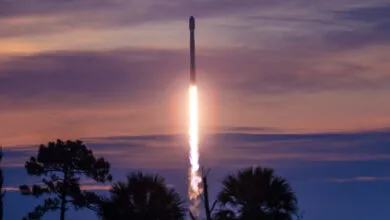
When Starlink began delivering connectivity directly to smartphones in 2024, Bensamoun saw the solution arriving. On July 8, the world’s first satellite dog tracking service went live. The device combines a GPS receiver that pinpoints the dog’s position in real time with a simple battery-powered modem that connects to T-Mobile’s cellular network, which partners with Starlink. When the dog’s location falls outside a pre-defined zone, the owner gets a message through a smartphone app. And when no cell tower is within range, the tracker links with an overflying Starlink satellite to complete the task.
Dog owners can also set a geo fence around their pet, defining an area where the dog is allowed to roam without triggering an alert. If the dog crosses that virtual boundary, such as escaping from the backyard, the tracker sends an immediate notification. The Fi Ultra GPS tracking collar runs on a battery that lasts “multiple days,” giving desperate pet owners plenty of time to locate their runaway. To speed up the search, Fi enables owners to send the dog signals, short bursts of vibrations or sounds, to encourage it to come home voluntarily.
“You can train your dog with those vibrations and reward it with food every time they receive the vibration,” said Bensamoun. “That way, they will start associating the vibration with their food being ready at home.”
GPS tracking has existed for decades. In the animal world, wild and endangered species were the first to wear these devices in the 1990s. But those early trackers were clunky and expensive, suitable for large mammals like moose and caribou but not for commercial pet use. The technology finally shrank to small enough dimensions in the early 2010s, when the first GPS dog trackers entered the market. Now, with satellite connectivity, the lost pet problem has a new, far-reaching solution.
(Source: Space.com)