Nuclear Startup Deep Fission Is Going Public Again – Questions Remain
▼ Summary
– Nuclear startup Deep Fission announced a Nasdaq IPO seeking $157 million at $24–$26 per share, after a prior reverse merger that made it a reporting company but never resulted in publicly traded stock.
– The company’s timeline for its first reactor has slipped; it no longer provides an estimate for achieving criticality, compared to a prior goal of July 2026.
– Deep Fission’s financial position has worsened, with a deficit growing to $88.1 million and cash declining by $6.4 million in six weeks, and it retains a “going concern” warning if the IPO fails.
– Technical challenges remain: the company is drilling a test well at 8 inches diameter, but commercial scale requires boreholes 30–50 inches wide and a mile deep, with no finalized reactor design.
– The IPO appears driven by investor excitement over nuclear fission, not clear technological or commercial progress, contrasting with revenue-generating peer X-energy, which is further along in regulatory licensing.
A sense of déjà vu rippled through the nuclear energy sector this week as startup Deep Fission announced plans to go public, aiming to attract investors for its vision of building subterranean reactors to power AI data centers.
Wait, haven’t we seen this before? Yes, we have. Last September, Deep Fission claimed it had gone public through a reverse merger with Surfside Acquisition, a Delaware shell company, raising $30 million in a private placement at $3 per share. Now, the company is seeking $157 million in a Nasdaq IPO at an expected price range of $24 to $26 per share. The confusion is understandable.
That earlier listing, however, was public in name only. The reverse merger was completed, making Deep Fission a reporting company with SEC obligations, but its stock never actually traded. The company had intended to list on the OTCQB, a marketplace for developing companies, but no listing ever materialized. In its S-1 filing, Deep Fission explicitly denied that its stock had ever been publicly traded. When asked by TechCrunch, the company declined to comment, citing the quiet period before its IPO.
The new Nasdaq offering follows a more traditional IPO route, valuing the company at up to $1.66 billion. That’s a hefty valuation for a firm that, just a year ago, struggled to close a $15 million funding round.
Stranger still, the S-1 filed on May 20 paints a bleaker picture than the one from December. The timeline for switching on its first reactor has slipped. Back in December, Deep Fission hoped to achieve criticality,the point where a nuclear chain reaction becomes self-sustaining,by July 2026. Now, it offers no estimate at all.
The company notes it is drilling a test well, but it has also lost significant money. One constant remains: the S-1 includes the same “going concern” warning from December. Without the IPO, Deep Fission could run out of cash within the next 12 months.
Financially, the situation has worsened. As of March, the company’s deficit grew to $88.1 million, up from $56.2 million. In the last six weeks, cash and equivalents dropped by $6.4 million, or about 7%.
On the technical side, Deep Fission now says it is prioritizing drilling,perhaps an admission that boring holes is harder than it sounds. The company began drilling its first test well in March, designed to collect data at depths up to 6,000 feet. At just eight inches in diameter, it’s far smaller than what commercial operations will require.
The leap from test well to commercial scale presents major challenges. Deep Fission says it will need boreholes 30 to 50 inches in diameter and a mile deep, though it hasn’t settled on a final size. Even at the low end, these boreholes will be larger than typical oil and gas industry wells. Until the company knows how large a hole it can drill, finalizing the reactor design remains difficult.
So what changed since December to justify a larger offering at a nine-figure valuation? Deep Fission did receive an $80 million equity investment, including $20 million from data center developer Blue Owl, which also signed a non-binding MOU for future power plants. Still, that wasn’t enough to remove the going concern warning. Perhaps the company is holding back positive news, but that seems unlikely given what’s at stake.
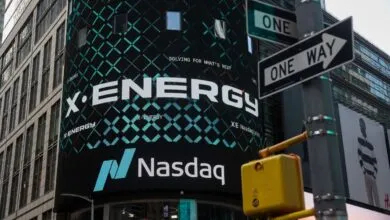
More likely, Deep Fission and its backers are trying to ride the wave of investor excitement around fission power. Last month, nuclear startup X-energy went public in an upsized IPO. But X-energy is generating revenue and is far ahead in the Nuclear Regulatory Commission’s licensing process. That contrast serves as a useful reminder: in a sector where enthusiasm often outruns technical and regulatory reality, valuation and progress are not the same thing.
It’s unclear exactly what is driving Deep Fission toward its IPO, but technological or commercial progress doesn’t appear to be among the reasons.
(Source: TechCrunch)