Convective Capital raises $85M for disaster resilience
▼ Summary
– Convective Capital announced an $85 million fund, following a $35 million fund, with institutional investors like insurance companies replacing wealthy individuals.
– The fund’s original “firetech” mission invested in AI cameras, autonomous aircraft, brush-clearing robots, and wildfire insurance.
– The new fund expands to a resilience thesis for “risk management in the physical world,” addressing $60 trillion in at-risk real estate.
– First investments from the new fund include timber mills, AI home design, drone power-line inspections, and commodity price insurance.
– AI tools boost portfolio productivity but also create market demand by stressing energy and water systems from data center construction.
Fire season arrived early this year in California, with flames already encroaching on a former nuclear test site near Los Angeles. The escalating frequency of wildfires and other natural disasters is not only capturing public attention but also drawing serious venture capital interest from Silicon Valley.
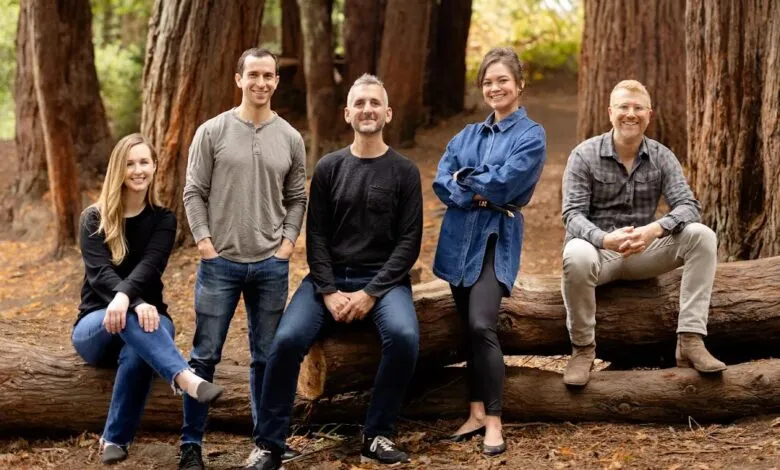
Convective Capital, an early-stage venture firm led by Bill Clerico, has just closed a $85 million fund, announced Thursday. This follows the firm’s initial $35 million fund raised in 2022. While the first round was primarily backed by high-net-worth individuals, including Clerico himself, a cofounder of WePay who sold the company to JPMorgan for $300 million in 2017, the new fund is anchored by institutional investors such as insurance companies and asset managers.
Convective originally pioneered the concept of “firetech,” investing in companies like Pano, which uses AI-powered cameras for early fire detection; Raine, which builds autonomous aircraft to drop water on blazes; Burnbot, a robotics startup that clears brush and grasses; and Stand, an insurer helping homeowners fireproof their properties. With this latest capital, the firm is broadening its focus beyond wildfires to a more comprehensive resilience thesis: delivering physical-world risk management.
“There’s $60 trillion of real estate at high risk from disasters, the U. S. spends a trillion dollars a year mitigating and recovering from disasters, we need a new approach to this,” Clerico told TechCrunch. “The silver lining is that it’s gotten so bad that the private markets can now take over , utilities going bankrupt, insurers leaving big markets, these are very large economic events, and those create markets for new solutions and products.”
The first four investments from the new fund include The Lumber Manufactory, a company building timber mills to make forest management more economical; Drafted, which uses AI for home design; Voltaire, a Y Combinator-backed drone startup for inspecting power lines; and Edge Technologies, which offers insurance products to hedge against volatile commodity prices.
Convective’s first fund has already generated $100 million in revenue across its portfolio, with an aggregate valuation of $2 billion. Clerico noted that 79% of the first fund’s companies have progressed from seed to Series A, a rate well above industry benchmarks.
Still, this is an emerging sector, and a significant part of Convective’s work involves helping founders navigate relationships with challenging customers like utilities, insurers, and government agencies. A central question in the field is how to persuade insurers to invest directly in technologies that reduce disaster impact. Clerico says that shift is underway, partly thanks to Convective-backed insurance startups such as Stand and Delos.
“There’s like a wave of new insurers that are stepping into the void left by the incumbents,” Clerico said. “That’s a really amazing opportunity for us as investors, but also it’s provoking a response now from the incumbents, and they need to change the way that they’re doing business.”
Clerico added that AI tools are boosting productivity for his early-stage teams, while also enabling new methods of fire detection through sensor data and behavior modeling. At the same time, the industry’s rapid expansion of data centers is creating demand for exactly the services his companies provide.
“[AI] is putting a lot of demand on the energy system and water system through data center construction,” he said. “It’s not just something in our portfolio, but it’s actually creating market opportunity for our portfolio by adding additional stress to our physical systems.”
(Source: TechCrunch)