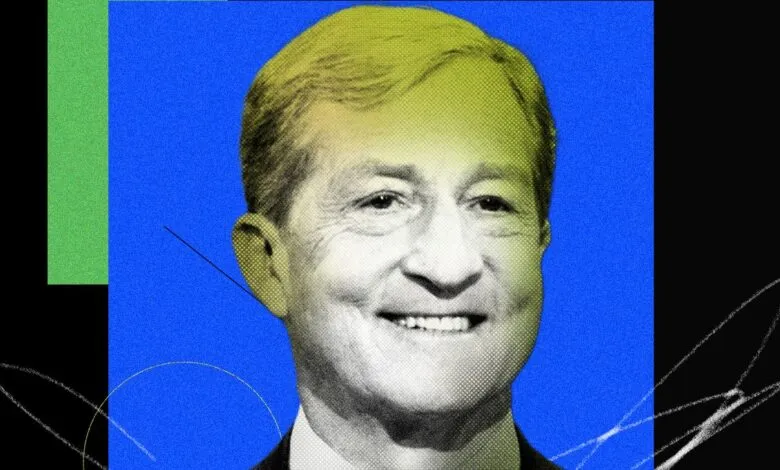
Tom Steyer Wants to Save California from Billionaires – Without Driving Them Away
▼ Summary
– Tom Steyer, a billionaire and former hedge fund founder, is running for California governor as a Democrat, spending over $130 million of his own money.
– He supports the Billionaire Tax Act and campaigns on affordability, climate policy, and immunity to corporate influence, positioning himself as a “class traitor.”
– Steyer’s stance on issues like AI and taxation is cautious and evasive, avoiding firm positions to not alienate voters.
– The article questions whether he can reconcile taxing billionaires while keeping them in California, and regulating AI without stifling it.
– Steyer’s transformation from hedge fund manager to climate activist is rooted in his early love for wild places and outdoor work.
For voters worried about the outsized role of Big Tech and billionaire influence in California’s future, Tom Steyer appears to be a natural fit. After building a fortune through Farallon Capital Management, one of the largest hedge funds globally, Steyer walked away in 2012 to focus on philanthropy, political activism, and climate advocacy. Now, he’s competing in a crowded field of Democratic and Republican candidates aiming to survive a June primary and win the California governorship this November.
In the lead-up to the midterms, I’ve been speaking with candidates who intersect with WIRED’s core coverage. A few weeks ago, I interviewed Alex Bores, a New York congressional candidate whose time at Palantir and stance on AI regulation drew opposition from Silicon Valley-backed super PACs. Steyer felt like a logical next conversation. He’s running to govern a state where AI policy, immigration enforcement, and climate change are headline issues. His campaign posture is especially unusual. He has been called a “class traitor” for openly distancing himself from fellow elites. He supports California’s controversial Billionaire Tax Act, which has prompted figures like Sergey Brin and Peter Thiel to threaten leaving the state. And he has campaigned heavily on affordability, climate action, and the claim that he is immune to corporate influence. Given that he has spent over $130 million of his own money on the race, that claim seems plausible.
For some Democratic voters, Steyer checks a lot of boxes. Then he starts talking.
Like most politicians, Steyer is skilled at walking a fine line. But the line itself presents the problem. Whoever wins the governorship this November will have to navigate an exceptionally narrow path: taxing billionaires without driving them away, regulating AI development without stifling it, and managing the state’s tech titans without alienating them.
During our conversation, I sensed Steyer’s hesitation to commit too firmly or dig too deeply on specific issues, perhaps to avoid losing any potential voting bloc. That left me wondering: Can Tom Steyer be a governor who both champions billionaires and taxes them heavily? Can he celebrate the “mind-blowingly amazing” advances in AI while reining in the industry? And can he learn my name before interviewing me?
The third question gets answered in the interview. The first two will be serious tests for anyone elected to lead California. After our conversation, I wasn’t convinced that Steyer’s approach is entirely coherent. At the very least, a California governor should be able to use Google.
This interview has been edited for length and clarity.
KATIE DRUMMOND: Welcome, Tom. Thanks for joining us on The Big Interview.
TOM STEYER: Kate, thank you for having me.
So, you’re a billionaire. You made your money in hedge funds. But over the last decade or so, you’ve become a climate activist. Tell us about that shift.
When I was growing up, whenever I had free time from school or work, I tried to get to wild places and take outdoor jobs. I worked as a ranch hand. I picked fruit. Before business school, I spent a summer in Alaska. I went because I wanted to see what North America looked like before Europeans arrived.
I wanted to see the animals, the birds, the fish. I wanted to look at Denali. I wanted to see the vast, untracked, rich, and fertile land that North America once was.
(Source: Wired)