Can Linux Add a Kill Switch After Its CVE Spree?

▼ Summary
– The Linux kernel has multiple severe bugs, Copy Fail and Dirty Frag, enabling privilege escalation and putting thousands of systems at risk.
– NVIDIA engineer Sasha Levin proposed a “kill switch” that intercepts calls to affected functions and returns a predefined value, allowing systems to keep running until a patched kernel is available.
– The kill switch modifies the kernel in-memory, requiring a reboot to clear the patch.
– The proposal was roundly rejected on the Cybersecurity sub-Reddit due to concerns it opens a potentially massive attack vector.
– The patch was partially generated by the LLM Claude Opus 4.7, raising concerns it needs thorough human vetting before being merged into mainline.
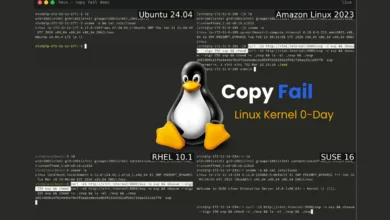
For those who may have missed the headlines while distracted by other matters, the Linux kernel has recently been battered by a series of serious vulnerabilities, most notably Copy Fail and Dirty Frag. Both bugs enable privilege escalation, a threat that has left administrators across the globe on edge. The danger is real: thousands of systems are potentially exposed to exploitation. The frustration deepens because system managers often find themselves stuck waiting helplessly for official patches to arrive. Into this tense environment steps NVIDIA engineer [Sasha Levin] with a provocative proposal: a kill switch for compromised kernel functions.
The idea is straightforward in design. Instead of triggering a full-scale kernel panic or a system-wide shutdown, this feature would intercept calls to the affected function and return a predefined value. Think of it as a surgical block rather than a nuclear option. In theory, this approach allows affected systems to keep operating until the proper patched kernel is ready for deployment.
However, the proposal is not without its drawbacks. One clear limitation is that this is an in-memory kernel modification, meaning a full system reboot is required to clear the change. More troubling is the potential for introducing a massive new attack surface. The cybersecurity community on Reddit has been vocal in its rejection of the idea, raising alarms about unintended consequences. Adding another layer of concern, the patch in question was at least partially generated by an LLM, specifically Claude Opus 4.7. If this code ever makes it into the mainline kernel, one can only hope that multiple pairs of well-caffeinated human eyes will have thoroughly vetted it before deployment.
(Source: Hackaday)