Build a Martech Stack That Simplifies Brand Management
▼ Summary
– Most B2B organizations use 12–20 martech tools, yet fewer than 10% maintain strong brand cohesiveness across all channels.
– A successful brand management stack starts with a documented strategy, using tools like Notion or Miro to define positioning and messaging.
– Digital asset management (DAM) is the core tool that centrally organizes and governs brand assets, preventing brand drift at scale.
– Execution tools for design and publishing should integrate with the DAM to ensure only approved, current content is used across channels.
– Governance layers—including approval workflows and brand monitoring—are essential to enforce standards and turn tools into a protective system.
Most marketing departments are drowning in software. The typical B2B organization juggles between 12 and 20 different martech tools, yet fewer than 10% of brands manage to maintain consistent messaging across all their products and channels. The core problem isn’t a lack of technology; it’s that these disparate platforms rarely work together toward a single, unified goal: delivering a cohesive brand experience at every touchpoint.
Anyone who has managed a brand across campaigns, sales enablement, partner content, or social media knows how easily brand elements can slip. A logo that’s slightly off-color here, outdated messaging lingering on a partner’s landing page there. Individually, these seem like minor errors. But collectively, they steadily erode the brand equity your organization has worked so hard to build.
The fix isn’t piling on more tools. It’s about selecting and aligning the right tools with clear intent.
Start with strategy, then build your stack
Before auditing your current software or shopping for new solutions, take a step back and define what brand equity truly means for your organization. David Aaker’s brand equity model,built around loyalty, awareness, perceived quality, brand associations, and proprietary assets,offers a powerful framework. It shifts brand management from a tactical checklist into a long-term driver of sustainable growth. For your martech stack, this means you need tools that both build your brand and protect it.
On the strategic side,the “building” part,platforms like Notion, Miro, and Lucidchart help teams document positioning, define messaging hierarchies, and map customer journeys. These aren’t flashy tools, but they create the shared foundation that makes everything downstream possible. Without a documented strategy, your design and content teams are essentially flying blind.
The core of the stack: Digital asset management
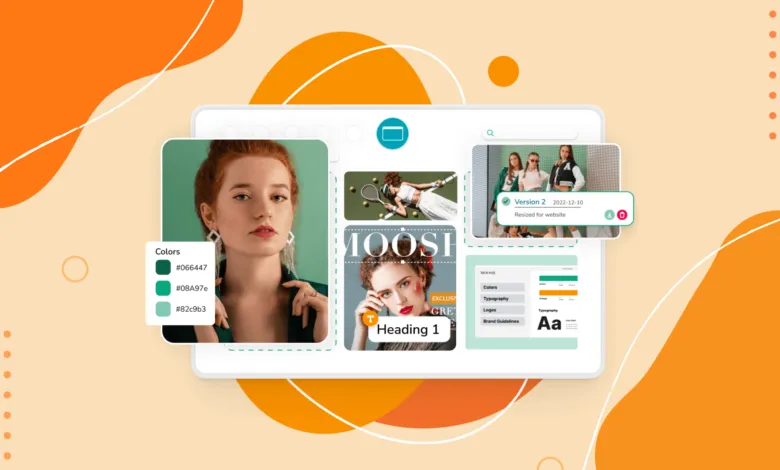
If one tool separates a functional brand management stack from a messy collection of disconnected apps, it’s digital asset management (DAM). Many teams mistake cloud storage platforms like Google Drive or Dropbox for a DAM, but their capabilities are vastly different. A proper DAM centrally organizes, manages, delivers, and governs brand assets throughout their lifecycle. It includes approval workflows, permission controls, version management, design templating, and easy-to-share brand guidelines,features that simple cloud storage simply cannot offer.
Research shows that consistent branding can increase revenue by 10–20%. DAM provides the operational backbone to make that consistency possible at scale. When every team member, agency partner, franchisee, and distributor pulls from the same approved, current asset library, brand drift stops being an inevitable byproduct of growth.
Recent innovations have made DAM even more powerful. Many platforms now use AI to accelerate content discovery, automate metadata tagging, and enable natural language search across large libraries. This reduces the creative bottleneck that often slows go-to-market timelines.
Beyond DAM, you need tools that turn brand strategy into published content without introducing inconsistency. For visual design, the right choice depends on your team’s makeup: Adobe Creative Cloud for professional creatives, Figma for collaborative UI work, and Canva for non-designers who need guardrails and simplicity rather than full design flexibility.
A key balance to strike is giving your team the freedom to create content as needed while still enforcing brand guidelines. Many of these design tools offer brand templating features at premium levels. Alternatively, for greater brand control and the ability to capture usage analytics, consider using brand templates directly within your DAM.
For social and content distribution, platforms like Hootsuite, Sprout Social, and HubSpot enable coordinated publishing across channels. This is critical for organizations that need to maintain brand presence across multiple social media platforms, email, and owned content simultaneously. The essential rule: ensure these tools pull from your DAM rather than from individual desktops. This guarantees that only on-brand, approved, and current content gets syndicated to every channel.
Content and SEO tools like SEMrush and Ahrefs round out the execution layer by ensuring your brand’s voice builds authority in search. With the rise of generative engine optimization (GEO) alongside traditional SEO, it’s more important than ever to ensure that AI summaries pull correct information about your brand,often the first touchpoint a customer has.
Governance closes the loop
A brand management stack without solid governance is just a collection of creative and publishing tools. The final layer,including approval workflows, digital rights management, brand monitoring, and reporting,transforms your stack into a flexible yet protective system.
Workflow and approval tools can exist ad-hoc, but they’re often more effective when embedded in your existing project management platform or DAM. This keeps proofing cycles fast and accountable. Brand monitoring tools like Mention track how your brand is perceived externally, offering additional data points to spot potential drift before it compounds and spreads.
The takeaway
The goal of an optimized brand management martech stack isn’t to add complexity or more tools for their own sake. It’s to create the conditions where any team member or external partner can find and produce on-brand content quickly, confidently, and without needing to email the design team for approval.
That outcome requires strategy, documentation, a DAM platform as the central source of truth, execution tools that integrate with the DAM, and governance mechanisms that enforce standards at scale. Get those four layers working together, and your brand stops being something you manage reactively. It becomes something that builds long-term value for your organization.
(Source: MarTech)