Host a Mini Data Center at Home: The Latest AI Pitch
▼ Summary
– SPAN’s “distributed data center solution” places liquid-cooled Nvidia GPUs in homes, offering subsidized electricity, Internet, and backup batteries to homeowners.
– The startup plans a 100-home pilot test this year, aiming to quickly expand AI compute by using excess household power capacity instead of building warehouse-sized data centers.
– SPAN claims its units are quiet and discreet, and lower local electricity bills, unlike traditional data centers that are loud, ugly, and drive up costs.
– The approach avoids land use, water consumption, and community opposition issues, and SPAN says installing 8,000 units costs five times less than a comparable 100-megawatt data center.
– Starting in 2027, SPAN plans to scale to 80,000 nodes nationwide for cloud gaming, content streaming, and AI inference, not for training large AI models.
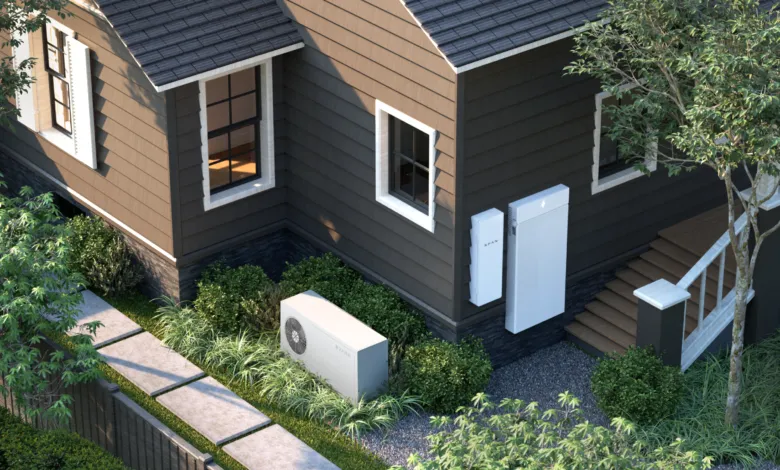
A San Francisco startup is pitching a novel solution to the nation’s data center shortage: bring the servers directly into residential neighborhoods. The plan would embed liquid-cooled computing nodes into new homes, offering homeowners subsidized electricity, internet access, and backup batteries in exchange for hosting the equipment.
SPAN, the company behind the initiative, has already launched pilot testing and is preparing for a 100-home trial later this year. Their “distributed data center solution” relies on XFRA nodes equipped with Nvidia RTX Pro 6000 Blackwell Server Edition GPUs. According to the company’s press release, these units operate with liquid cooling and produce minimal noise, making them suitable for residential settings.
The core idea is to tap into the excess power capacity already available in American households. This approach allows SPAN to rapidly scale compute resources for AI workloads without the massive costs, long timelines, and regulatory hurdles tied to building traditional warehouse-sized data centers.
“Data centers are loud, ugly, and often drive up local electricity bills,” Chris Lander, vice president of XFRA at SPAN, told Ars. He contrasted this with the home-based model, calling it “quiet, discreet, and makes energy more affordable for the host and community.”
By sidestepping the land use and water consumption issues that plague large-scale data center projects, SPAN’s method could also help avoid the growing community backlash against such developments. In a CNBC interview, the company claimed that installing 8,000 XFRA units would cost five times less than building a conventional 100-megawatt data center with equivalent compute power.
SPAN’s roadmap calls for scaling to 80,000 XFRA nodes across the United States starting in 2027, delivering more than 1 gigawatt of distributed compute. This network is not intended to replace the massive centralized facilities that hyperscalers like Google and Microsoft use for training AI models. Instead, it is designed to support cloud gaming, content streaming, and AI inference,the process of applying trained models to real-world tasks.
(Source: Ars Technica)