Lego Batman PC Specs Sheet Shows How Not to Market a Game
▼ Summary
– The game’s minimum spec requires frame generation to achieve 1080p at 30fps, resulting in a base frame rate of approximately 15fps, which is nearly unplayable.
– The 1080p target is achieved using FSR balanced upscaling, reducing raw pixel output to just over 19 million pixels per second, far below the standard 124 million for 1080p 60fps.
– Frame generation on a 15fps base adds significant latency, making controls feel dull even for slow-paced games like Lego titles.
– The recommended and 4K specs also rely on frame generation, targeting 60fps with a base frame rate around 30fps, still below the 45-60fps ideal for this technology.
– The spec sheet may be overly conservative or indicate the game is surprisingly demanding; listing native 30fps as a minimum would be more appropriate than relying on frame generation with low base rates.
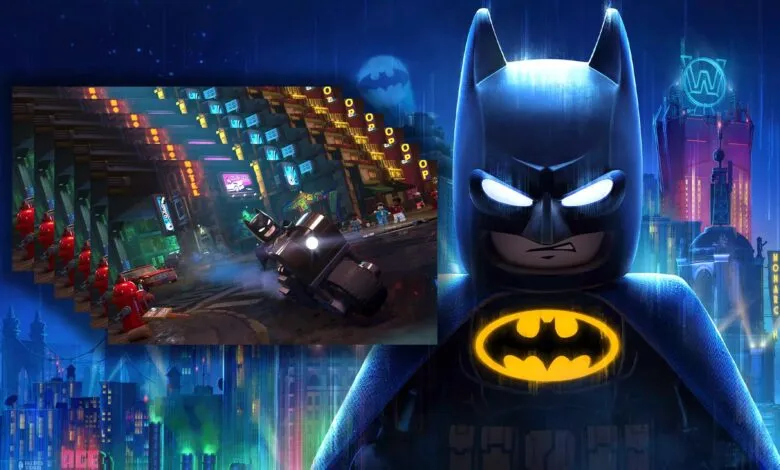
The release of PC system requirements for Lego Batman: Legacy of the Dark Knight has sparked unexpected debate, but not for the usual reasons. Instead of praising the game’s accessibility, Digital Foundry staffers and PC enthusiasts have been left scratching their heads over a spec sheet that seems to defy conventional logic. The listed minimum specifications target a 1080p resolution at 30 frames per second, but only with frame-generation technology enabled. This means the actual base frame-rate before interpolation would hover around a sluggish 15fps, a figure often considered unplayable in most gaming contexts.
The situation worsens when you consider the resolution details. That 1080p target is achieved through FSR Balanced upscaling, which reduces the raw pixel count to a bizarre 1506×847. At 15fps, that translates to just over 19 million pixels per second. For context, a standard 1080p display running at 60fps processes 124 million pixels per second. It is highly unusual to see such a low native pixel output for a game on low settings, even on modest hardware like the Ryzen 5 1600 and Radeon RX 6400 listed in the minimum spec.
The core problem lies in the use of frame generation. This technique adds input latency on top of an already laggy experience caused by that 15fps baseline. While Lego Batman is not a fast-paced shooter, even in a slower game, frame-gen on a 15fps base will likely result in noticeably sluggish controls. The same approach applies to the recommended and 4K tiers, which promise 60fps with frame-gen enabled, implying a base frame-rate of around 30fps. That is more acceptable, but both Nvidia and AMD have suggested a 45-60fps base frame-rate as a reasonable starting point for their frame generation tech.
Either the spec sheet writers have been overly cautious, or Lego Batman will be a surprisingly demanding Unreal Engine 5 title. A simpler solution would have been to recommend more modern hardware capable of hitting playable frame-rates without relying on frame generation, rather than including older CPUs and GPUs to suggest broad compatibility. Listing a native 30fps presentation as the bare minimum would have been far more sensible. Even mainstream hardware should be able to scale down settings enough for a near-60fps readout, especially with upscaling technologies like FSR, XeSS, or DLSS available.
It is fine to note that frame generation can help push 120 or 240fps for high refresh rate monitors. However, 60fps without frame-gen should be the default expectation for minimum and recommended specs. The game launches on May 22nd, and hopefully we will soon see how it actually performs on low-end systems.
(Source: Digitalfoundry.net)