Virgin Galactic unveils new ship amid cash and time crunch
▼ Summary
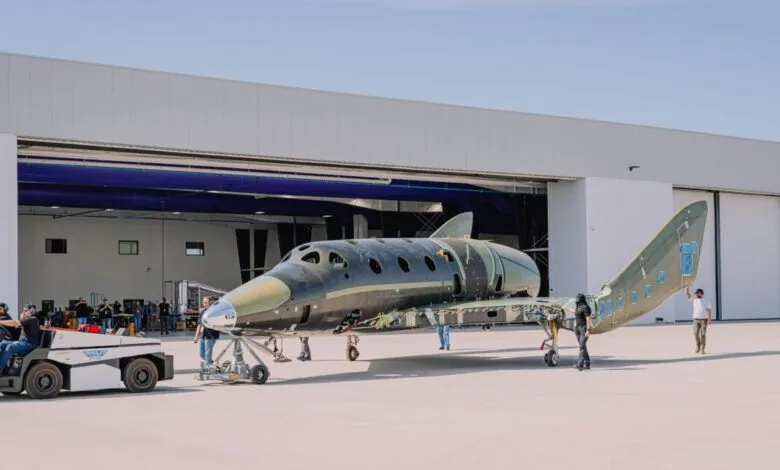
– Virgin Galactic shared a photo of its next-generation spaceship being towed outside its factory in Mesa, Arizona.
– Founded by Richard Branson 22 years ago, the company reached space in December 2018 and began flying passengers in May 2021.
– Virgin Galactic stopped flying its VSS Unity spacecraft in June 2024 to focus on developing a new vehicle for more frequent, lower-cost flights.
– The company has been quiet since June 2024, making this week’s hardware reveal notable, though the suborbital tourism industry’s future remains uncertain.
– Spaceflight remains expensive and dangerous, but both Virgin Galactic and competitor Blue Origin have seen robust demand since starting commercial flights in 2021.
On Thursday, Virgin Galactic, the publicly traded spaceflight company, posted a fresh image on social media showing its next-generation spaceship being towed outside its factory in Mesa, Arizona. It’s a reminder that the venture, founded 22 years ago by Sir Richard Branson with the goal of democratizing space travel, is still moving forward.
You may recall the early buzz: hundreds of people purchased tickets nearly two decades ago, eager for a ride to the edge of space. After a long and, at times, tragic development phase, the company finally crossed the threshold of outer space in December 2018, reaching an altitude of 80 kilometers or more, a definition that has stirred some debate. Commercial flights with the VSS Unity spacecraft began in May 2021, and the company notched an impressive six successful spaceflights in 2023. But in June 2024, Virgin Galactic grounded VSS Unity to concentrate on building a new vehicle designed for more frequent and lower-cost spaceflights.
Since that pivot, the company has remained largely out of the spotlight. That makes this week’s reveal of new hardware a significant development. Virgin Galactic is still pressing ahead, but the bigger question is where the company, and the broader suborbital space tourism industry, is headed.
Profitability remains elusive in the spaceflight business, even for companies tackling relatively straightforward suborbital missions. The industry appeared close to a breakthrough about five years ago. In the summer of 2021, Virgin Galactic and its U. S.-based rival, Blue Origin, both launched commercial flights. Within weeks of each other, Branson and Blue Origin founder Jeff Bezos each made their own trips to space. Demand for tickets has been strong from both companies, but converting that interest into a sustainable, profitable operation has proven to be a steep challenge.
(Source: Ars Technica)