Musk vs. Altman Begins, DOJ Cuts Voting Rights, AI Job Fears Overhyped?

▼ Summary
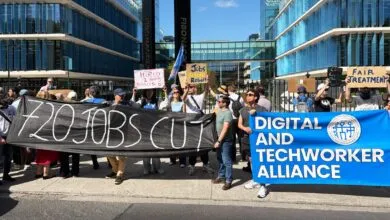
– Meta plans to cut 10% of its workforce (about 8,000 employees) and close 6,000 open roles, while Microsoft offered voluntary buyouts to nearly 9,000 employees on the same day.
– Over 700 contractors in Ireland, employed by Covalen to train Meta’s AI models by checking for dangerous or illegal content, are being laid off as their work makes the job obsolete.
– A Stanford study found AI is taking jobs from younger workers, as AI agents can handle tasks previously done by junior employees, reducing the need for them.
– Many software companies are “bloated in the AI era,” and a single engineer using AI can do more work, potentially requiring fewer engineers overall.
– AI rollout at many companies has not yet created expected efficiencies, but restructuring for AI is seen as sensible, with Amazon also taking similar steps.
Set aside the legal arguments for a moment because, honestly, who can predict the outcome? The jury includes a psychiatrist, a painter, and a former Lockheed Martin employee. That’s the unpredictable beauty of the American justice system. No one knows exactly what this group will decide or why. We’ll find out soon enough. Meanwhile, another major story has been simmering in the AI industry for months, but it just hit a critical inflection point. Meta recently announced layoffs that many attribute to AI automation. The company plans to cut 10 percent of its workforce, roughly 8,000 employees, and close another 6,000 open roles. On the same day, Microsoft said it would offer voluntary buyouts to nearly 9,000 employees, the first time it has made such an offer. Meta’s internal memo didn’t explicitly blame AI, but the company has nearly doubled its spending on the technology, pouring massive sums into data centers, capital expenditures, and infrastructure. It’s not just white-collar workers feeling the heat. WIRED’s Joel Khalili spoke with a group of contractors in Ireland, more than 700 workers employed by Dublin-based firm Covalen. Their job? Training Meta’s AI models and checking generated content against rules that bar dangerous and illegal material. It’s grueling work, both for its content and for the uncomfortable realization that they are effectively training the AI to replace them. It’s a role designed to become obsolete as soon as it’s done well enough.
Leah Feiger: This is the perfect moment for our quarterly check-in: Is AI really taking jobs? Zoë, I’m always eager for your perspective here, not just on Meta and Microsoft, but on the broader trends.
Zoë Schiffer: It’s fascinating. A Stanford study from months ago suggested that AI is indeed displacing younger workers. That makes sense because you still need people to manage AI agents, but if those agents can handle tasks that junior employees used to do, you need fewer of them. At the same time, many companies are rolling out AI without creating the efficiencies they expected, at least not yet. But after talking to many people in Silicon Valley, including those affected by layoffs and managers embracing AI-forward structures, I believe something controversial: many software companies are simply bloated in the AI era. If you do AI correctly, a single engineer can accomplish far more than before. So you might need fewer engineers, unless you choose to expand products or projects. That’s an option too. I think we’ll see many companies follow Meta’s lead. Amazon has already taken similar steps, partly to please investors. I know this is an unpopular opinion, but I genuinely believe restructuring makes sense. If you can vibe code a Shopify clone over a weekend with just two really good engineers, why does Shopify need hundreds?
I don’t want those people to lose their jobs, but frankly, I believe that’s the direction we’re heading.
(Source: Wired)