Apple CEO Tim Cook’s Successor May Be a Product-Focused Leader
▼ Summary
– John Ternus, Apple’s SVP of hardware engineering, will become the company’s next CEO, succeeding Tim Cook.
– His public role has included announcing major products like the iPhone Air and the transition to Apple Silicon Macs.
– Ternus has a 25-year tenure at Apple, where he is known for a collaborative leadership style and rising through the hardware engineering ranks.
– He has overseen significant product developments, including the AirPods and Vision Pro, but also contributed to criticized features like the Touch Bar.
– Ternus has also driven innovations in sustainable materials and product repairability to reduce Apple’s environmental impact.
A significant leadership transition is underway at Apple, marking a shift from operational mastery back to a core focus on product innovation. The incoming chief executive, John Ternus, brings a deep engineering pedigree that contrasts with his predecessor’s celebrated supply chain expertise. Having spent 25 years at the company, Ternus is not a newcomer to the spotlight, having frequently served as the public face for major hardware announcements in recent years.
His visibility increased notably last September when he introduced the iPhone Air, the standout model in the 2025 lineup. For years, he has been the executive presenting new Macs, a role that began with the historic introduction of the first Apple Silicon Macs in 2020. That launch fundamentally reshaped the company’s computer business, a transformation Ternus helped steward through subsequent releases like the 15-inch MacBook Air in 2023 and last year’s suite of M4-powered Macs. Now, at 50 years old, his purview expands from hardware engineering to overseeing the entire corporation.
Ternus’s career bridges the distinct eras of both Steve Jobs and Tim Cook. He arrived in 2001, joining the product design team after working as a mechanical engineer elsewhere. His rapid ascent was evident early on; a former manager noted Ternus became a team leader just a few years after being hired. Colleagues describe a grounded leadership style, recalling that he declined a private office upon promotion to remain seated with his engineering team. His rise through the ranks was steady, reaching Vice President of Hardware Engineering in 2013 and ascending to Senior Vice President in 2021, which placed him on the executive leadership team.
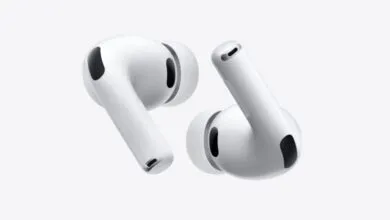
The product landscape has evolved dramatically under his technical guidance. He oversaw the development of the original AirPods, which debuted in 2016. More recently, his tenure as SVP has seen a wave of foundational changes: the iPhone’s shift to USB-C, a complete redesign of the MacBook Air, a major thinning of the iPad Pro, and the launch of the Vision Pro headset. The company is widely expected to unveil its first foldable iPhone later this year, continuing this pattern of ambitious hardware evolution.
This record is not without its noted missteps. A recent profile highlighted his central role in two controversial projects: the MacBook Pro Touch Bar and the problematic butterfly keyboard mechanism. Both were ambitious attempts at reimagining user input that ultimately faced significant criticism.
Beyond flagship devices, Ternus has driven quieter, yet critical, initiatives in sustainability and product longevity. Apple credits him with pioneering the use of advanced materials, such as 3D-printed titanium in the Apple Watch Ultra, and engineering innovations that have enhanced device repairability. These efforts are central to the company’s environmental goals of reducing its carbon footprint and extending product lifecycles.
He assumes the CEO role at a pivotal moment, tasked with steering a tech giant renowned for its market-defining hardware. The roadmap ahead is reportedly filled with projects poised to disrupt categories, including new smart home hardware, a long-anticipated Siri overhaul, touchscreen OLED MacBook Pros, and even smart glasses. The responsibility for this future, and for upholding a formidable legacy, now rests with a leader whose entire career has been defined by building the products themselves.
(Source: The Verge)