Nvidia CEO warns of US risk from Huawei chip AI
▼ Summary
– Nvidia CEO Jensen Huang warned that DeepSeek optimizing its AI models for Huawei’s chips instead of American hardware would be a “horrible outcome” for U.S. technological dominance.
– DeepSeek is preparing to launch its V4 foundation model on Huawei’s Ascend processor, requiring a major software migration from Nvidia’s CUDA to Huawei’s CANN framework.
– This shift breaks a key dependency, as Chinese labs had remained tied to the Nvidia ecosystem via CUDA software even when using alternative hardware.
– While Huawei’s chips currently lag behind Nvidia’s in raw performance, Huang fears China’s energy, researchers, and software optimization could compensate, creating a viable alternative AI development path.
– The situation highlights a policy tension, where U.S. export controls aimed at limiting China are instead accelerating the development of a domestic Chinese AI hardware and software stack.
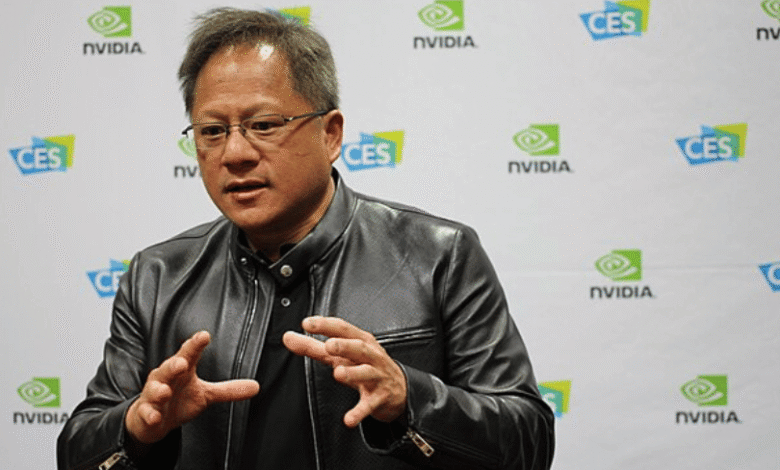
The CEO of Nvidia has issued a stark public warning about a strategic shift in artificial intelligence development that could undermine a core pillar of American technological leadership. Speaking on a recent podcast, Jensen Huang framed the potential for China’s leading AI lab, DeepSeek, to fully optimize its models for Huawei’s domestic chips as a severe risk to U.S. interests. His comments highlight how a move away from the American software-hardware ecosystem, specifically Nvidia’s CUDA platform, represents a fundamental challenge beyond mere chip performance.
Huang stated that if advanced AI models become optimized for a different technological stack, and as AI proliferates globally using those Chinese standards, it could enable China to surpass the United States in the field. This perspective carries significant weight given Nvidia’s position as the primary beneficiary of the current global paradigm, where its GPUs and CUDA software are virtually synonymous with cutting-edge AI training. The immediate catalyst for this concern is DeepSeek’s impending launch of its V4 foundation model, which multiple reports indicate is designed to run on Huawei’s latest Ascend 950PR processor.
The true significance lies not in the hardware itself but in the accompanying software migration. DeepSeek has reportedly spent months rewriting its core code to work with Huawei’s CANN framework, deliberately stepping outside the CUDA ecosystem Nvidia cultivated over two decades. This software layer has acted as a powerful secondary mechanism of control; even when using alternative processors, developers remained tethered to Nvidia’s tools. By embracing CANN, DeepSeek is breaking that dependency, creating a potential parallel AI ecosystem that operates entirely independently of American technology.
Analyses of raw computing power still show a substantial gap. Huawei’s previous-generation chips delivered only about 60% of the inference performance of Nvidia’s H100, with the overall performance disparity estimated to widen significantly by 2027. However, Huang himself argued on the podcast that hardware performance is just one factor. He noted China’s “abundant energy” and “large pool of AI researchers” could compensate, allowing progress even with inferior silicon. A successful demonstration by V4 would validate an alternative, fully Chinese AI development pathway.
This dynamic reveals a paradox in current U. S. policy. Export controls intended to limit China’s capabilities are inadvertently accelerating the development of domestic alternatives. Nvidia has attempted to serve the Chinese market with compliant chips like the H200, but China has reportedly blocked those imports to protect its homegrown chip industry. Meanwhile, the journey has not been seamless for Chinese firms. DeepSeek’s earlier R2 model faced repeated delays and training failures on Huawei hardware, forcing a retreat to Nvidia GPUs for the training phase, though Huawei chips were still used for inference. This distinction is critical, as training is the most compute-intensive stage, while inference is where most commercial value is realized.
The broader stakes for Nvidia are immense. The company’s market valuation exceeds $3 trillion, fueled by data center revenue that surged 93% year-over-year last quarter. Its dominance rests on the virtuous cycle of CUDA’s entrenched developer environment. If a lab like DeepSeek proves that competitive models can be built outside this ecosystem, it weakens the rationale for global reliance on Nvidia and challenges the geopolitical assumptions guiding recent AI policy. U. S. lawmakers are already responding, with calls to place DeepSeek and other Chinese AI firms on an export control entity list.
Huang’s public warning suggests this risk is now seen as concrete, not theoretical. DeepSeek’s V4 launch serves as a pivotal test. If this multimodal foundation model performs competitively on Huawei silicon, it would represent a major step toward fragmenting the global AI stack. The outcome could determine whether the CUDA moat protecting Nvidia’s supremacy begins to erode, reshaping the entire landscape of the strategic AI chip competition.
(Source: The Next Web)