Topic: export controls
-

Ukrainians Sue US Chipmakers for Aiding Russian War Machine
Ukrainian civilians are suing U.S. semiconductor firms Texas Instruments, AMD, and Intel in Texas courts, alleging the companies negligently allowed their chips to circumvent export controls and power Russian and Iranian weapons used in deadly attacks. The lawsuits claim these corporations priori...
Read More » -
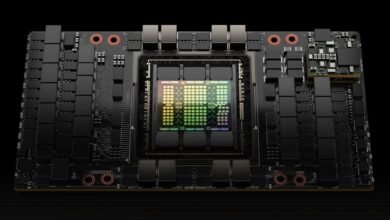
U.S. Senators Push Bill to Curb AI Chip Exports to China
The SAFE Chips Act of 2025 proposes to codify existing U.S. export restrictions on advanced AI chips for 30 months, preventing companies like Nvidia and AMD from selling their most powerful processors to China and other designated nations. The legislation defines restricted chips by mirroring cur...
Read More » -

Nvidia's AI Chip Push in China Gains Traction
Chinese authorities have conditionally approved major tech firms like ByteDance, Alibaba, and Tencent to purchase hundreds of thousands of Nvidia's advanced H200 AI chips, marking a significant shift from previous stringent U.S. export controls. U.S. policy has shifted toward regulated commercial...
Read More » -

Nvidia Accused of Antitrust Violations by China
China's antitrust regulator ruled that Nvidia violated laws in its 2020 acquisition of Mellanox, adding complexity to U.S.-China trade tensions. Nvidia asserts compliance with laws and is cooperating with authorities, while the open investigation could affect broader economic relations. U.S. expo...
Read More » -
US to Levy 25% Tariff on AMD, NVIDIA AI Chip Exports to China
The U.S. has imposed a 25% tariff on specific advanced AI chips, like Nvidia's H200, exported to China, formalizing a revenue-sharing deal where the government receives a quarter of the sales value. The policy is framed as a transactional trade strategy to profit from adjusted export controls, wi...
Read More » -

Nvidia Demands Upfront Payment for H200 AI Chips in China
Nvidia now requires Chinese customers to pay the full cost upfront for its H200 AI chips, with no refunds or cancellations, marking a stricter sales policy. The policy is a response to geopolitical risks, as final U.S. and Chinese regulatory approvals are pending, with China expected to impose st...
Read More » -
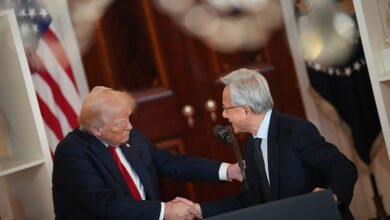
Experts: US 25% Nvidia Chip Tax "Makes No Sense"
The U.S. has allowed Nvidia to export its advanced H200 AI chip to China, a move critics argue accelerates China's technological progress by bridging a critical computing gap. Supporters of the policy argue it economically contains China by keeping its AI industry dependent on U.S. chips, while f...
Read More » -
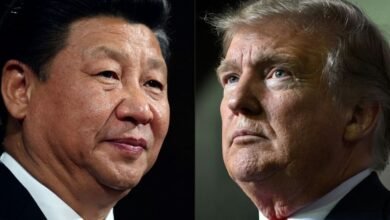
Trump Threatens "Massive" Tariffs on All Chinese Imports
Former President Donald Trump has threatened a massive increase in tariffs on all Chinese imports and may cancel his planned meeting with President Xi Jinping, citing China's recent "very hostile" trade actions. Trump accused China of attempting to disrupt global markets by imposing new export re...
Read More » -

China's Chip Strategy: A New Trade War Tactic
China has introduced semiconductor-related measures into trade discussions, including an anti-dumping probe into U.S. legacy chips and antitrust actions against Nvidia. These moves represent a strategic shift, with China leveraging its market power to counter U.S. restrictions and seek concession...
Read More » -

Microsoft's $15.2B UAE AI Deal Tests US Tech Diplomacy
Microsoft is investing $15.2 billion in the UAE over four years, including a $1.5 billion equity stake in G42 and significant capital for AI and cloud infrastructure expansion. The investment involves the first export of Nvidia's advanced GPUs to the UAE under a special U.S. license, positioning ...
Read More » -

Tech Giants Cut China from Supply Chains
Major tech companies like Microsoft, Amazon, and Google are reducing their reliance on Chinese manufacturing and supply chains due to escalating U.S.-China geopolitical tensions. Microsoft aims to source up to 80% of components for products like Surface devices and data centers from outside China...
Read More » -

Nvidia Found Guilty of Antitrust Violations in China
China's regulatory body (SAMR) has preliminarily ruled that Nvidia violated antitrust laws by not fully meeting conditions tied to its 2020 acquisition of Mellanox Technologies. The announcement was timed to strengthen China's position in upcoming US-China trade discussions, coinciding with the e...
Read More » -

China Approves Import of Nvidia's High-End AI Chips
China has approved three major tech firms, ByteDance, Alibaba, and Tencent, to import over 400,000 of Nvidia's advanced H200 AI chips, marking a shift from a previous weeks-long suspension of these shipments. The H200 chip represents a significant performance leap, being roughly six times more capa...
Read More » -

California's AI Safety Law: Proving Innovation and Regulation Can Coexist
California's SB 53 mandates that major AI labs disclose safety protocols and adhere to security standards, particularly for catastrophic risks, enforced by the Office of Emergency Services. The law reinforces existing industry practices to uphold corporate safety commitments and prevent cutting c...
Read More » -

Nvidia's Top Customer Accounts for 25% of Revenue
Nvidia's revenue reached $130.5 billion in 2025, but nearly 40% came from just two clients, revealing a high dependency on a few major accounts. This customer concentration poses significant financial risk, as losing either key client could sharply impact revenue, despite the company's market inf...
Read More » -

Microsoft Shifts Surface Production Out of China
Microsoft plans to relocate Surface device and server production from China by 2026, including assembly and component manufacturing, as part of a strategic supply chain shift. This move is driven by escalating U.S.-China trade tensions, involving tariff threats and export controls on critical mat...
Read More » -

Anthropic's Dario Amodei Calls for Urgent "Race" to Understand AI's Inner Workings
Dario Amodei, CEO of leading AI safety company Anthropic, has published a new paper titled "The Urgency of Interpretability," making a forceful case for prioritizing research into understanding the internal mechanisms of powerful AI systems before they reach potentially overwhelming levels of capability.
Read More » -

Meta's $2 Billion AI Agent: What's Next?
Meta has acquired AI startup Manus for over $2 billion to accelerate the development of advanced, general-purpose AI agents across its platforms and close the competitive gap with rivals like OpenAI. Manus gained attention for its autonomous AI agent capable of complex tasks with minimal oversigh...
Read More »