LG Rollable Teardown Reveals Hurdles for Flexible Phones
▼ Summary
– LG was a major smartphone competitor but exited the market in 2021 after struggling with declining sales and competition.
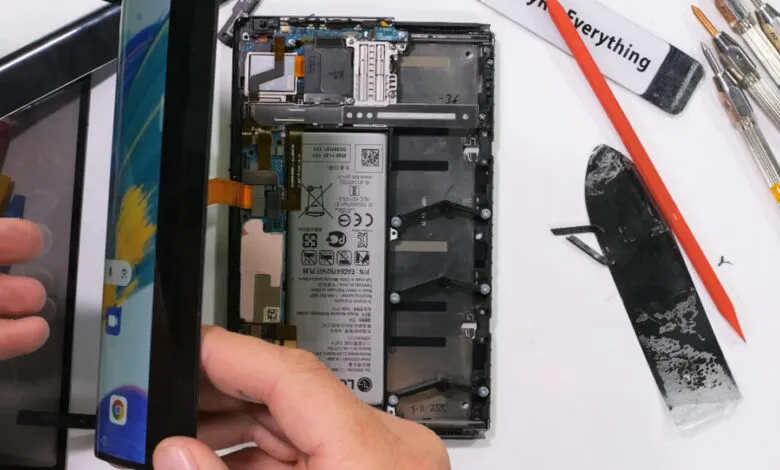
– The company had planned to launch a rollable phone, a prototype of which was recently featured in a detailed YouTube teardown.
– The LG Rollable prototype uses internal motors and a sliding mechanism to expand its screen area by about 40%, avoiding the thickness of foldables.
– Its complex internal design, including motors, tracks, and support arms, suggests it would have been very expensive to produce.
– The teardown reveals the device was a working prototype, allowing a rare look at LG’s innovative but ultimately abandoned technology.
The smartphone market once saw LG as a major contender, particularly in its rivalry with Samsung. However, as industry growth slowed, the company faced increasing challenges. In 2021, LG aimed to redefine the market with a rollable phone concept, but the project stalled after initial previews. Now, years after LG exited the mobile business, a detailed teardown of a working LG Rollable prototype has surfaced, revealing the significant engineering complexities that likely prevented such devices from reaching consumers.
This prototype represents one of several flexible display concepts that emerged in the early 2020s. Advances in flexible OLED technology had made screens more viable, paving the way for foldable phones. Yet these innovations came with a high cost, both in price and mechanical design. The internal complexity shown in the teardown suggests rollable phones might have been even more expensive to produce than their foldable counterparts.
A functional unit, possibly the same one demonstrated at CES 2021, was examined in the video. At rest, it resembles a standard smartphone. A simple swipe command activates a motor system, which extends the display from within the chassis. This mechanism increases the screen real estate by roughly 40 percent, offering a larger viewing area without the noticeable hinge or bulk associated with foldable designs.
The extension is powered by two small motors connected to an internal track via geared teeth. The display itself features a interlocking, zipper-like structure that secures it to the frame during movement. Notably, the motor operation generates considerable mechanical noise. To address this, LG programmed the device to play a distinctive chime, effectively masking the sound during use.
While the motors provide the driving force, a supporting internal lattice structure of spring-loaded arms is crucial. This framework maintains tension and keeps the flexible OLED panel perfectly flat and even as the phone’s frame expands and contracts. Key components like the battery and motherboard are mounted on a sliding tray, allowing the internal space to adjust seamlessly as the screen rolls out.
As a prototype, the device has a robust, utilitarian build with visible screws, which facilitated its careful disassembly and reassembly. This preservation allows a rare glimpse into LG’s ambitious final attempt to capture market attention with innovative form factors before ultimately discontinuing its smartphone division. The teardown underscores not just a novel idea, but the profound engineering hurdles that continue to challenge the commercialization of rollable mobile technology.
(Source: Ars Technica)