LG Rollable Phone Teardown Shows 2026 Tech Advantage
▼ Summary
– YouTuber Zack Nelson performed a full teardown of LG’s unreleased, motorized rollable smartphone, a device the public was never meant to see.
– The phone’s mechanism expands a 5.5-inch display to nearly 7.5 inches like a scroll, differing from modern foldable phones that use a hinge.
– The internal engineering is complex, featuring a zipper-like support structure, dust-blocking bristles, and twin motors for smooth extension.
– Despite the intricate disassembly, the years-old prototype was successfully reassembled and powered back on, demonstrating its durability.
– The phone was spec’d as a flagship of its era and was nearly ready for a planned 2021 launch before LG shut down its mobile division.
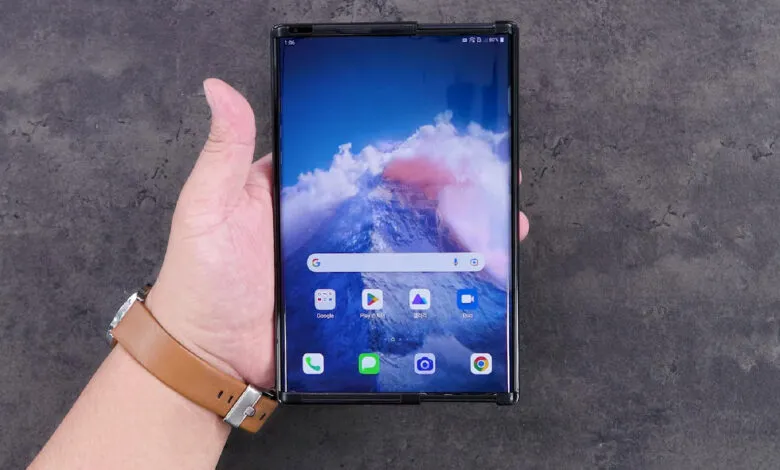
A recent video from a popular tech channel offers a fascinating glimpse into a smartphone that never was. Zack Nelson of JerryRigEverything has performed a full teardown of LG’s unreleased rollable phone, a device originally slated for a 2021 launch before the company exited the mobile business. The detailed disassembly reveals a remarkably polished piece of engineering that still feels innovative and futuristic, even when compared to 2026’s smartphone landscape.
The phone’s defining feature is its motorized mechanism, which transforms the device from a standard-sized handset into a small tablet. Unlike modern foldable phones that use a hinge, this concept employs a rolling action, where the flexible screen extends from within the body like a high-tech scroll. With a simple swipe, the display can expand from a compact 5.5 inches to nearly 7.5 inches, offering a larger viewing area without the visible crease associated with folding panels.
The internal engineering is particularly intricate. Beneath the curved flexible OLED panel, the device features a fine, zipper-like support structure along the edges. To protect the delicate rolled section of the screen from debris, the housing is lined with dust-blocking bristles. The extension is powered by twin geared motors, assisted by three spring-loaded arms to ensure the panel unfurls smoothly and evenly. According to an internal LG rating cited in the video, this complex mechanism was designed to withstand approximately 200,000 extensions.
Software integration was also a key focus. The device included animated wallpapers that dynamically grew with the expanding screen. It also featured a unique rear second display mode, where the flexible panel could tuck under a glass back to show widgets and camera previews when not in use.
While the engineering is undeniably impressive, the setup appears heavily over-engineered. This complexity suggests manufacturing at scale would have presented significant challenges had the product actually launched. The rest of the phone’s specifications align with a flagship from its era, including a 4,500mAh battery, a 64MP main camera with optical image stabilization, a 12MP ultrawide sensor, a rear-mounted fingerprint reader, and USB-C connectivity.
Perhaps the most compelling part of the teardown is its conclusion. After meticulously removing glass panels, bezels, and scores of screws to extract the flexible screen and motor assembly, Nelson successfully reassembled the prototype and powered it back on. This demonstrates that, despite its complexity, LG had engineered the rollable phone to be serviceable and capable of surviving a full dissection.
The LG Rollable was clearly ahead of its time in 2021. In today’s market, which is increasingly dominated by foldable designs, a refined version of this slidable concept could resonate strongly. It represents an aspirational and alternative form factor that certain enthusiasts would likely champion, proving that innovative ideas from the past can still capture our imagination years later.
(Source: Android Authority)