Living Robots Now Have Nervous Systems
▼ Summary
– Engineers are now building robots directly from living cells, creating self-organizing systems called “neurobots” with functional neural circuits instead of mimicking biology.
– These neurobots, made from frog cells that include neurons, exhibit more complex, exploratory movements and behaviors than earlier non-neural biological machines.
– Researchers aim to understand how these simple neural networks self-organize to control behavior, which is a step toward integrating biological tissue with engineered systems.
– Potential future applications for such biological machines include environmental monitoring, pollutant detection, and precision tissue repair.
– The technology is being advanced commercially, with initial focus on deploying simpler, non-neural versions (xenobots) for environmental sensing applications.
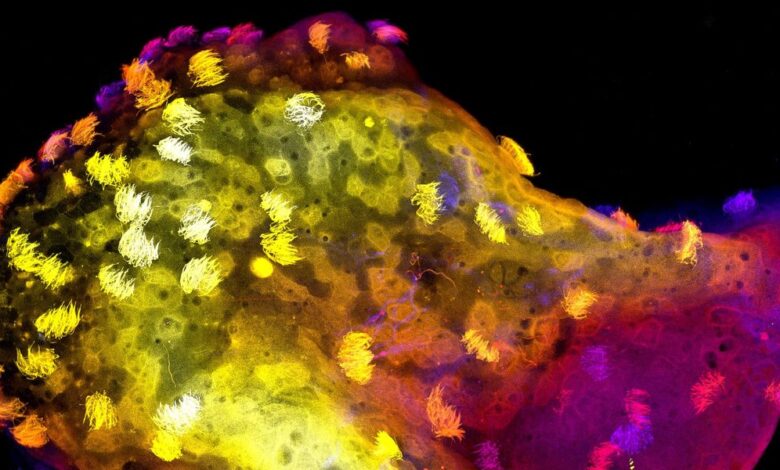
The field of robotics is undergoing a profound transformation, moving beyond mechanical imitation to construct machines directly from living cells. Researchers have now created self-organizing biological robots, or neurobots, equipped with functional nervous systems. This breakthrough, detailed in a recent study, represents a significant leap toward understanding how simple neural networks generate complex behaviors and paves the way for integrated cyborg systems.
For years, engineers have modeled machines on biological principles. The latest work, led by Tufts University biologist Michael Levin and his team, takes a radically different approach. Instead of mimicking life, they are building with it, assembling living cells into autonomous entities that form their own neural circuits. This shift introduces a true engineering component into bioengineering, creating systems that are both biological and designed.
These developments build upon earlier creations known as xenobots, first reported in 2020. Constructed from frog cells, these simple clusters demonstrated surprising capabilities like self-propulsion, damage repair, and even basic replication. However, their behavior was largely mechanical, driven by physical structures rather than internal control. The new neurobots incorporate a critical advancement, neurons that mature from stem cells and wire themselves into networks throughout the cellular assembly. This foundational nervous system allows for integrated electrochemical signaling, moving these living machines beyond simple reflexes.
The presence of neurons changes everything. Neurobots exhibit more dynamic and exploratory behaviors than their predecessors. They swim in looping, spiraling paths, spend less time motionless, and respond distinctly to neuroactive drugs. This link between internal neural activity and observable action provides a unique model for scientists. As neuroengineer Haleh Fotowat notes, deciphering the organizing principles behind these guided motions could allow researchers to harness and direct biological functions predictably.
Beyond immediate applications, this research prompts deeper questions about the origins of biological form and function. Levin highlights that these systems, which are neither evolved nor engineered in a traditional sense, offer a novel platform for exploring fundamental principles of organization. The work is now expanding into human-derived constructs with anthrobots made from lung cells. The next step involves integrating human neural cells, aiming to create fully human biobots that could potentially be trained for specific tasks.
The practical potential is vast. Commercial efforts, through ventures like Fauna Systems, are initially focusing on environmental applications. Simpler xenobots could serve as sensitive living sensors in aquaculture or wastewater monitoring, where their behavioral changes might signal the presence of multiple pollutants. This concept mirrors existing systems that use organisms like mussels as environmental sentinels. Neurobots, with their enhanced computational capacity, could eventually provide even more sophisticated, integrated sensing.
While the path forward involves substantial technical hurdles, the trajectory is clear. The creation of living robots with nervous systems marks a pivotal moment, blurring the lines between biological discovery and engineered design and opening a new chapter in our ability to interface with the living world.
(Source: Ieee.org)