NASA’s New Moon Mission Goals Explained
▼ Summary
– NASA’s Apollo 8 mission in 1968 launched three humans toward the Moon during a period of deep national division in the United States.
– That historic flight provided some comfort to a country troubled by assassinations, riots, political discord, and an unpopular war.
– A new crew of four astronauts—Reid Wiseman, Victor Glover, Christina Koch, and Jeremy Hansen—is now traveling to the Moon.
– This Artemis II mission is occurring during another time of global trouble, echoing the past.
– The article suggests this modern lunar mission is unlikely to become the same major cultural event that Apollo 8 was.
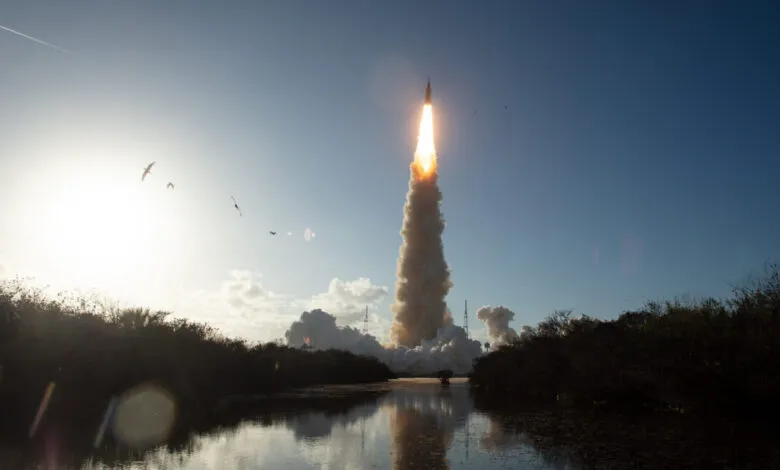
The United States was a nation in turmoil in December 1968 when NASA first sent a crew toward the Moon. That pioneering flight, Apollo 8, offered a moment of unity and hope to a country grappling with political assassinations, civil unrest, and an unpopular war. Today, history echoes as a new crew embarks on a lunar journey. Astronauts Reid Wiseman, Victor Glover, Christina Koch, and Jeremy Hansen are now en route to the Moon with the Artemis II mission, launching at another time of global uncertainty. While the cultural impact of this flight may differ from its historic predecessor, its significance for the future of human space exploration remains profound. This mission is a critical step in NASA’s plan to establish a sustainable lunar presence, paving the way for future landings and long-term exploration. The world watches, perhaps with a different perspective than in 1968, but the ambition to push human boundaries beyond Earth orbit continues unabated.
(Source: Ars Technica)