Flipsnack’s Living Visuals: AI-Driven Immersive Content
▼ Summary
– Interactive content generates over 50% higher engagement than static formats, leading to longer user interaction and better brand recall.
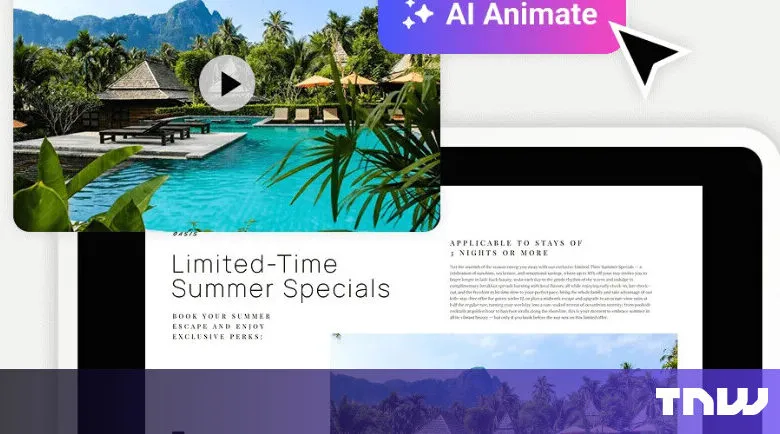
– Flipsnack’s new Living Visuals feature uses AI-driven motion to transform static catalogs into dynamic flipbooks without requiring video teams or new software.
– The technology focuses on subtle, cinematic animations embedded directly into documents to guide viewer attention without overwhelming them.
– Built-in analytics allow businesses to track engagement metrics, tying motion directly to measurable performance outcomes like conversions.
– The tool is designed for accessibility, enabling marketing and sales teams to enhance existing content within their current workflows easily.
The digital landscape has fundamentally shifted, with interactive content now driving engagement rates over 52% higher than static formats. This isn’t just a minor trend, it’s a transformation in how audiences consume information, particularly in competitive sectors like B2B sales and e-commerce where capturing attention is critical. Flipsnack’s new Living Visuals feature directly addresses this change, using AI-driven motion to convert ordinary digital catalogs and brochures into immersive, dynamic experiences designed to boost performance.
“We are moving from reading business documents to experiencing them,” states Adrian Moza, CEO of Flipsnack. The platform’s innovation allows teams to add a cinematic quality to their materials instantly, eliminating the traditional need for video production resources or complex new software. This evolution responds to a clear behavioral shift, as audiences increasingly gravitate toward content with inherent movement, from social media clips to interactive website elements. While static imagery remains essential, motion simply captures and holds attention more effectively. Living Visuals meets this demand by embedding auto-playing animation directly into sales and marketing documents.
“The future is immersion,” Moza asserts. “We are empowering teams to convert flat, static documents into a powerful competitive advantage.” The technology is integrated natively into the Flipsnack platform, making it highly accessible. A user can transform a standard image into a dynamic visual element within a flipbook without any technical expertise or external editing tools. This democratization of motion is pivotal, putting advanced engagement techniques directly into the hands of marketing and sales professionals using their existing workflows.
The strategic application of this motion is key. The animations are subtle and cinematic, designed to integrate seamlessly without overwhelming the viewer. They serve a functional purpose, guiding attention to crucial product details, animating property images, or creating depth on a page. “Teams don’t need to rethink their entire workflow,” Moza explains. “They can enhance what already exists and immediately see the impact.” This focus on incremental enhancement within familiar systems encourages faster adoption than demanding radical procedural change.
The business impact is measurable. Flipsnack’s built-in analytics allow companies to track vital engagement metrics like views, impressions, and time spent. Here, motion transitions from a mere aesthetic choice to a functional lever for improving conversion. Industries reliant on visual storytelling, including retail, real estate, and hospitality, are positioned to gain significant advantage. Early use cases demonstrate the potential, such as a static product image transitioning to show texture and context, or a proposal using motion to highlight its most critical sections.
“Living Visuals is about helping content perform without adding complexity,” Moza emphasizes. “It’s about making every page work harder.” The timing of this innovation aligns with a broader cultural moment where attention spans are contracting and expectations for digital experiences are rising. Successful platforms will be those that anticipate how users prefer to consume content. Flipsnack positions itself in this anticipatory space, facilitating a progression from simple interaction to genuine immersion.
“Immersive content isn’t another ephemeral trend, it’s a direction,” Moza concludes. “And the teams that adapt early will define how business communication looks in the years ahead.” As motion becomes a baseline expectation rather than a novelty, tools like Living Visuals precisely signal this shift. They transform passive documents into active experiences, ensuring content doesn’t just exist, but actively engages.
(Source: The Next Web)