PaperShell wins €40.3M EU grant for first full-scale factory
▼ Summary
– PaperShell has secured a €40.3M EU Innovation Fund grant for an €83M project to expand its Tibro, Sweden plant to 23,000 tonnes annual capacity by 2030.
– The company produces a strong, lightweight composite material from kraft paper and a bio-binder, which is already NATO-approved and shipped to multiple industries.
– The material can reduce CO₂ emissions by up to 98% compared to alternatives like aluminium or plastics, with the potential for carbon-negative performance.
– The new flagship factory, construction starting in 2027, will feature automated lines including one for printed circuit boards, addressing European supply chain reliance.
– The Tibro expansion is designed as a modular, replicable production system template for future sites across Europe.
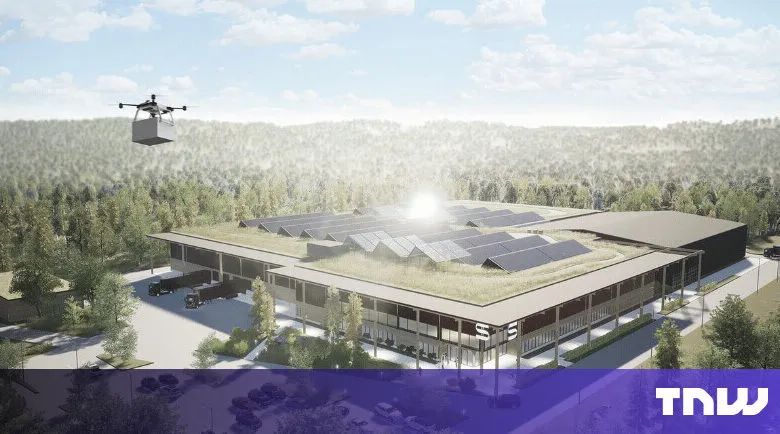
A Swedish deeptech firm has secured a major European Union grant to build its first full-scale production facility, marking a significant step for a novel sustainable composite material. PaperShell has signed a Grant Agreement with the European Commission, unlocking €40.3 million from the EU Innovation Fund. This grant supports a total €83 million project to transform its pilot plant in Tibro, Sweden, into a flagship factory with an annual capacity of 23,000 tonnes by 2030.
The company’s innovation lies in a unique material made from layers of kraft paper impregnated with a bio-binder from agricultural waste. The resulting composite is described as stronger than many plastics, lighter than aluminium, and more versatile than traditional glass fibre. Since 2023, the pilot facility has shipped over 150,000 components, and the material is already NATO-approved and used in construction, defence, electronics, and transport sectors.
This substantial funding award followed a competitive selection process. PaperShell was chosen from 359 applicants in the Medium-Scale category of the Net Zero Technologies call, administered by the European Climate, Infrastructure and Environment Executive Agency (CINEA). The EU Innovation Fund, financed by revenues from the EU Emissions Trading System, is one of the world’s largest programmes for climate innovation. After receiving initial notification in November 2025, the company successfully demonstrated co-financing for the remaining €43 million of the project cost, including through a fully oversubscribed funding round closed that December.
The environmental case for the material is central to its value proposition. PaperShell reports that replacing conventional materials like aluminium or plastics with its composite can reduce CO₂ equivalent emissions by up to 98%, with potential for carbon-negative performance in closed-loop systems. Over its first decade of operation, the new Tibro factory is projected to avoid approximately 2.6 million tonnes of CO₂ emissions.
Scheduled to begin construction in 2027, the 15,600 square metre facility will house multiple automated production lines. One dedicated line will produce copper-clad laminates and printed circuit boards, targeting a strategic materials category where Europe currently relies heavily on Asian supply chains. The factory is designed as a scalable, modular template intended for replication at other sites across Europe once the model is proven.
Founder Anders Breitholtz, who started the company after two decades as a technology scout in materials and manufacturing, has characterized the grant as a defining moment not just for PaperShell, but for European industrial decarbonisation more broadly. The expansion solidifies the commercial pathway for a material already finding applications in construction panels, transport and defence components, and consumer electronics.
(Source: The Next Web)