Report: Enterprise Cybersecurity Software Fails in 1 of 5 Cases

▼ Summary
– Endpoint security software fails to protect 20% of enterprise devices, creating a significant protection gap.
– Delays in applying patches are common, with 24% of vulnerability management platforms operating outside of compliance.
– Critical updates for Microsoft Windows are delayed by an average of 127 days, leaving systems exposed.
– Nearly 10% of enterprise endpoints are permanently unpatched, creating irremediable vulnerabilities.
– The industry’s focus on threat detection has lagged in ensuring security tools remain reliably operational.
A significant gap in enterprise endpoint protection is exposing organizations to heightened risk. According to new research, cybersecurity software fails to protect one out of every five corporate devices. This widespread failure creates a substantial vulnerability window, equivalent to an organization leaving its digital doors unlocked for an estimated 76 days each year. The findings highlight a critical disconnect between deploying security tools and ensuring they remain fully functional and up-to-date when threats emerge.
The data comes from the 2026 Resilience Risk Index, which analyzed device-level telemetry across tens of millions of enterprise endpoints. These devices were confirmed to be running standard endpoint management and security software, making the failure rate particularly alarming. As Christy Wyatt, CEO of Absolute Security, observed, while cyber-attacks are a constant reality, the resulting system downtime is not inevitable. She noted that the industry’s focus on innovative threat detection has, unfortunately, come at the expense of ensuring operational resilience, leaving tools unreliable during critical moments.
No single flaw is to blame. Instead, the problem stems from the increasing complexity of modern IT environments. A major contributing factor is consistently slow patch management. The report found nearly a quarter of all endpoint vulnerability management platforms are now operating outside of compliance, a noticeable increase from the previous year. This trend means a growing number of devices run software with known, unaddressed security flaws, dramatically widening the exploitation window available to attackers.
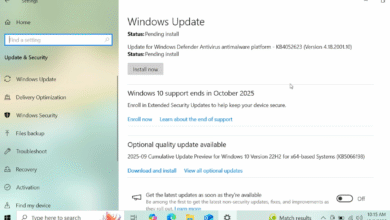
The issue extends to foundational systems. Critical updates for the Microsoft Windows operating system are delayed by an average of 127 days, leaving networks exposed to zero-day threats and other attacks for months. Perhaps more concerning is the rise of permanently unpatched endpoints, which now represent nearly 10% of the enterprise landscape. These devices, often running unsupported software like Windows 10, harbor vulnerabilities that may never be fixed, creating permanent weak points in an organization’s defenses.
This collective struggle to maintain a strong cybersecurity posture does more than just increase breach risk. It directly leads to costly operational downtime and remediation efforts that put businesses at a competitive disadvantage. The report emphasizes that the core challenge has evolved. It is no longer just about whether patches are available, but whether an organization possesses the ability to enforce critical changes across its vast endpoint ecosystem before a known exposure escalates into a major disruption.
Strengthening policies around patch management for security tools and operating systems is a vital step toward closing this protection gap. As endpoints continue to grow in number and strategic importance, ensuring they are not just monitored but actively and reliably secured is an urgent priority for enterprise resilience.
(Source: Infosecurity Magazine)