Kodiak CEO: Self-Driving Trucks Are Just Half the Battle
▼ Summary
– 2025 is a significant year for self-driving trucks, with multiple companies like Aurora, Waabi, and Kodiak AI planning major deployments or expansions.
– Kodiak AI’s CEO argues that beyond safe driving, the real challenge is integrating autonomous trucks into efficient, customer-owned business operations.
– The company differentiates itself by focusing on industrial and off-road “unstructured” environments, which it believes better prepares its trucks for highways.
– Kodiak’s business model involves an aftermarket solution with partners, selling driverless trucks to customers who then own and operate them, demanding high reliability.
– The CEO criticizes competitors for focusing on technology demonstrations rather than solving the full integration of autonomy into real customer workflows.
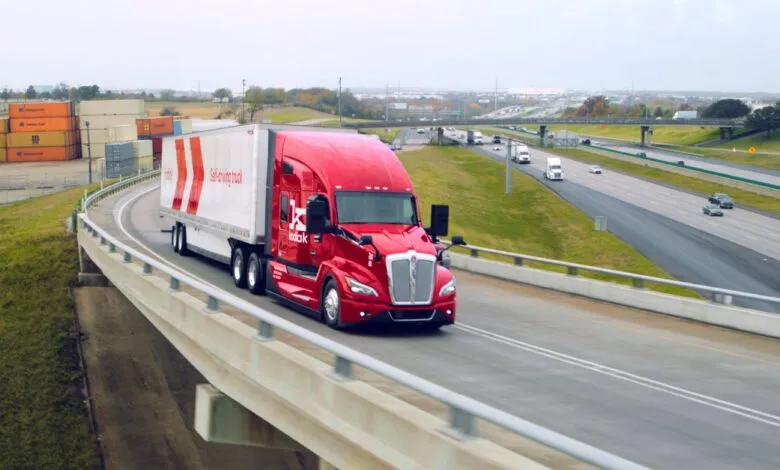
This year promises to be a pivotal one for autonomous trucking, with several companies racing to deploy driverless big rigs. While robotaxis often dominate the conversation, the freight industry is quietly making significant strides. Kodiak AI is one such company, aiming to launch a fully driverless long-haul operation by the end of 2026. However, its CEO, Don Burnette, argues that perfecting the self-driving technology itself is merely half the challenge. The real battle lies in building a viable, efficient business around it.
Burnette notes that while competitors focus intensely on AI, perception, and racking up test miles, Kodiak is planning for the operational realities of running a freight business. This involves critical questions about truck ownership, required uptime, and the logistics of what gets shipped. “What really matters to customers is how efficiently and effectively can I get that truck into and out of my operation,” Burnette explains. He believes that simply proving a truck can drive safely is now “table stakes.” The harder work is integrating autonomy seamlessly into a customer’s existing workflow, a complex pillar of the business most companies avoid discussing.
Founded in 2018 by Burnette, a veteran of Google’s original self-driving project, and Paz Eshel, Kodiak has taken a distinctive path. The company went public in late 2025 and has been conducting driverless deliveries in the Permian Basin since 2025, where it now operates twenty trucks. Burnette emphasizes their work across multiple sectors, including industrial and off-road trucking. He views these “unstructured” environments as a major opportunity, arguing that navigating their complexity has better prepared Kodiak’s systems for more predictable highways.
A key differentiator is Kodiak’s business model. Unlike some rivals who waited for manufacturers to build autonomous-ready trucks, Kodiak developed an aftermarket solution with partners like Roush Industries and Bosch. This allows them to produce automotive-grade, compliant trucks and scale effectively. Crucially, the twenty trucks delivered so far are owned and operated by Kodiak’s customers, not by Kodiak itself.
Burnette is direct about why this ownership model matters. When a customer owns the vehicle, they demand high performance on metrics like utilization, uptime, and maintenance. This sets a much higher bar for reliability. “When a customer owns the vehicle, it has to work,” Burnette states. He contrasts this with companies that own their own test fleets, suggesting they can stage-manage deployments without the pressure of real-world, round-the-clock functionality. In those cases, a truck working only a few hours a week might be hailed as a victory, but that approach would never satisfy a paying customer expecting a dependable product.
His candid assessment extends to the broader industry. When asked if Kodiak would follow a competitor into the robotaxi space, he questioned whether that rival had a real product to begin with. He argues that many companies excel at producing impressive technology demonstrations and “snazzy visuals” but have not crossed the harder threshold of delivering a usable, customer-owned product integrated into daily operations.
For Burnette, solving the self-driving puzzle is only the first pillar. The second is building the trucks at scale, and the critical third is making the autonomy genuinely usable in real workflows. This third pillar encompasses integrating trucks into customer sites, managing pickups and drop-offs, and providing necessary monitoring tools. He asserts that while most of the industry is focused on the first pillar, Kodiak is tackling all three simultaneously, building a business where the product’s value is defined by its relentless utility, not just its autonomous capabilities.
(Source: The Verge)