Google Boosts UCP With Cart, Catalog & Onboarding Tools

▼ Summary
– Google updated its Universal Commerce Protocol (UCP) with new draft specifications for Cart and Catalog capabilities and highlighted the availability of Identity Linking.
– The Cart feature allows AI agents to build multi-item baskets for pre-purchase exploration, while Catalog enables agents to retrieve real-time product details like pricing and stock.
– Identity Linking lets shoppers connect their retailer accounts via OAuth, allowing loyalty benefits to apply when purchasing through Google’s AI surfaces like Gemini.
– Google is simplifying UCP onboarding through Merchant Center to attract more retailers and announced three platform partners (Commerce Inc, Salesforce, Stripe) for implementation.
– These updates expand UCP from single-item checkout to handling fuller shopping experiences, though retailers must weigh sales on Google’s platforms against direct site traffic.
Google has enhanced its Universal Commerce Protocol (UCP) with significant new features, including Cart and Catalog functionalities, alongside a streamlined onboarding process via Merchant Center. This marks the first major update since the protocol’s introduction earlier this year. These additions are designed to empower AI shopping agents, enabling more dynamic and comprehensive retail interactions directly within Google’s ecosystem. For retailers, this evolution presents both new opportunities for customer engagement and important considerations regarding sales channel control.
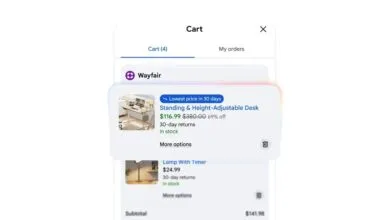
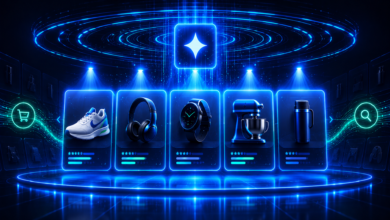
The newly introduced Cart capability allows AI agents to assemble multi-item baskets from a single retailer during a shopper’s exploration phase. This feature supports pre-purchase activities, letting users curate selections before deciding to buy. When ready, the entire cart can seamlessly transition into a checkout session. Simultaneously, the Catalog specification grants agents access to real-time product data. This includes up-to-the-minute details on pricing, inventory levels, and product variants, moving beyond static product feeds to enable accurate, live queries during product discovery.
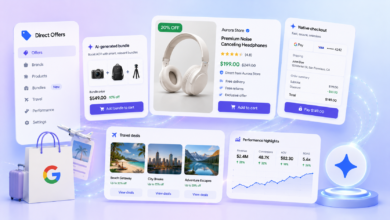
A third key component, Identity Linking, is now being highlighted as a readily available option. This feature, which uses OAuth 2.0, allows customers to securely connect their existing retailer accounts to platforms integrated with UCP. The practical effect is that personalized benefits,such as member discounts, loyalty pricing, and promotional shipping offers,can be applied even when a purchase is initiated through an AI agent on Google surfaces like AI Mode or Gemini, rather than on the retailer’s own website.
It is important to note that all three of these capabilities,Cart, Catalog, and Identity Linking,are optional for retailers to implement. Businesses can choose which features align best with their strategy. Currently, the Cart and Catalog specs are published in draft form, open to feedback from the developer community, while Identity Linking is part of the stable protocol.
To accelerate adoption, Google is simplifying the integration process. The company announced a more accessible onboarding pathway through Merchant Center, aimed at attracting a broader range of retailers, including smaller businesses. This streamlined process is slated to roll out gradually over the next several months. For retailers who prefer not to develop a direct integration, third-party platform support is expanding. Commerce Inc, Salesforce, and Stripe have each announced plans to implement UCP, which could significantly reduce the technical resources required for participation.
These developments substantially broaden the scope of the UCP framework. Initially focused on single-item checkouts, the protocol now supports building complex shopping baskets and pulling live inventory data. This progression moves UCP closer to facilitating a complete, end-to-end shopping journey within Google’s AI interfaces. The simplified onboarding and platform partnerships lower the entry barrier, making the technology accessible to retailers without dedicated engineering teams.
However, the fundamental trade-off for merchants remains. Sales facilitated through UCP occur on Google’s platforms, not on the retailer’s owned digital properties. While Identity Linking can incorporate loyalty benefits to improve the customer experience on these external surfaces, some brands may view their loyalty programs as a primary driver for direct site traffic. The decision to participate will hinge on balancing the reach and convenience of AI-powered surfaces against the desire to maintain a direct customer relationship and brand control.
Looking forward, the draft status of Cart and Catalog means their technical specifications could evolve based on industry input. Google has indicated its intention to extend UCP capabilities across its AI products, including AI Mode in Search and the Gemini app, though specific timelines for wider rollout remain general. As these tools develop, they will continue to shape how retailers connect with customers in an increasingly AI-driven commerce landscape.
(Source: Search Engine Journal)