Nvidia CEO Defends DLSS 5, Calls Critics “Completely Wrong”
▼ Summary
– Nvidia CEO Jensen Huang dismissed criticism of DLSS 5, stating critics are “completely wrong” about it harming artistic control.
– The new DLSS 5 technology is described as an “AI-powered breakthrough” that uses “neural rendering” for visual fidelity.
– Major game developers, including Bethesda, Capcom, and Ubisoft, are supporting the DLSS 5 technology.
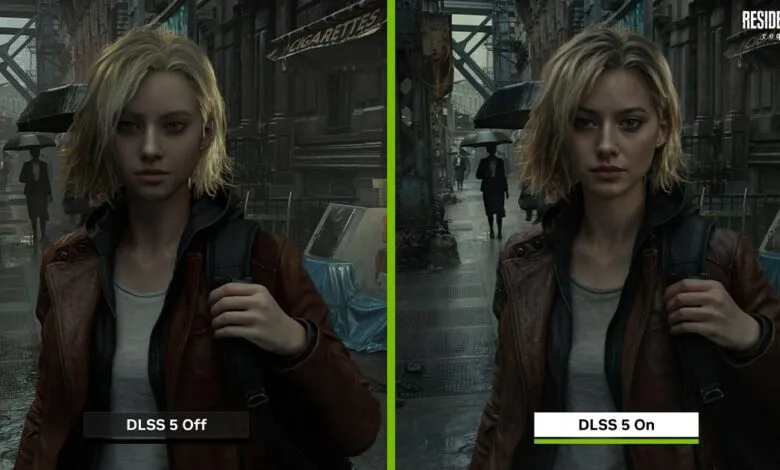
– Critics had specifically faulted the feature for adding an artificial AI sheen to character models, as seen in a *Resident Evil* demo.
– Huang clarified that DLSS 5 allows developers direct, fine-tuned control at the geometry level, calling it “content-control generative AI.”
Nvidia’s CEO has issued a strong rebuttal to recent criticism of the company’s latest upscaling technology. Jensen Huang defended DLSS 5 against claims that it undermines artistic vision, stating that detractors are “completely wrong.” He emphasized that the technology, which the company describes as a neural rendering breakthrough, is designed to enhance visual fidelity while remaining under the direct control of game developers.
The controversy emerged following the technology’s unveiling, where it was showcased in partnership with major studios like Bethesda, Capcom, and Ubisoft. A particular point of contention was a side-by-side demo featuring a character from Resident Evil: Requiem, with some observers arguing the AI-processed version applied an artificial sheen that detracted from the original artistic intent.
Addressing these concerns directly, Huang clarified the fundamental mechanics of the system. He explained that DLSS 5 operates at a foundational level, integrating with a game’s core assets. “It’s not post-processing at the frame level,” Huang noted. “It’s generative control at the geometry level.” This distinction is crucial, according to the CEO, because it means developers retain precise authority over the final output. They can fine-tune the AI’s application to textures and geometry to ensure it aligns perfectly with their creative goals.
Huang’s core argument is that this represents a new category of tool. He labeled it “content-control generative AI,” differentiating it from more autonomous forms of artificial intelligence that might alter content without developer input. By fusing traditional game development controls with generative AI capabilities, the technology aims to provide a new method for achieving higher visual quality without sacrificing the director’s vision. The executive’s comments underscore Nvidia’s position that DLSS 5 is an enabling technology for creators, not a replacement for their artistic judgment.
(Source: Games Industry)