Europe’s Top AI Startups to Watch in 2026
▼ Summary
– AWS has announced its second annual Pioneers Project cohort, featuring twelve European companies using AI and cloud tech to tackle challenges from healthcare to climate.
– A key finding from an AWS-commissioned report is that 38% of European AI startups would consider relocating to scale, with 65% citing a need for clearer regulation as a reason to stay.
– The selected companies include MLL Munich Leukaemia Laboratory, which rapidly diagnoses rare leukemia, and XOCEAN, which uses zero-emission autonomous vessels to map the ocean floor.
– Other notable pioneers are Hala Systems, providing airstrike warnings in conflict zones, and myTomorrows, connecting patients to clinical trials via an AI platform.
– AWS argues that deep tech investment and societal benefit align, as shown by the diverse cohort, and has announced funding initiatives like $1 billion in cloud credits for AI startups.
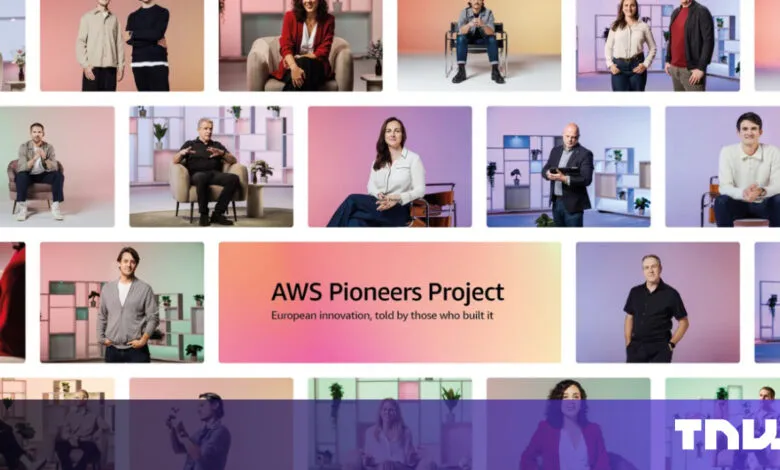
A new group of European startups is harnessing artificial intelligence to address some of the world’s most pressing challenges, from healthcare diagnostics to climate monitoring and civilian protection in conflict zones. Amazon Web Services has unveiled its second annual AWS Pioneers Project cohort, featuring twelve companies leveraging AI and cloud infrastructure for significant global impact. This announcement arrives alongside a concerning study suggesting Europe could lose its most promising innovators without regulatory changes. The research indicates that while AI accelerates innovation and productivity for a vast majority of startups, a substantial portion would consider relocating outside Europe to achieve scale, with many citing the need for a clearer regulatory framework as a key factor in their decision to stay.
The selected companies, based in France, Germany, Ireland, the Netherlands, Portugal, Sweden, and the United Kingdom, were chosen for their focus on measurable worldwide influence. One standout is Germany’s MLL Munich Leukaemia Laboratory, which applies genomics at cloud scale to diagnose rare leukaemia subtypes in a matter of hours, a process that traditionally takes weeks. The company reports having analyzed more than 1.4 million cases to date.
From Ireland, XOCEAN deploys a fleet of autonomous, zero-emission surface vessels for offshore wind surveys and ocean floor mapping, serving major energy clients while emitting a fraction of the carbon of conventional ships. In the humanitarian sector, Lisbon-based Hala Systems operates the Sentry platform. Originally developed for Syria, this system uses acoustic sensors, observer networks, and AI prediction to provide civilians with advance warnings of airstrikes and has contributed to war crimes documentation efforts, with its hardware now part of the Smithsonian’s collection.
The Dutch healthtech firm myTomorrows runs an AI platform that connects patients and physicians to global clinical trials and expanded access programs for treatments awaiting approval. Another notable pioneer is France’s Quandela, which is developing photonic quantum computers that operate at room temperature, a distinct advantage over systems requiring extreme cooling.
The remaining innovators address a wide spectrum of needs. France’s Callyope uses AI to detect early warning signs of mental health relapse. Germany’s CareMates has dramatically reduced hospital patient admission times with AI-powered software, while its compatriot ETERNO offers an AI assistant to optimize brief clinical consultations. Iktos in France accelerates drug molecule design by combining AI with laboratory robotics.
France’s Mindflow provides an enterprise automation platform bundling AI agents and no-code tools. The Swedish-Dutch venture Paebbl focuses on reducing concrete’s carbon footprint by accelerating natural mineralisation. Finally, the UK’s Proximie offers a surgical coordination platform aimed at expanding access to safe surgery for billions.
An AWS-commissioned study underpinning the launch, titled “Unlocking Europe’s AI Potential,” presents a dual narrative. It finds that 91% of AI-first startups report accelerated innovation and 89% cite productivity gains. However, it also reveals that 38% of European startups would consider relocating to scale, a figure that jumps to 51% among the fastest-growing companies. When asked what would make them stay, 65% pointed to a clearer and more proportionate regulatory environment.
AWS used the occasion to reiterate existing support programs, including $1 billion in cloud credits for generative AI startups and a $100 million education initiative. Whether these measures can counteract the relocation pressures identified in the report is a question the future trajectory of these pioneering companies may ultimately answer. As Sasha Rubel, AWS Head of AI and Generative AI Policy for EMEA, stated, these innovators are strengthening Europe’s role in global AI leadership by revolutionizing patient care, accelerating discovery, and helping to save lives.
(Source: The Next Web)