How Fireflies Synchronize Their Flashing Lights
▼ Summary
– Male fireflies in South Carolina synchronize their flashing by following local interaction rules, a discovery presented at the American Physical Society meeting.
– This research on synchronization could provide future insights into biological rhythms like circadian cycles or neural firing, as well as inform drone swarm design.
– Collective behavior studies have been dominated since the 1980s by agent-based models like “boids,” where simple interaction rules between individual units produce emergent flocking or swarming patterns.
– Fire ants exemplify collective behavior, transitioning from individual actions to acting as a single unit with solid/liquid properties when densely packed, enabling them to build structures and regulate traffic.
– Different species exhibit unique flocking mechanisms; for example, wild jackdaws alter their flying patterns based on whether they are roosting or mobbing predators.
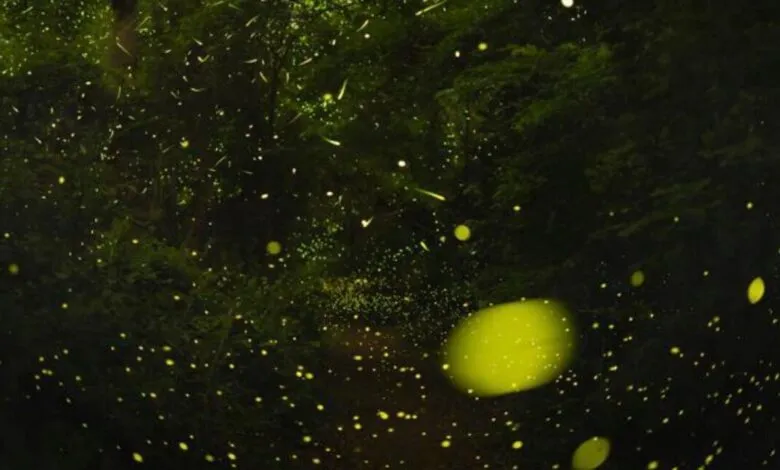
Scientists have uncovered the precise local rules that allow male fireflies in a specific South Carolina swamp to coordinate their brilliant flashing displays. This research, presented at a major physics conference, offers a fascinating glimpse into biological synchronization. The findings could eventually inform our understanding of complex systems, from the coordinated firing of neurons in the brain to the design of synchronized communication networks for drone swarms.
For many years, the study of swarming behavior was primarily the domain of observational biologists. This changed in the 1980s with a breakthrough from computer graphics specialist Craig Reynolds. He developed an influential agent-based model called “boids.” In this simulation, each individual in a group is represented as a simple dot moving at a constant speed. By applying a few basic rules about how these dots interact with their nearest neighbors, complex collective patterns like flocking or swarming spontaneously emerge once a certain density is reached.
Fire ants serve as a classic real-world example of such emergent collective intelligence. When isolated, ants act as independent individuals. However, when densely packed together, they begin to behave as a cohesive superorganism, demonstrating properties akin to both solids and liquids. This allows them to perform remarkable feats, such as pouring from a container or linking together to form floating rafts and towering structures, a crucial survival adaptation during events like floods. Their colonies also show an exceptional ability to self-regulate traffic flow, almost never experiencing the congestion common in human systems.
Although flocking and swarming are common across the natural world, the specific mechanisms driving this behavior can vary dramatically between species. For instance, a 2019 study revealed that flocks of wild jackdaws adjust their flight patterns based on context. They use one formation when returning to their roost and a distinctly different strategy when banding together to mob a predator. This highlights how collective behavior is finely tuned to environmental demands and survival needs.
(Source: Ars Technica)