Slay the Spire 2 Review: Is the Sequel Worth the Climb?
▼ Summary
– Slay the Spire 2 is an easy recommendation, offering a familiar but refreshed experience with new character classes and a novel co-op mode.
– The game is tougher than the original, with reworked original classes and two new, complex characters like the Necrobinder and the challenging Regent.
– Strategic changes are required, as players must adapt their pathing and battle choices due to riskier elite enemies and new multi-act quest events.
– The new co-op mode supports up to four players, encouraging coordination through real-time card play and team-focused mechanics, though it lacks matchmaking.
– Even in Early Access, the game feels largely complete and polished, with its core content fully playable and only minor placeholder art indicating its development status.
Slay the Spire 2 arrives in Early Access feeling remarkably polished and familiar, offering a masterful evolution of the original’s addictive deckbuilding roguelike formula. For veterans of the first game, the sequel provides a refreshing challenge with its reworked classic characters and two entirely new classes. Newcomers will find an incredibly deep and satisfying strategic experience right from the start. While it doesn’t radically reinvent the wheel, the introduction of a novel co-op mode and thoughtful mechanical tweaks make this an easy and compelling recommendation for almost any fan of the genre.
Having spent over forty hours exploring the Spire’s new heights, I’ve secured victories with all five available classes. The journey is far from over, thanks to the returning Ascension difficulty modifiers and a wealth of unlockable content. The original trio, the Ironclad, the Silent, and the Defect, retain their core identities, yet feel revitalized. Strategic veterans will find their old tricks still work, but new card options like the Silent’s Sly label encourage fresh, energy-efficient builds. This shift is part of a broader design philosophy that makes the sequel feel less dependent on simply upgrading your energy limit, offering more flexible paths to victory.
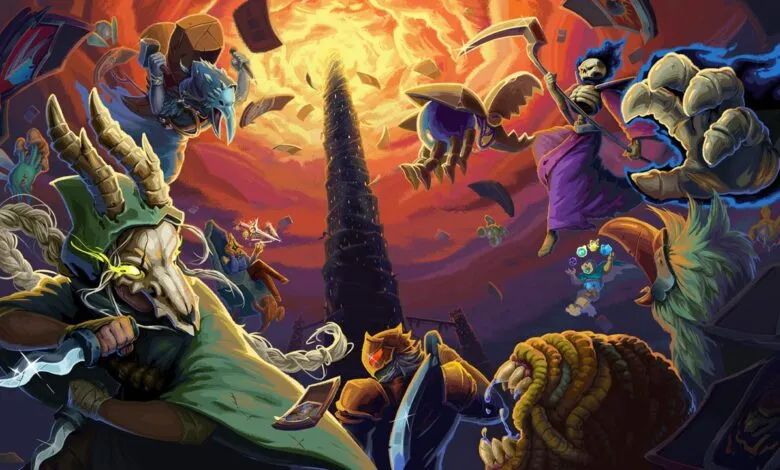
The new characters introduce wildly different playstyles. The Necrobinder, a luminous skeleton accompanied by a giant spectral hand named Osty, quickly became a favorite. Its Doom mechanic cleverly attacks an enemy’s health from two angles, while Osty acts as a secondary defender and a scalable attack. The class also utilizes Soul cards, harvested from foes, to enable explosive turns by drawing numerous cards. The other newcomer, the Regent, proved to be a formidable puzzle. This starfish-faced monarch, riding a living throne, became my personal challenge, requiring dozens of attempts to master. His gameplay revolves around accumulating Star currency to unleash devastating, multi-hit spells. A triumphant run finally clicked with a synergistic combo of card upgrades and relics, allowing me to obliterate the final boss in a spectacular, two-turn frenzy.
That struggle with the Regent highlights Slay the Spire 2’s current balance, which feels notably tougher than its predecessor. The learning curve seems tailored for dedicated players who relish deep systemic mastery. While this may feel daunting initially, the process of experimentation and eventual breakthrough remains intensely rewarding. This is precisely the kind of refinement Early Access is meant for, and the core gameplay is strong enough to make the climb enjoyable even during the toughest losses.
Success also demands adapting your macro strategy. My old habit of aggressively hunting Elite enemies for their powerful relics often backfired. The sequel’s Elites are punishing; one type caps damage taken per turn, forcing protracted battles that can cripple your run through accumulated health loss. This pushed me to reconsider my path, prioritizing special events and multi-act quests over relentless combat. Discovering a map in one act that leads to a treasure trove in the next, or caring for a bird egg at a rest site, adds engaging narrative layers and strategic trade-offs, as these quest items temporarily occupy valuable deck space.
Another significant change is the reward structure at the start of each act, replacing the single blessing from Neow. You now choose between three options, often with substantial drawbacks, setting a dramatic tone for the run ahead. Landing a major boon like extra energy can define your entire attempt, making these choices thrilling high-stakes moments.
Beyond the vibrant new art and animations, the standout addition is the cooperative mode for up to four players. It transforms the methodical turn-based combat into a delightful, chaotic real-time puzzle. Everyone plays cards simultaneously, making communication essential to coordinate attacks and avoid overkill. The mode is brilliantly balanced, with enemy health pools scaling dramatically and attacks targeting the entire team, forcing coordinated focus fire. While there’s no matchmaking, playing with friends is a blast, enhanced by quality-of-life features like reviving downed allies after combat and multiplayer-specific support cards. The ability to draw on the map for planning is a charming touch that benefits solo play as well.
Even in its Early Access state, the game feels feature-complete and stable. Beyond expected balance tweaks, the only signs of its development status are some placeholder artwork and a lore progression tree that maintains the series’ charmingly vague and silly tone. The performance has been flawless in my experience, with one significant bug already patched. Whether you’re a seasoned ascendant or a curious newcomer, Slay the Spire 2 is already a towering achievement, confidently building upon the foundation of one of gaming’s most influential titles.
(Source: IGN)