Apple Studio Display XDR Review: Premium Pro Monitor, High Price
▼ Summary
– Apple has released two new 27-inch 5K Studio Displays: a refreshed base model with an upgraded camera, speakers, and ports, and a new high-end Studio Display XDR.
– The Studio Display XDR features a new mini-LED panel with 2,304 dimming zones, a 2,000-nit peak brightness, a 120Hz adaptive refresh rate, HDR support, and numerous accurate reference picture modes for professionals.
– The display offers 16 presets, including two general-use modes and 14 reference modes for specific color spaces and professional tasks, with highly accurate factory calibration in the reference modes.
– It includes built-in six-speaker spatial audio and a 12MP Center Stage webcam, and is controlled entirely via macOS, with connectivity through two Thunderbolt 5 and two USB-C ports.
– Targeted at creative professionals using Macs, the Studio Display XDR starts at $3,299, representing a significant upgrade over the previous Pro Display XDR but at a premium price.
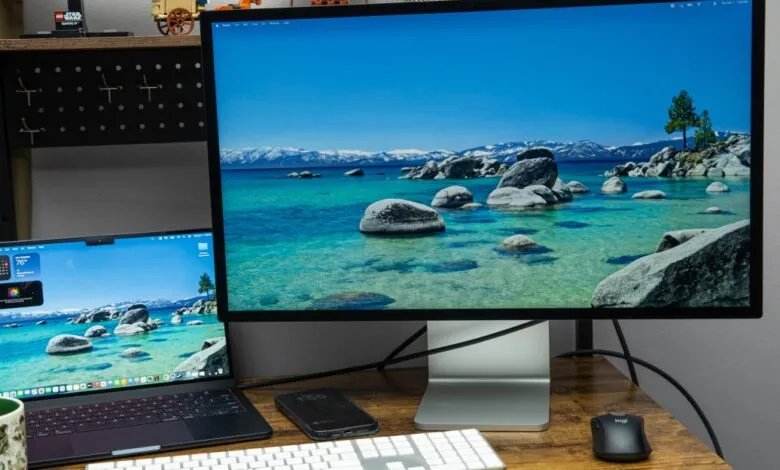
Four years after the initial 5K Studio Display, Apple has refined its professional monitor lineup with two new models. The standard Studio Display offers a familiar 27-inch 5K panel with meaningful upgrades to its camera, speakers, and connectivity. The far more compelling Studio Display XDR, however, represents a significant technological leap, replacing the older Pro Display XDR with a new mini-LED panel boasting 2,304 local dimming zones and a blistering peak brightness of 2,000 nits. This model is clearly designed for creative professionals who demand extreme color accuracy and high dynamic range, though its starting price of $3,299 firmly places it in a premium tier.
The standard Studio Display feels like an evolution of the previous model. It retains the same 600-nit SDR panel but integrates a much-improved 12MP Center Stage webcam, a robust six-speaker spatial audio system, and now includes two Thunderbolt 5 ports alongside two USB-C. While the base price holds at $1,599, adding features like nano-texture glass or a height-adjustable stand can quickly increase the cost.
The Studio Display XDR is where Apple’s engineering focus shines. Its new mini-LED backlight, similar to recent MacBook Pros but with higher resolution and brightness, delivers exceptionally crisp images and text. While its local dimming control handles light bleed admirably for an LCD, it still doesn’t reach the perfect black levels of an OLED display. Viewing angles are respectable for an IPS panel, showing minimal color shift even when viewed off-axis, a notable improvement over its predecessor.
A major strength for professionals is the suite of 16 picture presets. This includes 14 highly accurate reference modes for specific workflows like HDR video, digital cinema, and photography, each clearly listing its target color space and technical details. Apple has confirmed that two DICOM presets for medical imaging will be added via a software update later this year. Testing with professional calibration equipment showed impressive accuracy across these reference modes, with color and grayscale measurements often falling into the imperceptible error range. The main calibration quirk noted was elevated brightness in shadow details, making dark areas slightly less deep, though full user calibration capabilities are promised in a future update.
The two general-use presets are particularly intriguing. They allow the display to hit its full 2,000-nit brightness potential in highlights and support both P3 and Adobe RGB color spaces, enabling seamless switching between video and print workflows. These modes utilize Apple’s new CMF 2026 color-matching function, an attempt to modernize color science beyond the decades-old CIE 1931 standard for better consistency across different display technologies.
Beyond the panel, the Studio Display XDR includes a capable six-speaker audio system that delivers the best sound this reviewer has heard from a built-in monitor solution, though dedicated speakers or headphones are still recommended for critical listening. The 12MP webcam provides a clear, noise-free image with Center Stage face-tracking. Like other recent Apple displays, all controls are managed through macOS, with no physical buttons on the monitor itself.
Connectivity is robust, featuring two Thunderbolt 5 ports and two 10Gbps USB-C ports. The upstream Thunderbolt port delivers 140W of power, enough to charge even the largest MacBook Pro, and supports daisy-chaining additional displays. The included cable, however, could be longer for more flexible desk arrangements.
The monitor starts at $3,299, with nano-texture glass adding $300. This anti-glare treatment is excellent at containing direct reflections but is likely only necessary in challenging lighting environments. Buyers must also choose at purchase between a fixed, height-adjustable stand or a VESA mount adapter, as the stand is not removable later.
Ultimately, the Studio Display XDR stands as a formidable tool for Mac-based professionals. Its combination of a bright, mini-LED panel, extensive reference modes, and high refresh rate makes it a compelling, if expensive, choice for color-critical work. It offers a more accessible plug-and-play experience compared to ultra-high-end reference monitors from brands like Sony, albeit at a premium over many professional alternatives. This is a display built for two audiences: professionals who need its specific capabilities and Apple enthusiasts drawn to the brand’s top-tier creations. For the former group, it warrants serious consideration; for the latter, the decision is likely already made.
(Source: The Verge)