Musk and Hegseth’s “Star Trek” Vision Misses the Show’s Point
▼ Summary
– Elon Musk and Defense Secretary Pete Hegseth expressed a shared goal to “make Star Trek real” during an event at SpaceX headquarters in Texas.
– The event was part of Hegseth’s “Arsenal of Freedom” tour, a phrase that is also the title of a *Star Trek* episode about a dangerous AI weapons system.
– Musk specifically stated his desire to “make Starfleet Academy real,” referencing the fictional institution from the franchise.
– Secretary Hegseth emphasized the critical role of innovation and AI for the U.S. military, announcing a new AI acceleration strategy.
– The strategy aims to extend the military’s AI lead by removing bureaucratic barriers and increasing investment and experimentation.
The recent comments from Elon Musk and Secretary of Defense Pete Hegseth about making “Star Trek real” reveal a fundamental misunderstanding of the franchise’s core ideals. Their vision, focused heavily on militaristic advancement and technological dominance, stands in stark contrast to the show’s enduring message of exploration, diplomacy, and a hopeful, unified future for humanity. While they invoke the iconography of the series, their interpretation seems to overlook its most critical lessons.
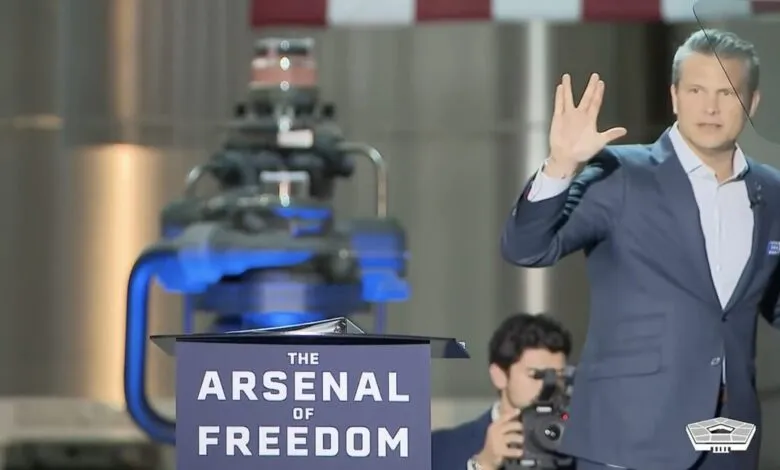
During an event at SpaceX headquarters in Texas, part of Hegseth’s “Arsenal of Freedom” tour, both men enthusiastically embraced the Star Trek aesthetic. Musk spoke of his ambition to create a real-world version of Starfleet Academy, while Hegseth greeted the crowd with the famous Vulcan salute. The location itself, a town named Starbase, draws directly from the series’ terminology. Yet the context they chose is curiously at odds with the source material.
The phrase “Arsenal of Freedom” is not just a catchy tour name; it is the title of a specific Star Trek: The Next Generation episode. That story serves as a cautionary tale about the dangers of unchecked militarization and autonomous weaponry. It depicts a planet destroyed by an AI weapons system that continues to operate long after its creators are gone, ultimately threatening the Enterprise itself. The episode is a narrative warning against the very concepts of an unfettered “arsenal” that Hegseth’s tour promotes.
Hegseth’s remarks centered squarely on accelerating the United States military’s lead in artificial intelligence. He announced a new strategy to deploy advanced AI across all defense networks, emphasizing the removal of bureaucratic hurdles to foster rapid experimentation and investment. His goal is clear: to ensure military dominance through technological superiority. This framework views AI primarily as a tool for strategic advantage and battlefield supremacy.
This perspective misses the philosophical heart of Star Trek. The franchise presents a future where humanity has moved beyond its baser instincts of conflict and scarcity. Earth is united, money is obsolete, and the driving purpose of organizations like Starfleet is peaceful exploration and scientific discovery. Advanced technology, including powerful AI, exists to improve life and understanding, not to subjugate or destroy. Diplomacy and cooperation are consistently valued over brute force, with characters often seeking solutions that avoid violence.
Musk and Hegseth’s vision appears to extract the cool technology, the starships, the gadgets, while discarding the essential humanistic ethos that gives those elements meaning. They see a blueprint for a powerful military-tech complex, but not the foundational societal evolution that makes such technology safe and benevolent in the Star Trek universe. Wanting to “make Star Trek real” requires more than building faster rockets or smarter weapons; it demands a radical reimagining of human priorities toward peace, curiosity, and shared prosperity. Their interpretation, focused on dominance, ironically highlights everything the hopeful series stands against.
(Source: Ars Technica)