HTC’s New Smart Glasses Prioritize Privacy
▼ Summary
– The Vive Eagle glasses offer extended battery life and include a clip-on Power Boost accessory for additional power.
– Powered by Vive AI, the device integrates ChatGPT and Gemini without requiring user logins to protect privacy.
– Privacy is enforced through a visible indicator light that disables recording if covered or verbally commanded.
– HTC executives emphasize that unlike social media companies, they do not use user data to train AI models.
– HTC hopes that competitors focusing on privacy will help shift cultural perceptions against smart glasses.
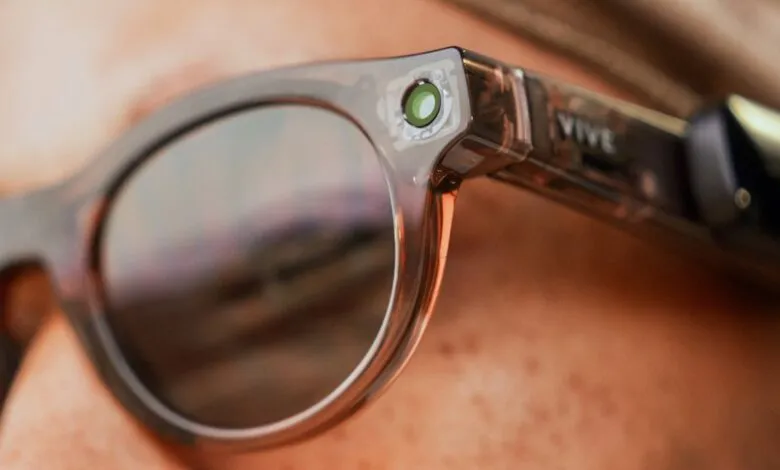
HTC’s Vive Eagle smart glasses are designed with a distinct focus on user privacy, aiming to differentiate themselves in a market currently dominated by Meta. The hardware offers 4.5 hours of battery life during continuous music playback and extends to 36 hours on standby. For users requiring extended power, HTC offers the Power Boost, a companion clip-on battery pack priced at $49. This accessory attaches directly to the frame; while visible, it is described as less intrusive than one might expect.
The device integrates Vive AI, an assistant capable of leveraging OpenAI’s ChatGPT or Google’s Gemini. A key privacy feature is that the system does not require user login, effectively keeping services “de-identified” to prevent the retention of personal data. Consequently, users forfeit the personalized experiences these chatbots typically provide through email and message analysis. HTC includes Vive’s AI Plus for free for the first two years, after which a monthly subscription fee of $2.50 applies.
Physical safeguards are prominent near the cameras, where a bright indicator light signals recording status. If this light is covered, recording ceases immediately. Additionally, vocal commands such as saying “stop recording” will halt the capture process. Video footage remains encrypted and stored locally on the glasses rather than being automatically uploaded to a phone or cloud service. Importing photos or videos requires manual intervention via the companion app.
This approach contrasts sharply with previous industry challenges. Meta has faced significant scrutiny over its indicator lights, leading some users to block the LEDs with stickers or tamper with the hardware. In response, Meta implemented software updates that disable the camera if the indicator light is compromised, alongside other privacy measures. However, the visual similarity between the Vive Eagles and Meta glasses creates confusion. Many potential buyers struggle to distinguish between the brands, often assuming all smart glasses share similar data practices despite HTC’s different corporate identity.
HTC executives argue that their business model removes the incentive for data harvesting. As McDowell states, “We’re not a social media company.” He emphasizes that there is no benefit to HTC in collecting user information, noting that “There’s no benefit to me to have any of your info. We don’t train our AI model or any third-party AI models with any of the information that is used on the glasses.”
The broader industry is attempting to address cultural disdain for wearable cameras through various design choices. Companies like Even Realities, Viture, and Halliday are exploring camera-less options, privacy shields, or virtual displays that do not capture the external world. While Meta currently holds the majority of the market share, HTC hopes that competitors prioritizing better privacy practices will help shift public perception. McDowell expresses the desire to align technology with societal norms, stating, “We’d like to make sure that our technology adapts to society’s expectations, not the other way around.” He adds, “I hope that everybody that’s making products like these takes steps in the right direction.”
(Source: Wired)