Nvidia Shield TV price rises $100 amid AI hype
▼ Summary
– Nvidia has increased the price of the Shield TV Pro by $100 to $299.99 due to rising component costs driven by generative AI demand.
– The streaming device, originally launched in 2019 with an aging Tegra X1+ processor, remains popular despite its older technology.
– Nvidia confirmed that memory and storage prices have surged across the industry, impacting hardware manufacturing expenses.
– The company stated it actively manufactures and sells every unit without relying on pre-AI stockpiles to offset costs.
– This price hike reflects broader supply chain constraints affecting devices with memory or storage capabilities in 2026.
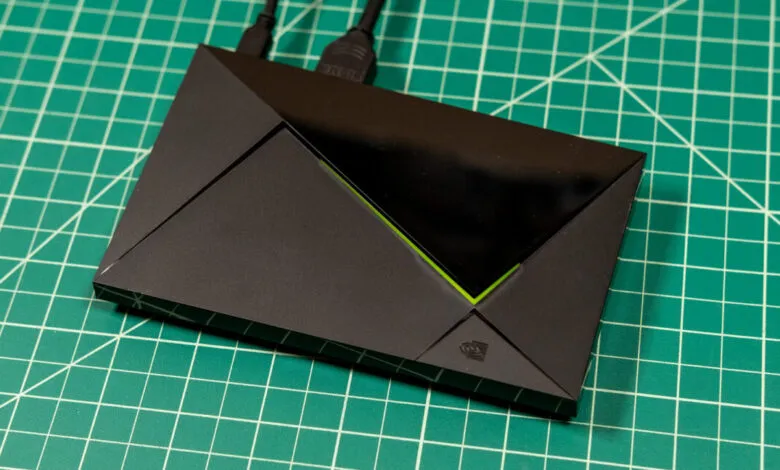
Generative AI has fundamentally reshaped technology supply chains, establishing a clear market trend for 2026: any device requiring memory or storage is facing significant cost increases. This inflationary pressure extends beyond cutting-edge hardware, impacting legacy products as well. Nvidia has confirmed that the Shield TV Pro will see an immediate price hike of $100, bringing its new retail cost to $299.99.
The current generation of the Shield streaming box was originally released in 2019. It features Android TV, hardware decoding for diverse media formats, and AI upscaling capabilities. Although it utilizes the older Tegra X1+ processor, the chip remains highly efficient for media streaming tasks. The device initially launched at $199.99, while a lower-tier non-Pro model was available for $149.99. Nvidia has since discontinued the non-Pro variant, leaving the Shield TV Pro as the sole offering in the lineup.
A spokesperson for Nvidia attributed the price adjustment to broader industry trends driven by artificial intelligence demands. “Starting October 2, SHIELD Pro will be priced at $299. The cost of components, including memory, has increased substantially across the industry,” the spokesperson stated. This confirms that the surge in component costs, particularly for memory modules, is the primary driver behind the updated pricing structure.
Andrew Bell, who previously described the Shield line as a passion project within the company, noted earlier this year that Nvidia continues to actively manufacture the devices. Unlike many tech firms that rely on existing inventory, Nvidia sells every unit it produces. Consequently, the company cannot buffer against rising costs using pre-AI stockpiles. New units are subject to the same supply chain constraints affecting modern smartphones and computers, forcing the price increase despite the hardware’s relatively mature design.
(Source: Ars Technica)
