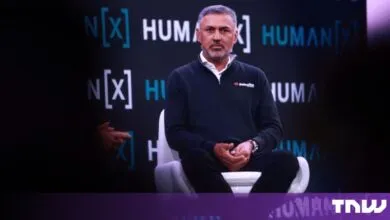
Timnit Gebru: No Existential Threat From AI

▼ Summary
– Timnit Gebru has emerged as a central figure in debates regarding artificial intelligence, challenging industry narratives about AI capabilities and risks.
– Gebru previously left Google after co-authoring a paper criticizing biases in large language models, leading her to found an institute focused on tech harms.
– She argues that the focus on existential risk and AI sentience is a harmful distraction from more immediate issues like bias and societal harm.
– Critics within the AI community, including Anthropic members, contend that Gebru’s earlier research underestimates the reasoning abilities of modern AI systems.
– Gebru’s critique of effective altruism groups has aligned her with right-wing entities who also oppose these communities, highlighting shifting ideological alliances.
The discourse surrounding artificial intelligence has evolved into a specialized lexicon defined by terms like stochastic parrots, misalignment, and P(doom). Amidst this booming industry, the debate over AI’s true impact has crystallized around two central concepts: the claim that large language models merely mimic data without understanding, and the assertion that advanced systems pose an existential risk to humanity. At the forefront of this contention stands Timnit Gebru, a researcher who has consistently challenged prevailing narratives about technological safety and capability.
Gebru first captured global attention through her conflict with Google, which culminated in her departure after she coauthored a paper criticizing biases in the company’s AI systems. She argued that these models essentially repeat their training data, thereby reinforcing harmful stereotypes. This controversy led her to establish an institute dedicated to investigating technology-driven harms and promoting unbiased tools. Her upcoming book, Deep Unlearning: The Rise of AI and the Radicalization of a Tech Idealist, further explores these themes. Recently, Gebru has targeted industry factions claiming AI is so potent it could end human civilization. In response, critics including an Anthropic cofounder have dismissed her earlier work as outdated, insisting that modern AI possesses genuine reasoning capabilities. Interestingly, Gebru’s skepticism regarding the effective altruism community’s influence has inadvertently aligned her with right-wing critics who share similar concerns about ideological capture within tech circles.
The Narrative as a Distraction
Gebru argues that the current focus on apocalyptic scenarios serves as a harmful distraction from tangible issues such as bias, surveillance, and labor exploitation. During a recent discussion, she emphasized that the fear-mongering surrounding AI safety is not merely misleading but actively dangerous. She pointed out that warnings of imminent doom have circulated for over a decade, repeating every few years with little substantive change.
> “I would even go farther than that and say that it’s dangerous. It’s not just a distraction, but it’s harmful.”
She noted that figures like Elon Musk and Peter Thiel have been issuing these warnings since 2013. According to Gebru, the rhetoric remains static despite significant shifts in technology. This cycle of alarmism often involves prominent organizations like the Future of Life Institute, founded by MIT physicist Max Tegmark and Jaan Tallinn. Tallinn, a Skype cofounder and key investor in Anthropic’s Series A funding, also backs METR, a third-party auditor whose recent report on OpenAI agents allegedly hacking Hugging Face gained widespread attention.
(Source: Wired)