Google’s $899 Gemini Laptop Aims to Replace Your PC
▼ Summary
– Google has announced that the new AI-powered Googlebook laptop is available for preorder at $899, positioning it as an upgrade to traditional Chromebooks.
– The device runs on Android OS and integrates Gemini AI capabilities directly into the hardware, including features like an AI cursor and dictation tools.
– Key AI features include Rambler for cleaning up text, Magic Cursor for interacting with content, and vibe-coded widgets, though some features lack unique hardware requirements.
– Analysts suggest that while these AI features are useful, they may not be sufficient on their own to drive a mass migration of users from existing devices.
– Google aims to leverage the Googlebook to capture the K-12 education market by transitioning millions of current Chromebook users toward its Gemini AI ecosystem.
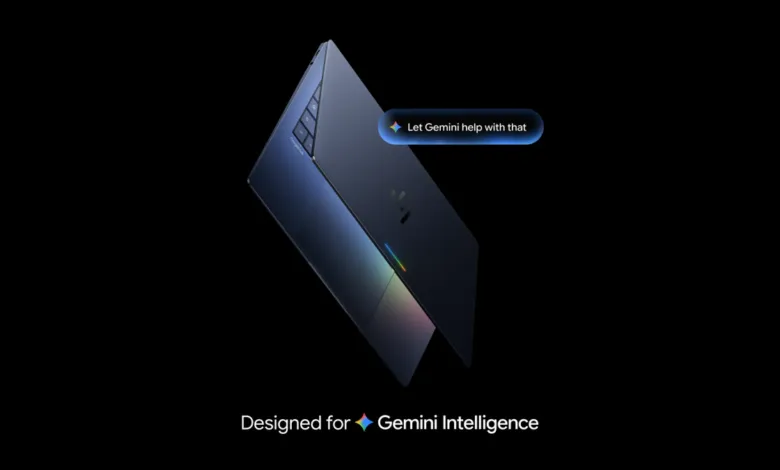
Google has officially opened preorders for its new Gemini-powered laptop, a device the company refers to as the Googlebook. Priced at $899, the machine was first introduced in May and is now positioned as a significant evolution beyond traditional Chromebooks. While it retains familiar elements like the Android operating system and the desktop version of the Chrome browser, the primary draw is the deep integration of Gemini AI directly into the hardware experience.
The strategy behind this release is to shift user behavior from installing separate desktop applications to using an AI-native ecosystem. By embedding these capabilities into the device itself, Google hopes to convert millions of existing Chromebook users into regular users of its advanced AI tools. The goal is not just to sell hardware but to establish a long-term foothold in the education sector, where approximately 50 million Chromebooks are currently in use across K-12 schools.
The Magic Cursor and AI Integration
At the heart of the Googlebook experience is what Google calls the Magic Cursor. This feature transforms the standard pointer into an active conduit for Gemini, allowing users to interact with content on their screens in novel ways. For instance, highlighting text on a webpage can prompt Gemini to analyze or summarize it instantly. Hovering over an email allows the AI to assess potential security risks, while selecting multiple images lets users ask Gemini to visualize them together.
This functionality bears a strong resemblance to Android’s “Circle to Search” feature, which uses gestures like circling or tapping to connect with Google Search. However, industry observers note that Circle to Search alone did not trigger a massive migration to Android smartphones. Similarly, the Magic Cursor may struggle to serve as the primary selling point for the new laptops, especially given the rise of autonomous AI agents capable of executing complex tasks across browsers and operating systems without manual cursor guidance.
While innovative, the Magic Cursor represents a refinement of existing interaction models rather than a revolutionary leap. It demonstrates how AI can be woven into daily computing habits, but it remains unclear if this specific implementation will be enough to justify an upgrade for the average consumer.
Rambler and Vibe-Coding Widgets
Among the various AI features, Rambler stands out as potentially the most practical addition. This tool is designed to clean up messy, rambling voice notes or “brain dumps” and convert them into structured, readable text. While Rambler addresses a genuine need for productivity and organization, it is arguably more of a convenience than a necessity. Users might find the feature valuable, but it does not necessarily compel them to purchase entirely new hardware when similar results can sometimes be achieved through software updates on existing devices.
Other features, such as vibe-coded widgets, Gemini Spark, and Gemini Live, add layers of customization and interaction. However, these functionalities do not strictly require specialized new hardware to operate. They represent enhancements to the software ecosystem rather than unique hardware differentiators. The challenge for Google lies in convincing users that these software-level improvements warrant a hardware refresh.
Hardware Specifications and Market Strategy
The Googlebook lineup includes flagship models built by major manufacturers including Acer, ASUS, Dell, HP, and Lenovo. These devices are constructed from premium materials such as aluminum, magnesium alloy, and carbon fiber. The hardware specifications are robust, featuring displays with resolutions up to 2.8K OLED, haptic glass trackpads, and backlit keyboards. Under the hood, the laptops utilize processors from Intel and Qualcomm paired with dedicated Neural Processing Units (NPUs) to handle AI workloads efficiently. Google claims the devices can deliver up to 14 hours of battery life, aiming to compete with other high-end ultrabooks on the market.
From a business perspective, this launch serves as a bridge between Google’s current Chromebook dominance and its future AI ambitions. In May, the company confirmed that existing Chromebooks would continue to receive support, but many would eventually become eligible to transition to the new Googlebook experience. This approach allows Google to maintain goodwill among current users while gradually migrating them toward a more integrated AI ecosystem.
The $899 price point includes a substantial bundle of services to sweeten the deal. Buyers receive 12 months of Google AI Pro, which provides 5TB of cloud storage and access to Gemini Advanced tools. Additionally, the package includes three months of subscriptions to YouTube Premium, Adobe Photoshop, and other services. Google has also committed to providing regular security and feature updates for up to 10 years, addressing one of the common criticisms of lower-cost computing devices.
Preorders are currently available through the Google Store, Best Buy, and other authorized retailers. The devices will begin shipping on October 4 in the United States, followed by availability in Canada, the U. K., Ireland, France, Germany, and Australia on October 5. As the market evaluates the true utility of these AI-integrated features, the success of the Googlebook will likely depend on whether consumers view these tools as essential upgrades or merely incremental improvements.
(Source: TechCrunch)