Metal Gear Creator Reacts to Sony Ending PlayStation Discs
▼ Summary
– Hideo Kojima expressed sadness over Sony ending physical game discs in 2028, stating he has been buying Blu-rays and CDs.
– Kojima warned that streaming removes ownership, as users only access data from servers and could lose access if distribution stops.
– Sony’s shift to digital has raised ownership concerns, highlighted by recent removal of purchased movies and games from user libraries.
– Different companies are responding differently: Microsoft tests digitizing physical games, Nintendo uses DRM-locked key cards, and Sony’s PS6 disc drive plans are unclear.
– At least one factory that primarily printed PlayStation discs is already pivoting to other products, suggesting Sony may not reverse course.
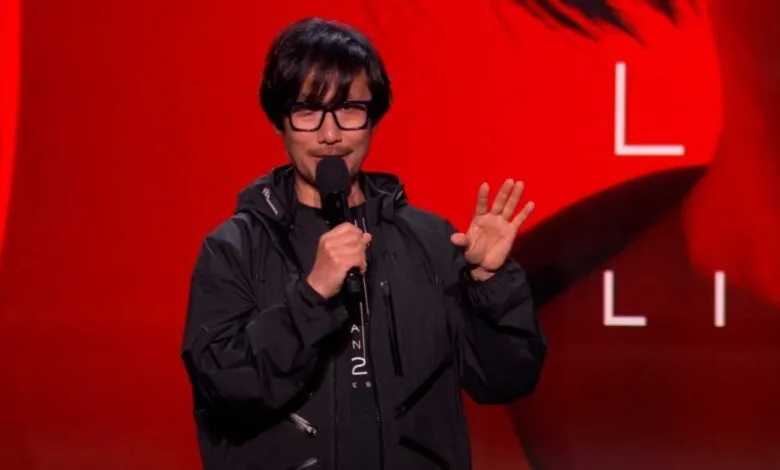
Hideo Kojima, the legendary creator behind Metal Gear and director of the recent Death Stranding series, has become one of the first major voices in gaming to publicly address Sony’s decision to phase out PlayStation game discs by 2028. Speaking at the Il Cinema in Piazza film festival in Italy, the celebrated developer turned to the topic of physical media and the perils of an all-streaming future.
“Since production is ending in 2028, this is about video games, but I grew up with physical media, so I find it really sad,” Kojima said, according to a translation by the gaming news account Genki. “Currently, I’ve been buying up a lot of Blu-rays, such as various movies, and CDs too.”
He reportedly elaborated further on the distinction between downloads and streaming. “The situation is different for games, as they are downloaded to the hard drive, that means the game data remains on your own hardware. However, if things shift to streaming in the future, that won’t be the case anymore. With streaming subscription services, like Netflix or Amazon, there is a server somewhere, and you essentially just have the right to turn the tap, and when you do, the data flows out. That’s how movies work on these platforms, right? You don’t download the data, you access it directly through a subscription. And the consequence of that is that you don’t actually possess the data yourself. There are companies that own these servers and let you ‘turn the tap’ for a monthly fee. However, with nations, politics and various ways of thinking, one naturally has to consider the possibility that if there is a change, the data inside will stop being distributed. And if that happens you won’t be able to watch or play the movies and games you like. That is what is frightening. So, what is happening to video games in 2028, might also happen to movies. I’d like everyone to keep that in mind.”
The news that Sony will end physical media around the expected launch of its PlayStation 6 console generation has reignited deep concerns over digital ownership and the restrictions that digital-only purchases impose on players. Just recently, Sony removed movies from users’ digital libraries that they had already purchased after license agreements expired. In the past, the platform holder has also demonstrated it can remove games from users’ libraries, as it did when Concord was “unlaunched” back in 2024. Fans have even combed through PlayStation’s terms of service to uncover language that could see unused accounts deleted altogether if they remain inactive for too long.
The debate prompted a resurgence of Kojima’s own tweets about digital ownership from 2021. “Eventually, even digital data will no longer be owned by individuals on their own initiative,” he wrote. “Whenever there is a major change or accident in the world, in a country, in a government, in an idea, in a trend, access to it may suddenly be cut off. We will not be able to freely access the movies, books, and music that we have loved. I would be a have-not. That’s what I’m afraid of. This is not greed.”
Different gaming companies are responding to the shift to digital in distinct ways. It remains unclear if the PS6 will ship with an optional optical drive to allow players who own PS4 and PS5 discs to still play them on the new device, assuming it is backward compatible. Microsoft is reportedly testing ways for existing users to digitize their physical game purchases so they can access digital versions of those games moving forward, with many analysts expecting Xbox to ditch physical media in the future as well. Nintendo, meanwhile, has responded with game key cards, a controversial form of physical media locked by DRM that functions more as a transferable download code than an actual game cartridge. Still, it offers advantages over a digital-only purchase, including the ability to resell it or trade it with a friend.
While some have remained hopeful that Sony might reverse course, there is already a report that at least one factory that primarily printed PlayStation discs is pivoting to different products.
(Source: Kotaku)