Blue Origin setback; Pentagon eyes new launch site
▼ Summary
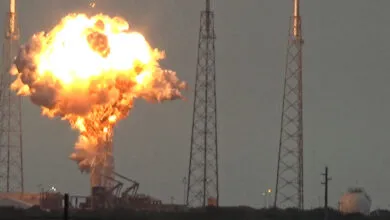
– Blue Origin’s New Glenn rocket exploded on its launch pad at Cape Canaveral, Florida, destroying much of the company’s sole orbital-class launch pad and grounding the rocket for an extended period.
– The full ramifications of the explosion are not yet understood, and the event will be analyzed for weeks, months, and years to come.
– China has drastically increased its space launches over the last decade while ignoring norms for disposing of rocket upper stages.
– Most launch companies reserve propellant to remove upper stages from orbit to prevent space debris, but China does not follow this practice.
– The mass of Chinese rocket bodies in long-lived orbits has risen from under 100 metric tons to 252 metric tons in the past five years, according to analyst Jim Shell.
Welcome back to Edition 8.43 of the Rocket Report. As of this writing, the full consequences of Blue Origin’s New Glenn rocket explosion at Cape Canaveral late Thursday night remain unclear. What we do know is sobering: the company’s only orbital-class launch pad has been largely destroyed, and the New Glenn rocket is facing an extended grounding. It’s far too early for definitive analysis, at least until daylight reveals the full scope of the damage Friday morning. One thing is certain, however: this incident will shape spaceflight discussions for weeks, months, and even years to come.
We always welcome reader insights. To avoid missing an issue, subscribe using the box below (the form won’t appear on AMP-enabled versions of the site). Each edition covers small-, medium-, and heavy-lift rockets, plus a preview of the next three scheduled launches.
Meanwhile, a separate issue is gaining attention: China’s growing contribution to space debris. The sharp increase in Chinese space launches over the past decade has brought a troubling pattern to light. According to an Ars report, China appears to be disregarding long-established norms for safely disposing of rocket upper stages. These components, which separate from the first stage to push a payload into orbit, were historically left in space. However, most modern launch operators now reserve enough propellant to de-orbit them, reducing the risk of creating orbital debris. China, however, is bucking this trend. A new analysis by Space Domain Awareness expert Jim Shell reveals that the mass of Chinese rocket bodies in long-lived orbits has surged from under 100 metric tons to 252 over the past five years, marking a striking and concerning increase.
(Source: Ars Technica)