China Surprise Launches Another Large Reusable Rocket
▼ Summary
– Unlike the US, where SpaceX clearly led, the competition for China’s first reusable orbital rocket is highly uncertain among multiple companies and state enterprises.
– SpaceX landed and relaunched a Falcon 9 booster years before any other US company achieved the same feat.
– China’s state-owned space enterprise may now have an advantage after the successful launch of the Long March 12B rocket.
– Two Chinese attempts to recover heavy boosters in December 2024 failed when both the Zhuque 3 and Long March 12A rockets crashed.
– The Zhuque 3, from private company LandSpace, and the Long March 12A, from a state-owned enterprise, both failed to land their boosters.
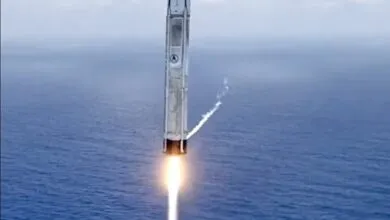
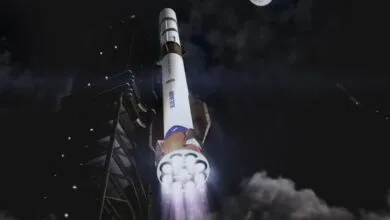
The race to secure China’s first reusable rocket landing is shaping up to be far more unpredictable than the U.S. contest a decade ago. Back then, there was little doubt about the winner: SpaceX landed a Falcon 9 booster in 2015, then flew it again just over a year later. It took nearly 10 years for any other American company to replicate that feat, with Blue Origin finally recovering its New Glenn booster last November and relaunching it in April.
China’s landscape is dramatically different. Multiple private companies and state-owned enterprises all have a realistic chance of landing an orbital-class booster this year. For a while, the advantage seemed to belong to the country’s newer, privately funded launch startups. But the latest launch of the Long March 12B rocket , backed by the deep pockets and vast infrastructure of China’s state-owned aerospace giant , signals that the legacy players may now be pulling ahead.
Secrecy remains a defining feature of China’s space program. The country’s first two attempts to recover heavy boosters both ended in failure last December. On December 2, the private company LandSpace launched its Zhuque 3 rocket. The mission succeeded in reaching orbit, but the booster crashed near its intended landing zone in the Gobi Desert of northwestern China. Less than three weeks later, the Long March 12A , a smaller rocket built by the Shanghai Academy of Spaceflight Technology, a state-owned entity , suffered a similar fate on its maiden flight. Both failures underscore the difficulty of the task, but they also highlight how many players are now seriously competing to achieve what only SpaceX and Blue Origin have managed so far.
(Source: Ars Technica)