Amazon in $9B Talks to Acquire Globalstar
▼ Summary
– Amazon is in advanced talks to acquire satellite company Globalstar in a deal valuing it at approximately $9 billion.
– The acquisition would give Amazon access to Globalstar’s valuable radio spectrum licenses and existing ground infrastructure for its satellite internet project.
– A major complication is Apple’s 20% stake in Globalstar, which powers the Emergency SOS feature on iPhones and requires direct negotiation.
– Globalstar’s shares surged to an 18-year high on the news, reflecting investor recognition of its spectrum’s value.
– The deal would significantly accelerate Amazon’s efforts to build a satellite network to compete with SpaceX’s Starlink.
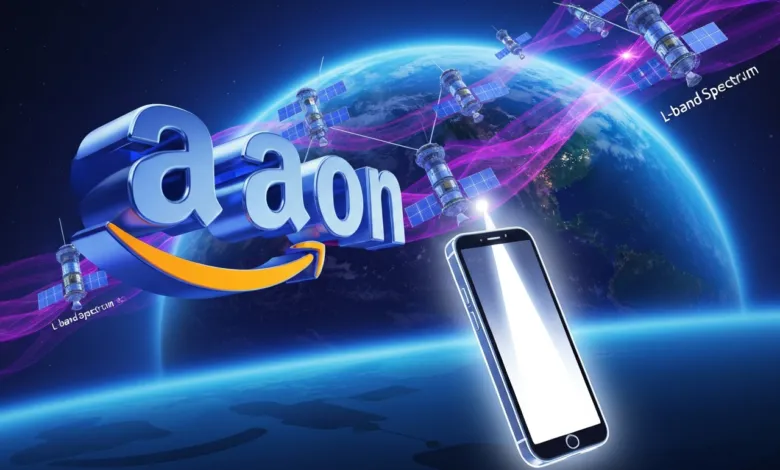
Amazon is reportedly in the final stages of negotiating a massive acquisition of satellite operator Globalstar, a potential $9 billion transaction that would dramatically accelerate its push into space-based internet. This move would provide a critical shortcut for Amazon’s Leo satellite programme, granting it immediate access to Globalstar’s L-band spectrum and established ground infrastructure in its race to compete with SpaceX’s Starlink. The presence of Apple as a major stakeholder, however, adds a significant layer of complexity to the discussions.
According to sources, the talks are advanced but no final agreement has been signed. The strategic value for Amazon is clear. Its Project Kuiper initiative, now called Amazon Leo, aims to deploy a constellation of over 3,200 low-earth-orbit satellites. While Amazon has launched more than 180 satellites to date, acquiring Globalstar would deliver a leap forward. The deal would transfer ownership of highly valuable and finite radio frequency spectrum licenses, along with decades of operational experience and a global customer base spanning enterprise, government, and consumer markets. Globalstar, which became profitable in 2025 with $273 million in revenue, represents a turnkey solution to build out this ambitious network.
A major hurdle is Apple’s deep involvement with the satellite company. In 2024, Apple invested $1.5 billion for a 20% stake in Globalstar, an arrangement that funds new satellites and supports the Emergency SOS via Satellite feature on recent iPhones and Apple Watches. This is not a passive financial holding, it creates a direct operational dependency for a core iPhone safety function. Consequently, Amazon must negotiate directly with Apple to ensure the continuity of this service under any new ownership structure, making the acquisition talks far more intricate.
News of the potential deal sent Globalstar’s stock soaring to an 18-year high in after-hours trading, as investors recognized the immense strategic value of its spectrum assets. For Amazon, success would mean compressing years of development into one transaction, instantly providing a platform to challenge Starlink across all its key markets, including consumers, businesses, and government agencies. The central question now is whether a structure can be found that satisfies Apple’s essential operational needs while fulfilling Amazon’s competitive ambitions in the satellite internet arena.
(Source: The Next Web)