The Exploration Company Raises $450M for New Rocket Engine
▼ Summary
– The Exploration Company has raised $450 million to fund the development of Storm, a reusable methane-oxygen rocket engine rather than its known Nyx capsule.
– CEO Hélène Huby prioritizes engine development as the most difficult component, with testing scheduled from late this year through 2028.
– The company is betting on a future European heavy-lift launcher for which no official procurement contract currently exists despite expectations of an ESA competition.
– Competitor ArianeGroup is already developing the Prometheus engine, creating a scenario of duplicated effort or healthy competition within Europe’s space sector.
– The funding round exceeded initial targets, highlighting investor confidence in TEC’s long-term strategy despite the lack of immediate vehicle orders.
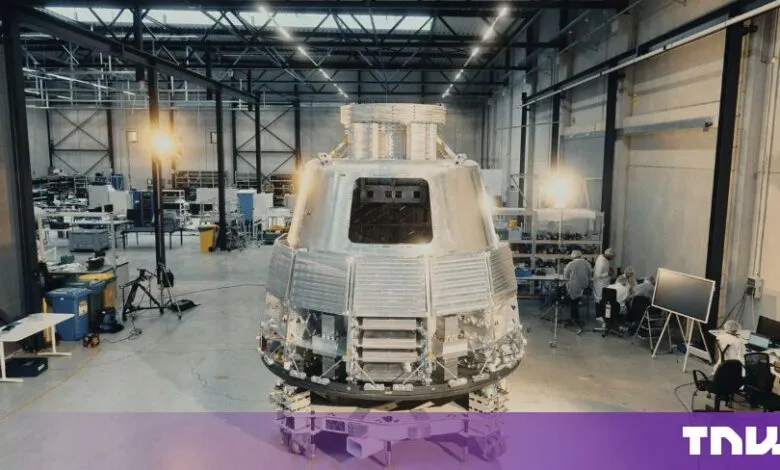
The Exploration Company has secured a massive $450 million funding round, with the majority of capital directed toward developing a new rocket engine rather than its more visible capsule technology. While the company’s reusable Nyx capsule has previously drawn comparisons to SpaceX due to high-profile contracts, founder and CEO Hélène Huby emphasized that propulsion remains the critical bottleneck for the industry.
“My strategy right now is to stay very focused on the rocket engine because there is no rocket without the engine,” Huby stated. “That’s the most difficult and longest part to build.”
This focus centers on Storm, an engine designed using a full-flow staged combustion cycle. This architecture, which also powers SpaceX’s Raptor engines, is notoriously complex to engineer but offers superior efficiency. TEC describes Storm as Europe’s first reusable high-thrust engine of its class, intended to power a future heavy-lift launcher capable of delivering up to 40 tonnes to low Earth orbit. Development has been underway for three years, and the new funding will support testing phases extending through 2028. The immediate roadmap involves subscale pre-burner tests within months, followed by oxygen-rich power pack trials, before moving to a full-scale workhorse engine. No components have fired in flight yet.
Betting on an Undefined Vehicle
A significant portion of this investment rests on a speculative premise: the existence of a launch vehicle that does not yet exist. Europe currently relies on Ariane 6, built by ArianeGroup, for heavy-lift capabilities. Huby anticipates that the European Space Agency (ESA) will open a competition for next-generation heavy-lift designs by the end of the decade. However, ESA has not announced such a contest. Current ESA initiatives, such as the European Launcher Challenge, prioritize small and medium-sized rockets, naming heavy-lift only as a distant goal.
Consequently, TEC is financing an engine for a program that lacks official commitment. This strategic bet is defensible given the long development cycles inherent in rocketry, but it highlights a gap between corporate ambition and institutional procurement.
TEC faces direct competition from ArianeGroup, which is developing Prometheus, another methane-oxygen reusable engine backed by ESA. Prometheus has been undergoing hot-fire tests since 2022, with ArianeGroup targeting operational use by 2030. If both companies succeed, they will occupy similar technological space, potentially leading to duplicated efforts unless ESA formalizes a unified heavy-lift requirement.
Financial Scale and Political Context
The $450 million raise significantly exceeds earlier reports suggesting a target of $300 million. Led by Bessemer Venture Partners, Atomico, and the Scaleup Europe Fund, the round includes participation from Balderton, Plural, Cherry, and Red River West. Alex Ferrara of Bessemer joins the board, bringing total funding since 2021 to approximately $680 million.
While no valuation was disclosed, earlier reports hinted at a potential figure above $2 billion during negotiations. TEC claims to hold over $2 billion in contracts and commitments, though the distinction between binding agreements and expressions of intent remains unclear. The company also asserts records for the largest Series C by a European space firm and the largest round led by a female EU-headquartered CEO, figures that remain unverified by independent sources.
The timing of the announcement carries political weight. It coincides with the opening of the International Space Summit in Paris, where Huby serves as a special envoy alongside astronaut Thomas Pesquet. The involvement of the €5 billion Scaleup Europe Fund, managed by EQT under the auspices of the European Commission, underscores the intersection of private venture capital and public industrial policy. Both French President Emmanuel Macron and European Commission President Ursula von der Leyen publicly praised the achievement, highlighting the significance of women’s leadership in technology.
Market Comparison and Future Milestones
In a global context, the scale of TEC’s raise contrasts sharply with recent American developments. On the same day, Washington-based Stoke Space raised $1 billion for a rocket that has never flown. TEC’s haul makes it the best-funded European space company at this stage, yet it remains less than half the amount secured by its US competitor.
Looking ahead, several key indicators will determine the viability of this strategy. Investors will watch closely to see if ESA initiates a heavy-lift competition and whether Storm successfully completes its initial pre-burner and subscale chamber tests in the coming months. Additionally, the success of the Nyx capsule remains paramount. TEC aims to demonstrate a flight to the International Space Station and return in 2028. Achieving this would mark the first time a European company has completed such a mission, potentially transforming a well-capitalized ambition into a proven capability.
(Source: The Next Web)