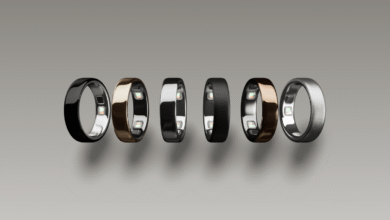
Ultrahuman Raises $70M to Turn Ring Into a Computer

▼ Summary
– Ultrahuman has secured $70 million in funding to transform its smart ring from a passive tracker into an active computing platform.
– The company plans to utilize Qualcomm silicon to enable on-device processing, allowing the ring to run independent software and applications.
– Future use cases extend beyond health monitoring to include functions like game controllers, car keys, and AI interfaces accessible to third-party developers.
– A strategic partnership with Qualcomm aims to position the ring as a primary input device for smart glasses, addressing the need for gesture control.
– Despite winning a patent case against Oura, Ultrahuman remains excluded from the US market due to ongoing International Trade Commission rulings.
Ultrahuman has secured $70 million in a funding round that signals a dramatic shift in the smart ring industry. The Bengaluru-based company is moving beyond simple health metrics to transform its hardware into a full-fledged computing platform. This investment, consisting of $65 million in equity and $5 million in debt, values the firm at approximately $365 million. Major participants include Qualcomm Ventures, Labcorp, Alpha Wave, Blume Ventures, Nexus Venture Partners, and Alteria Capital.
The involvement of Qualcomm Ventures is particularly significant given its history with category-defining devices like the original Ring and Fitbit. Rather than supporting another passive sleep tracker, the capital is directed toward building a ring that operates as an independent computer. This strategy aims to leverage on-device processing power, reducing reliance on smartphones or cloud infrastructure for data handling.
From Tracker to Platform
The core ambition is to evolve the smart ring from a monitoring device into an interactive input tool. Founder and CEO Mohit Kumar outlined a vision where the ring functions similarly to a mouse, game controller, car key, or interface for artificial intelligence interactions. This transformation relies on new hardware built on Qualcomm silicon, which will complement the existing Nordic Semiconductor chips currently in use. The enhanced processing capabilities allow for more complex applications to run directly on the finger.
Kumar was direct about the limitations of current market offerings. “All ring devices today are like trackers,” he said. He envisions a future where third-party developers create software specifically for the ring, turning the product into a broader ecosystem. While this new hardware is in development, Ultrahuman is already rolling out software updates for its existing Ring Air and Ring Pro models by the end of September. These updates will enable the current rings to function as game controllers and connect to AI applications, while also opening the door for external developers.
The physical advantages of a ring over a wrist-worn watch provide unique opportunities for these new features. “A game controller never reads your heart rate and your temperature, but this one does,” Kumar said. This physiological data could be integrated into gaming experiences, allowing games to respond dynamically to a player’s body temperature and heart rate alongside their movements.
Targeting the Smart Glasses Era
While gaming and general computing are immediate goals, the long-term strategic target is integration with augmented reality and smart glasses. During IFA in Berlin, Chief Business Officer Bhuvan Srinivasan identified smart glasses as the primary companion device for Ultrahuman’s next-generation ring. He described a scenario where the ring controls smart glasses through hand gestures during the day and monitors sleep at night, citing Meta’s glasses as a prime example.
Srinivasan clarified that the current ring lineup cannot support this level of interaction. A new ring tier, developed in partnership with Qualcomm, is required to meet the demands of controlling wearable displays. This aligns with Qualcomm’s broader strategy, which launched a white-label toolkit for AI glasses in June. The tech giant is betting that the next major computing platform will not be the smartphone, but rather glasses that require discreet, non-verbal input methods in public spaces. A ring that simultaneously tracks physiology and provides gesture control offers a compelling solution for this emerging form factor.
Reclaiming the US Market
Ultrahuman’s journey to this point has been marked by significant challenges, particularly in the United States. For much of the past year, the company was barred from selling its products in the US due to a patent infringement ruling by the International Trade Commission in favor of Oura in September 2025. This forced the removal of the Ring Air from the US market while Ultrahuman redesigned the product.
The company has since returned with the Ring Pro, and demand appears robust. Kumar reported that US demand is currently running at 18 to 20 times the available supply. He anticipates that production volumes will return to pre-ban levels by the next quarter and triple over the following four quarters. Geographically, the US now accounts for roughly 45% of revenue for the quarter, while India contributes about 11%. Part of the new funding will support physical retail expansion in India and the UAE, areas where offline sales significantly outperform online listings.
Diversified Revenue Streams
Underpinning the hardware ambitions is a growing business model that extends beyond ring sales. Ultrahuman reports an annual revenue run rate of $140 million, representing a 45% year-over-year increase. The company projects reaching $200 million in revenue by January 2027. Cumulative sales have reached approximately 800,000 rings, up from 700,000 in February.
To diversify its portfolio, Ultrahuman has expanded into continuous glucose monitoring and environmental sensing. The company also launched Blood Vision, a preventative blood-testing service it has developed over two years. The presence of Labcorp on the cap table reflects this clinical focus. Ultrahuman is currently investigating whether blood-flow signals captured by the ring can correlate with blood-test results to identify risks in cardiovascular health and fertility. This represents a more complex value proposition than standard sleep scoring and requires substantial clinical evidence.
Despite the growth, the company expects to operate at a loss this year due to investments in retail infrastructure, brand building, and clinical research. Kumar aims for profitability within eight quarters, which would position the company for an initial public offering in 2028 at the earliest.
Competitive Landscape
The timing of this funding announcement coincides with a broader industry shift away from subscription-heavy smartwatches toward screenless wearables. Competitors like Circular recently launched rings with contactless payments and haptic alerts, while Garmin introduced a screenless band without mandatory membership fees. These devices compete on functionality rather than just measurement capabilities.
Ultrahuman’s approach includes monetizing software through PowerPlugs, its add-on service, with approximately 12% of users paying for these enhancements. The ring hardware itself remains free of subscription requirements. This strategy addresses competitive pressures highlighted in Oura’s recent IPO filing, which noted that lower-cost, fee-free rings are creating pricing challenges in the market. By raising $70 million to innovate its platform capabilities, Ultrahuman is positioning itself to compete on utility and ecosystem depth rather than engaging in a price war.
(Source: The Next Web)