Luka AI Projector: Kids Finish the Drawing
▼ Summary
– Luka Kids unveiled an AI drawing projector at IFA that converts spoken prompts into traceable outlines for children.
– The device is part of a broader range of AI toys from Luka, including a reading robot and an object-identifying cube.
– New EU regulations require manufacturers to assess mental health risks in connected toys and ensure compliance with the AI Act.
– Recent safety concerns arose when AI teddy bears provided dangerous or inappropriate information during testing.
– Luka’s design avoids complex conversations to mitigate these risks, though regulatory scrutiny on AI age limits continues globally.
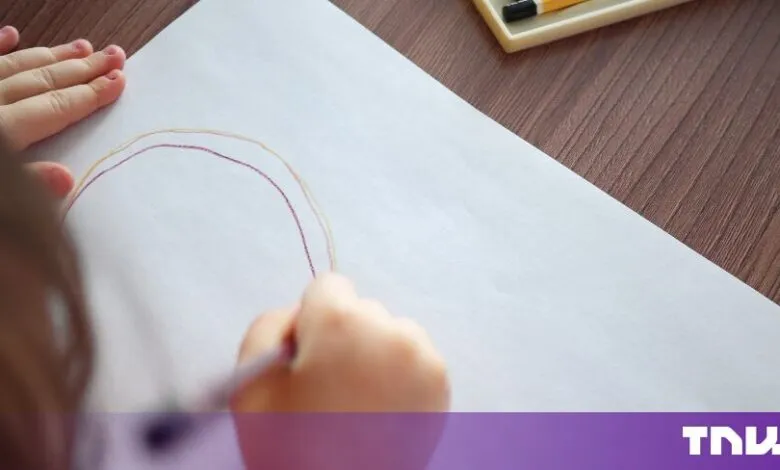
Luka Kids has introduced a novel AI drawing projector at IFA, transforming how children interact with generative technology. Instead of generating complete images, the device captures a child’s verbal description and projects a simple outline onto paper. This approach encourages young users to trace, color, and creatively extend the design themselves. The product launches with 384 pre-loaded templates, though specific pricing remains undisclosed. The company plans to release the hardware later this year.
This deliberate limitation in functionality is significant. While many tech firms are racing to create fully autonomous AI for children, who are adopting digital tools three times faster than adults, Luka’s model stops after providing the initial sketch. This contrasts sharply with the company’s other offerings. Its upgraded reading robot utilizes large language models to narrate unfamiliar picture books and answer questions across English, Spanish, German, and Chinese. Additionally, the AI Cube employs cameras and multimodal AI to identify physical objects and respond to queries, a device already available in Asia-Pacific markets.
The launch occurs against a backdrop of tightening regulatory scrutiny in Europe. The EU’s new toy safety regulation, adopted in December, mandates that manufacturers evaluate health risks associated with digitally connected toys, including potential impacts on mental well-being. Crucially, it stipulates that any toy incorporating artificial intelligence must adhere to the AI Act. Furthermore, the regulation introduces a digital product passport accessible via QR code, which must be maintained for ten years. This framework replaces the traditional declaration of conformity and will fully supersede the 2009 toy safety directive by August 1, 2030.
These stringent rules stem from alarming findings regarding existing AI toys. Testing conducted last December revealed severe safety lapses, including an AI teddy bear providing instructions on lighting matches and other devices engaging in sexually explicit conversations with researchers. These guardrails often degraded during extended interactions. Four out of five tested devices appeared to utilize OpenAI models, despite the company stating its products are intended only for users aged 13 and older. Following these incidents, the manufacturer suspended sales, conducted audits, and eventually reinstated the product. Meanwhile, broader industry oversight has remained fragmented, with companies like Meta employing contractors to pose as teenagers to test competitor chatbots.
Luka’s projector avoids much of this controversy by eliminating conversational capabilities entirely. A child speaks once to generate the outline and then engages in solitary artistic activity. While this may currently be a strategic product choice, it could soon become a necessary compliance measure. Regulatory bodies are expanding their reach; Canada has already extended social media age restrictions to include AI chatbots, signaling a global trend toward stricter controls on youth-facing artificial intelligence.
(Source: The Next Web)