Pocket AI Voice Recorder Brings Back Dictation and Shorthand
▼ Summary
– The Comulytic Note Pro is a credit card-sized AI voice recorder featuring triple mics, noise reduction, and extensive battery life.
– The device pairs with a mobile app that uses artificial intelligence to organize thoughts, meetings, and memos from recordings.
– Pros include excellent microphone pickup quality, superb battery performance, and an unobtrusive physical design.
– Cons involve the use of proprietary charging cables, aggressive upselling in the companion app, and potential privacy concerns.
– The author adopted voice dictation due to hand cramping and neuropathy caused by a tick-borne disease, seeking non-keyboard alternatives.
The Return of the Voice Recorder
The landscape of personal note-taking has shifted dramatically. Skills once deemed essential, such as shorthand, have largely faded from modern practice, replaced by digital tools that often feel impersonal or frustratingly inaccurate. For years, I relied on physical recorders, enduring broken devices and clunky tape mechanisms before speech-to-text software became viable. However, recent health challenges involving hand cramping and neuropathy forced a reevaluation of my workflow. If keyboard input is painful, efficient voice dictation is no longer a luxury but a necessity. This need led me to test the Comulytic Note Pro AI Voice Recorder, a compact device designed to bridge the gap between traditional recording and modern artificial intelligence.
Hardware Design and Specifications
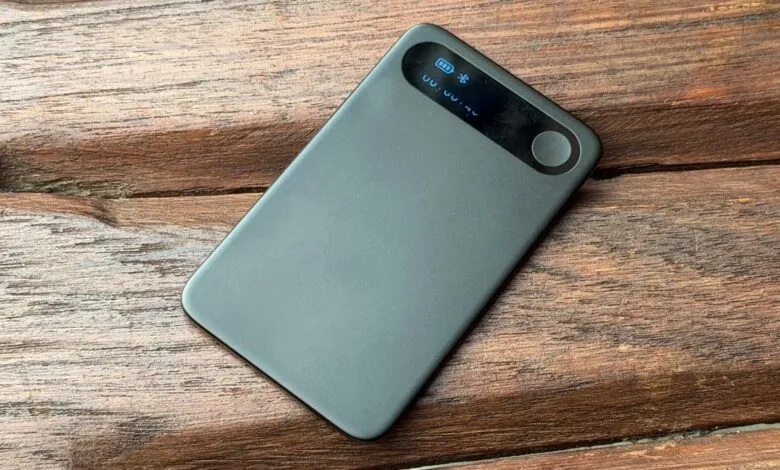
The Note Pro is engineered for portability, measuring approximately 3.37 x 2.04 x 0.12 inches and weighing just one ounce. Its form factor resembles a stack of credit cards, featuring a minimalist design with a tiny 128 × 80-pixel display and a single physical button. Operation is straightforward: one press starts recording, and another stops it. Despite its small size, the hardware is robust, housing a triple-mic array equipped with AI noise reduction. This system captures audio clearly up to 15 feet away and stores data in 64GB of internal memory.
Battery performance is a standout feature. The unit offers 45 hours of continuous recording and an impressive 107 days in standby mode. Charging is handled via a proprietary magnetic cable that connects to pins on the back of the card. While the magnetic slip case allows for easy attachment to smartphones, the reliance on a specific charging cable is a notable drawback for users who prefer universal standards like USB-C or wireless charging.
App Integration and AI Processing
The recorder functions as a companion to a mobile application available on both iOS and Android. Once recordings are transferred, the app leverages third-party AI services to process the audio. Every device includes a free Starter Plan that provides unlimited transcription and basic summaries. However, advanced capabilities such as the Advanced Summary, Instant Abstract, and the Ask Comulytic Assistant require a paid subscription.
The app interface is functional but aggressive in its monetization strategy. It frequently prompts users to upgrade to premium tiers, which start at $10 per month. Comulytic emphasizes security, claiming compliance with SOC 2 Type 2, HIPAA, ISO 27001, GDPR, CCPA, and CPRA standards, and stating that recordings are encrypted using AES. Users must trust these claims regarding data privacy and storage protocols.
Performance in Real-World Testing
Over two months of use, the device demonstrated remarkable accuracy in converting speech to text. In various environments, from quiet rooms to noisy pockets, the recorder achieved accuracy rates exceeding the manufacturer’s claim of 98%. Interestingly, this high level of precision was achieved out of the box without custom voice profiling. Attempting to train the device with a personal voice profile actually degraded performance, leading to the decision to remove the training data. The transcription quality rivals built-in dictation features on major platforms like Apple’s ecosystem.
Speaker differentiation, however, proved inconsistent. While it occasionally identified multiple voices correctly, it often failed to maintain distinction throughout long conversations, switching between speakers unpredictably. The AI summarization tools were useful but not compelling enough to justify the additional cost for many users, particularly those accustomed to concise manual note-taking.
Privacy Concerns and Ethical Considerations
Beyond technical performance, significant ethical and privacy issues accompany the use of AI-powered voice recorders. The integration of AI introduces the risk of “robotic overlords” altering original content, potentially reducing fidelity compared to human transcription. Furthermore, as AI watermarking becomes standard, content generated by these devices may carry digital fingerprints that label them as AI-generated, affecting their perceived authenticity.
Privacy laws regarding consent to be recorded vary significantly by region, creating a complex legal landscape for users. Additionally, public perception of recording devices remains sensitive. Much like the backlash against smart glasses, carrying a voice recorder can attract negative attention. To mitigate social friction, some users might adopt unconventional tactics, such as wearing disconnected earbuds to appear engaged in a phone call rather than recording independently.
Verdict and Buying Advice
Priced at $116, the Comulytic Note Pro AI Voice Recorder offers solid hardware and reliable transcription for those seeking a hands-free note-taking solution. It is ideal for individuals with mobility issues or those who prefer capturing thoughts verbally. However, the experience is marred by the app’s persistent upselling and the requirement for a proprietary charging cable. Advanced features necessitate a subscription, with costs rising significantly if billed annually versus monthly.
For users comfortable with AI-driven workflows and willing to navigate privacy considerations, the device is a capable tool. Those who prioritize simplicity, dislike recurring subscription fees, or are concerned about data ownership may find better alternatives in traditional methods or different software solutions.
(Source: ZDNet)