TechBBQ: Who’s in control of Europe’s AI?
▼ Summary
– The TechBBQ conference in Copenhagen centered on the theme of sovereignty, highlighting European efforts to gain control over AI infrastructure rather than relying on U.S. and Chinese providers.
– Recent restrictions by Anthropic on its Mythos and Fable models outside Europe have intensified discussions about digital independence and the risks of geopolitical dependency in AI development.
– Industry leaders emphasized that the core debate has shifted from technical capabilities to human agency, focusing on who retains decision-making power as AI agents become more prevalent.
– Privacy advocates like Meredith Whittaker warned against the integration of AI assistants into operating systems, citing concerns over massive data collection and the erosion of user privacy.
– Panels explored the economic impact of agentic workforces and the necessity for Europe to develop growth capital and collaborative frameworks with other regions like Africa.
The Quest for European AI Sovereignty
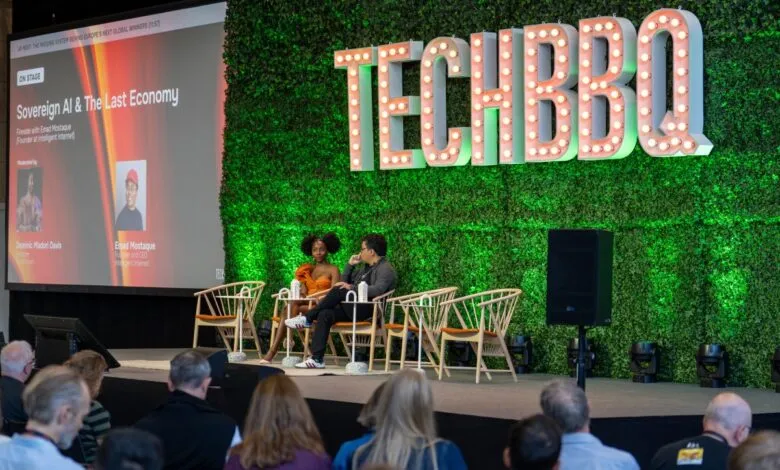
The atmosphere at TechBBQ in Copenhagen shifted significantly this year, moving beyond the technical mechanics of artificial intelligence to address a more fundamental geopolitical question: who holds the reins? While investors, founders, and operators gathered for the annual Nordic conference, the prevailing discourse centered on European sovereignty over the technology driving the current AI wave. This theme of “Emerging from Agency” resonated deeply following earlier disruptions when Anthropic restricted access to its Mythos and Fable models for users outside Europe.
This incident served as a stark reminder that relying on U. S. and Chinese infrastructure creates vulnerabilities. Reactions within the ecosystem were mixed; while some startup executives reported significant operational disruptions, others remained unfazed, viewing the reliance on foreign powers as a manageable risk for now. However, the underlying anxiety about losing control over critical infrastructure persists across the industry.
Defining Human Agency in the Age of Agents
Ellen de Brever, an angel investor and head of partnerships at the Novo Nordisk Foundation Cellerator, highlighted how the conference’s focus on agency reflected broader societal shifts. She noted that the conversation had evolved from debating what AI can achieve to examining what society is willing to permit.
“TechBBQ’s theme of agency felt particularly timely this year as the conversation shifted from what AI can do to what we’re actually willing to let it do,” de Brever said during the event, which concluded on August 27.
Rather than focusing solely on technological advancement, many sessions emphasized the importance of human oversight. Discussions ranged from women’s health innovations to collaborations between Nordic and African ecosystems, yet the core message remained consistent regarding the role of humanity in tech development.
“The age of AI agents isn’t really a story about machines gaining agency,” she continued. “It’s a story about humans deciding what to give up.”
Privacy Concerns and Data Control
A major point of contention arose during a panel moderated by the author featuring Signal President Meredith Whittaker. The discussion explored the compatibility of privacy and AI, with Whittaker offering a sharp critique of integrating AI assistants into operating systems, such as ChatGPT’s integration with iMessage. She argued that these developments create extensive data collection networks while obscuring their negative impacts.
She said this AI era is creating a “data collection apparatus” and that AI labs are using clever marketing to make people forget “about the collateral consequences” of acquiring so much data.
Whittaker emphasized that despite the hype, there remains a strong demand for secure alternatives.
“There is still a huge market need for privacy,” she said. “And particularly with the sovereignty concerns, we will have customers here.”
Economic Implications and Power Dynamics
Emad Mostaque, co-founder of Stability AI and Intelligent Internet, addressed the economic ramifications of an agentic workforce during a separate panel. He focused on how automation might reshape personal and national power structures, warning against the concentration of control among a few major AI laboratories.
“Sovereignty is the ability to resist power being exerted over you,” Mostaque said. He spoke about the concentration of power in the hands of a few AI labs and said, “Inevitably, every country will be run by AI and that “the person that controls the AI controls the country.”
Mia Negru, advocacy and engagement director for Life With Artificials, reflected on these implications after the session, suggesting that the rise of intelligent cognitive agents and robotic physical labor could trigger changes far exceeding previous industrial revolutions.
“If intelligent agents perform cognitive work and robots increasingly perform physical work, we may be approaching something much bigger than another technological revolution,” she said in the message. “We may have to rethink ownership, work, democracy, economic participation and eventually even who gets to participate in society.”
Networking and Human Connection
Despite the heavy topics discussed in formal sessions, the social events provided a space for lighter interactions and relationship building. Founders and investors mingled at various venues, including a rooftop barbecue hosted by Lovable, Nvidia, OpenAI, AWS Startups, and HSBC, where discussions turned to Denmark’s emerging tech hubs. Other gatherings included a cocktail reception at London’s Ada Ventures at Bird bar, focusing on women’s brain health innovation, and a speakers’ dinner on a Copenhagen island featuring fire dancers.
These informal settings underscored the enduring value of personal interaction in the tech community.
“In a room full of conversations about machines, the most memorable moments still come from the simplest thing,” de Brever said. “Human connection, face-to-face, building relationships, sharing ideas, and reminding each other of what technology can never quite replace.”
(Source: TechCrunch)