Samsung’s Z Flip 8: A Foldable Worth Remembering

▼ Summary
– The Galaxy Z Flip 8 is thinner, lighter, and has a front screen with native gestures for notifications, quick settings, and an app drawer, making it function more like a regular phone when closed.
– Samsung added three new gestures to the outer display, eliminating the previous need for the Good Lock workaround to launch apps on the cover screen.
– The phone uses new Flex Titanium display technology and silicon carbon batteries to achieve a thinner design while increasing display durability by 20x.
– The camera hardware remains unchanged from the Flip 7, with a 50MP main and 12MP ultrawide, though it now includes Super Steady Horizontal Lock.
– A new “Now Brief” widget generator creates custom widgets for information like pollen levels, and the phone starts at $1,199.99, $100 more than last year.
Samsung’s latest foldable, the Galaxy Z Flip 8, is pushing closer than ever to feeling like a standard smartphone. It’s thinner, lighter, and equipped with a front display that can handle almost any task you throw at it. Whether that evolution is a net positive remains an open question.
I recently spent three hours with the device, and at first glance, it’s a familiar sight. The Z Flip 8 retains the same 6.9-inch FHD+ AMOLED inner screen, the 4.1-inch Super AMOLED cover display, and the same base specs: 12GB of RAM, 256GB of storage, and a 4,300mAh battery. However, the real story is in the software and design refinements that make it a fully functional phone even when folded shut.
Samsung has introduced three new gestures for the outer display. A swipe down from the top left reveals your notification tray. Swipe down from the top right to access quick settings. A swipe up from the bottom opens a near-complete app drawer. The message is clear: Samsung wants you to use this phone closed for nearly everything. Previously, launching apps on the cover screen required the Good Lock workaround. Now it’s a native feature. On one hand, this is a welcome convenience. On the other, part of the appeal of a flip phone has always been its inherent limitations. If the Flip 8 is just a small, square phone, does it still curb the urge to doomscroll?
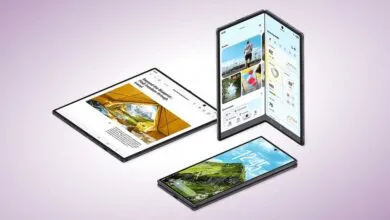
The device has also shed a few fractions of a millimeter, making it what Samsung claims is the thinnest and lightest flip phone on the market. It measures 13.1mm thick when folded and 6.1mm when unfolded, weighing just 180g. While it’s still thicker than the Galaxy Z Fold 8 Ultra (4.1mm unfolded) and thicker than a standard slab phone when closed, it sets a new benchmark for the flip category.
This slimmer profile is achieved through Samsung’s new Flex Titanium display technology, also found in the Z Fold 8 and Z Fold 8 Ultra. The process uses a thinner titanium film under the OLED and tighter bonding between the base plate and display module. While you may not notice a fraction of a millimeter in daily use, Samsung claims the display is 20x more durable than previous generations. That’s a significant improvement, especially for anyone who has seen cracked inner displays on public transit.
A shift in battery chemistry also contributed to the lighter build. Samsung has finally adopted silicon carbon technology, which packs more energy density than standard lithium-ion cells. The company says it uses less silicon than competitors for safety and longevity, but the result is a physically smaller battery that still offers the same 4,300mAh capacity and charging speed as the Flip 7.
If you were hoping for a major camera overhaul, you’ll be let down. The Flip 8 sticks with the same hardware as its predecessor: a 50MP main sensor and a 12MP ultrawide. It doesn’t match the 200MP main camera of the Z Fold 8 Ultra or the 50MP ultrawide of the Z Fold 8. However, Samsung has added its impressive Super Steady Horizontal Lock feature to this model.
The most intriguing feature I tested was the new “Now Brief” widget generator. It can proactively create custom widgets that surface information about your day. Samsung demonstrated asking the phone to show pollen levels each morning, and the Flip 8 generated a dedicated UI for it. I’m eager to test this feature over a longer period, as Samsung suggests you can request a wide variety of widgets. It feels reminiscent of Google’s recently announced Android 17 feature, but optimized specifically for the Flip’s front display.
There is a catch: the Flip 8 costs more. The starting price is $1,199.99, up $100 from the Flip 7’s $1,099.99, for the same storage and RAM configurations. If you’re looking for a flip phone that functions more like a conventional smartphone when closed, the Z Flip 8 is a compelling, if pricier, option.
(Source: The Verge)