Snap to Ship AR Glasses at a Hefty Price
▼ Summary
– Snap is launching Specs, a pair of standalone augmented reality glasses, for $2,195 with preorders available via a $200 refundable deposit and shipping expected in fall in the US, UK, and France.
– Specs are fully standalone with no tether or puck, weigh between 132g and 136g depending on size, and support removable prescription inserts.
– The glasses feature a proprietary display system with a 51-degree field of view, 16 million colors, and lenses that can transition from clear to tinted in 10 seconds.
– Battery life is up to four hours per charge, with a charging case providing four additional charges for a total of 20 hours, and a magnetic charging cable can stream content from other devices.
– Snap is launching Specs amid a growing smart glasses market, with privacy concerns and comparisons to Meta’s Ray-Ban glasses and Apple’s Vision Pro, though the product has not yet been tested by reviewers.
Snap is finally bringing its augmented reality glasses to the public, and they come with a price tag that matches their ambition. Called Specs, these wearable computers are built into see-through AR lenses and will cost $2,195. Preorders are now open at specs.com with a $200 refundable deposit, and the company expects shipments to begin this fall in the US, UK, and France.
This marks a pivotal moment for Snap. The company first dipped into smart eyewear with its original Spectacles back in 2016, and it has spent years quietly developing AR versions for internal testing. CEO Evan Spiegel promised consumer AR glasses by 2026, and the company even spun off its smart glasses team into a separate business unit. Now, that promise is becoming a reality.
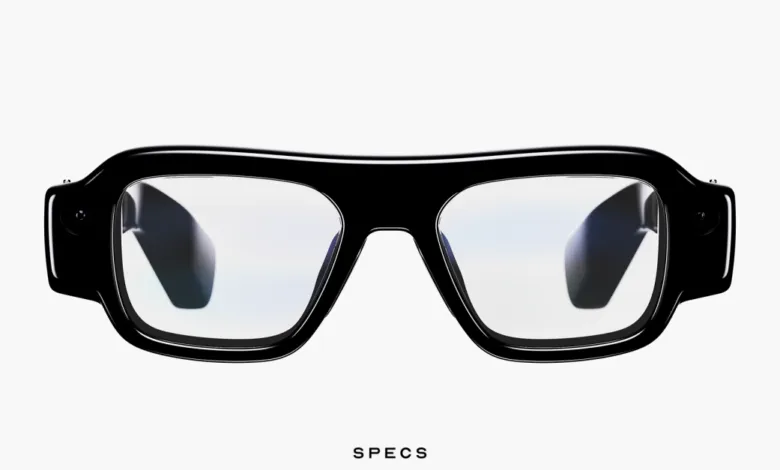
Snap emphasizes that Specs are fully standalone, requiring no external puck or tether. That’s a subtle dig at Apple’s Vision Pro, which relies on a separate battery pack. The glasses come in two sizes: a 47mm model weighing 132g and a 52mm model at 136g. They also include removable inserts that Snap says will support a wide range of prescriptions, making them more accessible for everyday wearers.
The design is unmistakably bold. With wide, chunky frames, Specs don’t look like Meta’s Ray-Ban smart glasses , Snap clearly wants them to stand out. They feature visible light and infrared cameras, and a small LED bar glows in the center of the frames when recording. While the aesthetic may not suit everyone, it’s a deliberate choice that signals a different approach to wearable tech.
Both lenses can display content, powered by Snap’s proprietary liquid crystal on silicon technology. This system offers a 51-degree field of view and can render 16 million colors. The lenses also transition from clear to tinted in just 10 seconds, adapting to changing light conditions.
Inside, the Specs pack two Snapdragon processors. Snap hasn’t specified the exact models, but one handles computer vision while the other manages AR Lenses. Together, they enable fast hand tracking, low latency, and responsive interactions that make digital content feel anchored in the real world. Battery life is rated at up to four hours on a charge, covering activities like audio and video playback, AI assistance, and Bluetooth notifications. The included charging case provides four additional charges, extending total battery life to 20 hours.
During his keynote at the AWE 2026 conference, Spiegel also highlighted a unique feature: the charging cable snaps magnetically to the side of the glasses. Plugging the other end into a phone, computer, or gaming device lets you stream content directly to the Specs, turning them into a personal display for external devices.
Still, we haven’t tested Specs ourselves, so we can’t yet speak to their daily usability. The product sits in a tricky middle ground between Meta’s popular Ray-Ban smart glasses and Apple’s less successful Vision Pro. And while the smart glasses market has grown significantly since Snap’s first Spectacles, challenges remain. Meta hasn’t publicly launched AR glasses yet, despite showing off a model in 2024 that never went on sale. Privacy concerns are also mounting, as my colleague Victoria Song recently noted, with many smart glasses still failing to justify their existence.
Snap is pushing ahead regardless. Whether Specs will find an audience remains to be seen, but the company is betting that its years of development and a premium price point will carve out a new niche in the wearable space.
(Source: The Verge)