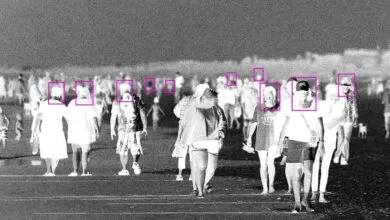
Man sues Florida cops after facial recognition ‘match’ led to arrest

▼ Summary
– Robert Dillon was arrested in August 2024 after a facial recognition system falsely flagged him as a 93 percent match to a suspect in a child luring case.
– The lawsuit claims police relied on the faulty match and concealed exculpatory evidence, such as that Dillon lived over 300 miles away and had no record of being in the area.
– The facial recognition system used was the Pinellas County Sheriff’s Office’s FACES database, which the Jacksonville Sheriff’s Office accessed for searches.
– The arrest was based on a low-quality image taken of a McDonald’s computer screen displaying surveillance footage.
– The lawsuit names multiple defendants, including the City of Jacksonville Beach and several law enforcement officers, and was filed in US District Court for the Middle District of Florida.
A Florida man is taking legal action against multiple law enforcement agencies, alleging that a flawed facial recognition match led to his wrongful arrest and that investigators deliberately ignored evidence that would have cleared him. The lawsuit, filed today in federal court, centers on the August 2024 arrest of Robert Dillon on charges of attempting to lure a child.
Dillon, a 52-year-old resident of Fort Myers, was taken into custody after a facial recognition algorithm identified him as a 93 percent match to a suspect captured on a McDonald’s surveillance camera in Jacksonville Beach. The problem, according to the complaint, is that Dillon had never visited that area. “This case is about what happens when police let an error-prone artificial intelligence system stand in for an investigation,” the lawsuit states. It argues that instead of testing the machine’s output against readily available facts, officers built a case to confirm the algorithm’s flawed conclusion.
The legal filing details several pieces of exculpatory evidence that were allegedly overlooked or concealed. Dillon lives more than 300 miles from Jacksonville Beach, and a search of a license plate reader database turned up no indication he was anywhere near the scene when the crime was reported. The identification itself was based on a low-quality image, specifically a photo taken of a McDonald’s computer screen displaying surveillance footage, the lawsuit claims. Despite this, Dillon was arrested and prosecuted for what the suit describes as “one of the most stigmatizing crimes a person can face.”
The lawsuit names the City of Jacksonville Beach, Jacksonville Beach Police Corporal Scott O’Connell, Jacksonville Sheriff T. K. Waters, Pinellas County Sheriff Bob Gualtieri, and Sergeant James Walters of the Jacksonville Sheriff’s Office as defendants. The erroneous match came from the Face Analysis Comparison and Examination System (FACES), a centralized facial recognition database maintained by the Pinellas County Sheriff’s Office. The Jacksonville Sheriff’s Office reportedly has access to this system and uses it to conduct searches for itself and partner agencies, including the Jacksonville Beach Police Department. Sergeant Walters is identified as the officer responsible for conducting or overseeing those searches and transmitting the results.
The case raises serious questions about the reliability of AI-powered surveillance tools and the duty of law enforcement to verify their outputs before making arrests.
(Source: Ars Technica)